Bench Notes › Articles › Build
Article · 1 min readYour Soldering Iron Might Be the Problem.
By Thomas Popp · Oct 7, 2026
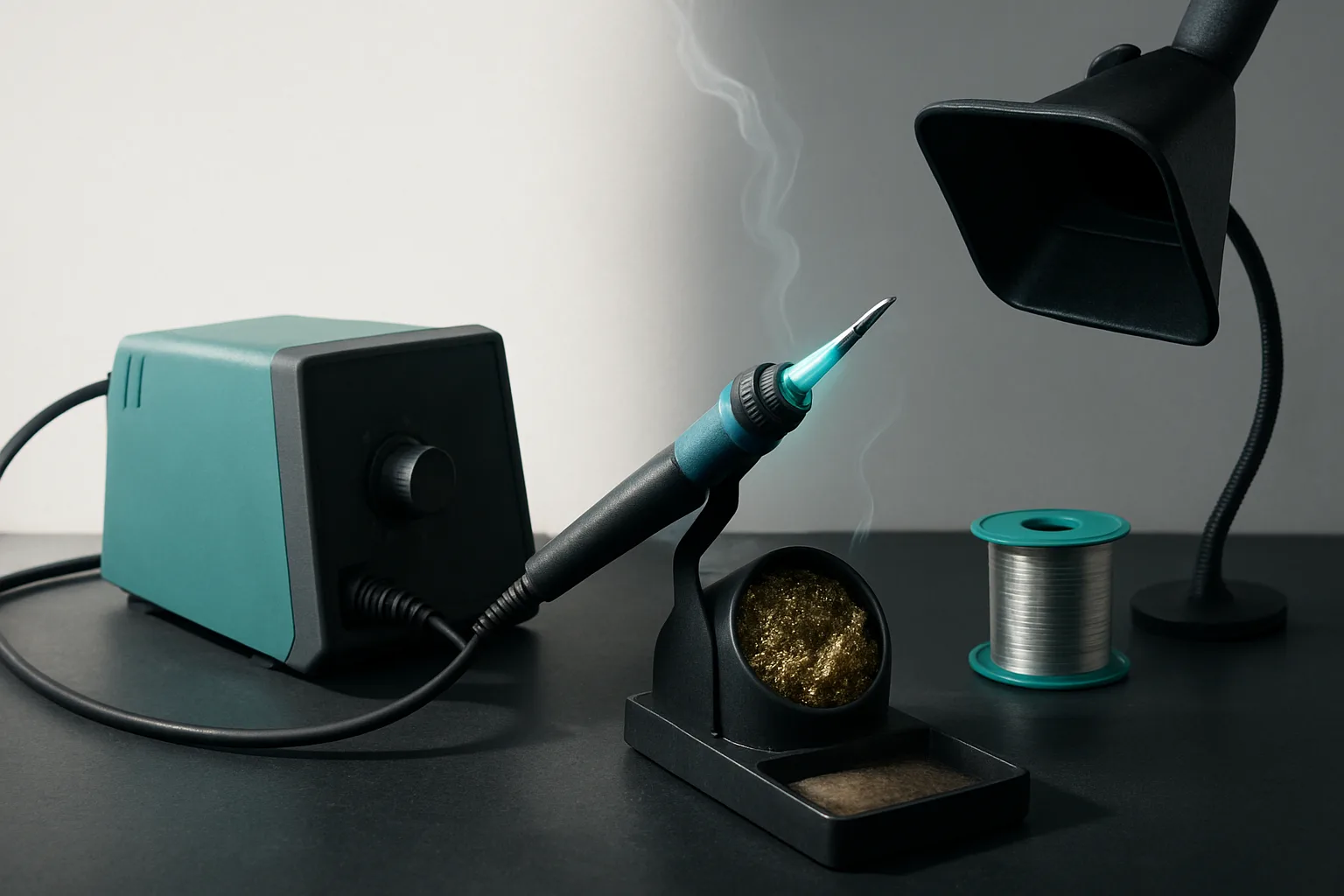
Your joints are dull, lumpy, or take forever to flow, so you crank the heat and push harder. The heat was not the problem. The tip was. This is one of the most misdiagnosed problems at the bench, because a dying tip makes every joint behave like bad technique - and bad technique is what people blame.
The tip is the heater
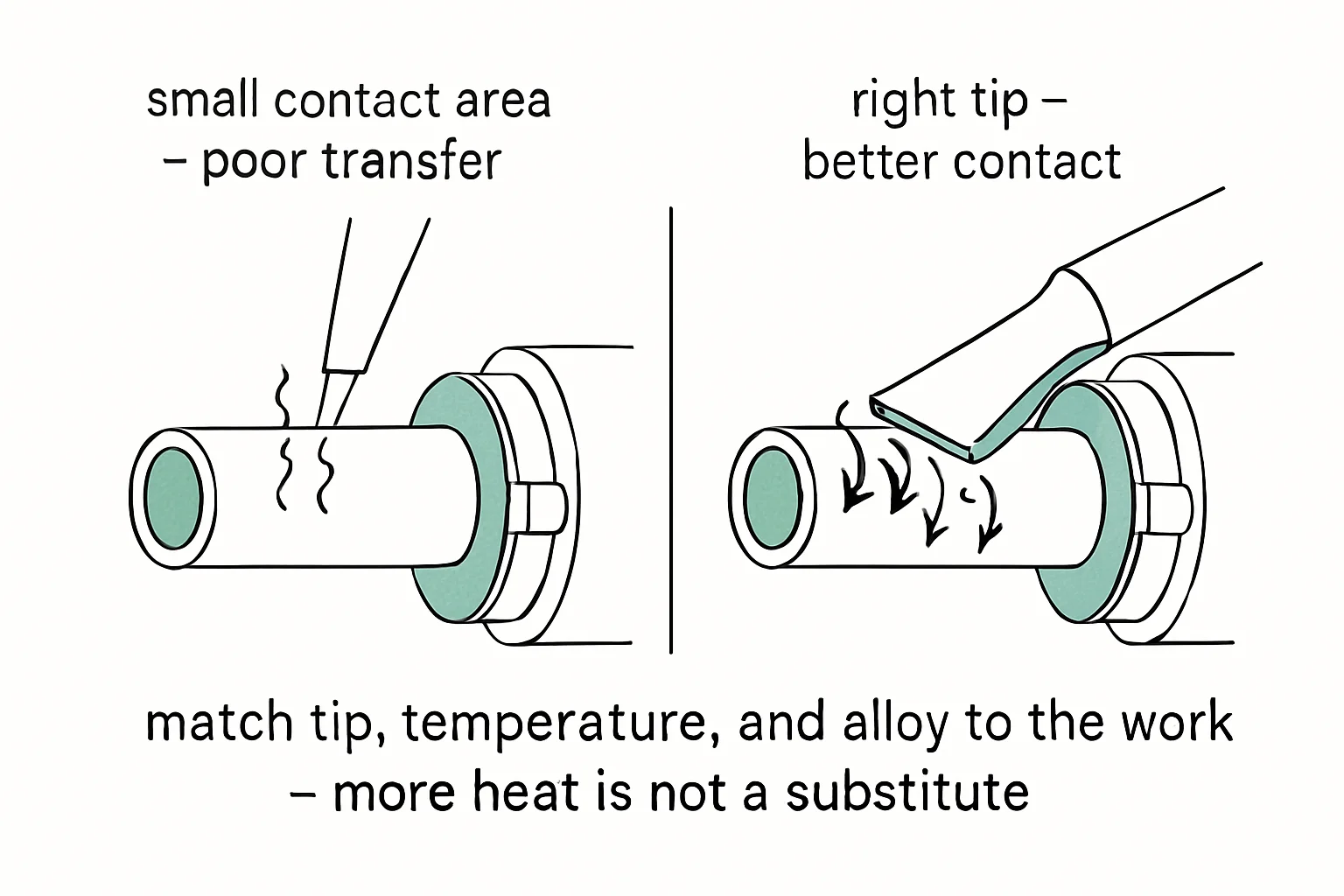
A soldering iron only heats through its tip's surface. That is the entire thermal path into your joint. A dark, pitted, oxidized tip barely transfers heat at all, which is why you get cold joints no matter how long you hold the iron there. Cranking the temperature does not fix it - the heat cannot get through the oxide layer - it just bakes the tip further and shortens whatever life it has left.
Run the iron at the lowest temperature that melts your solder cleanly, per your solder's datasheet, rather than maxing it out. Excessive heat accelerates oxidation, and oxidation is what kills the transfer. Low, clean, and tinned beats hot and crusty every time.
Clean, tin, keep it tinned
Fix the tip before you blame your technique. Clean it on brass wool - brass cleans with less thermal shock than a wet sponge, which matters because thermal shock is rough on the tip plating. Then tin it: melt fresh solder onto it until the whole working face shines silver. It should stay shiny. If the solder beads up instead of wetting the tip, the tip is oxidized and needs more cleaning, or it needs replacing.
The maintenance habit is the thing people skip: keep the tip tinned before and after every joint, and tin it again before you put the iron down. An idle bare tip oxidizes in minutes. A tip that spends its life coated in fresh solder lasts dramatically longer than one that sits bare between joints. This is a seconds-per-joint habit, not a project.
When to stop rescuing a tip
If you have been fighting a tip for a while, stop rescuing it. A replacement tip costs a few dollars. The hour you spend coaxing a pitted one back to life costs more than the tip ever did - and worse, a dying tip keeps making joints you cannot trust, so the rescue attempt quietly poisons your work. Pitted plating does not grow back. Buy the tip, tin the new one from the start, and put the old one out of its misery.
Bench takeaway: The tip is the whole thermal path - clean it on brass wool, keep it tinned, and replace it the moment it stops wetting.
Related
The XLR Wiring Mistake That Keeps Coming Back · Bad Solder Joints: What to Look For Before They Fail · Course: Build a basic XLR cable