Bench Notes › Articles › Reference
Article · 1 min readYour SDI Cable Works at 10 Feet. Why Not at 100?
By Thomas Popp · Oct 7, 2026

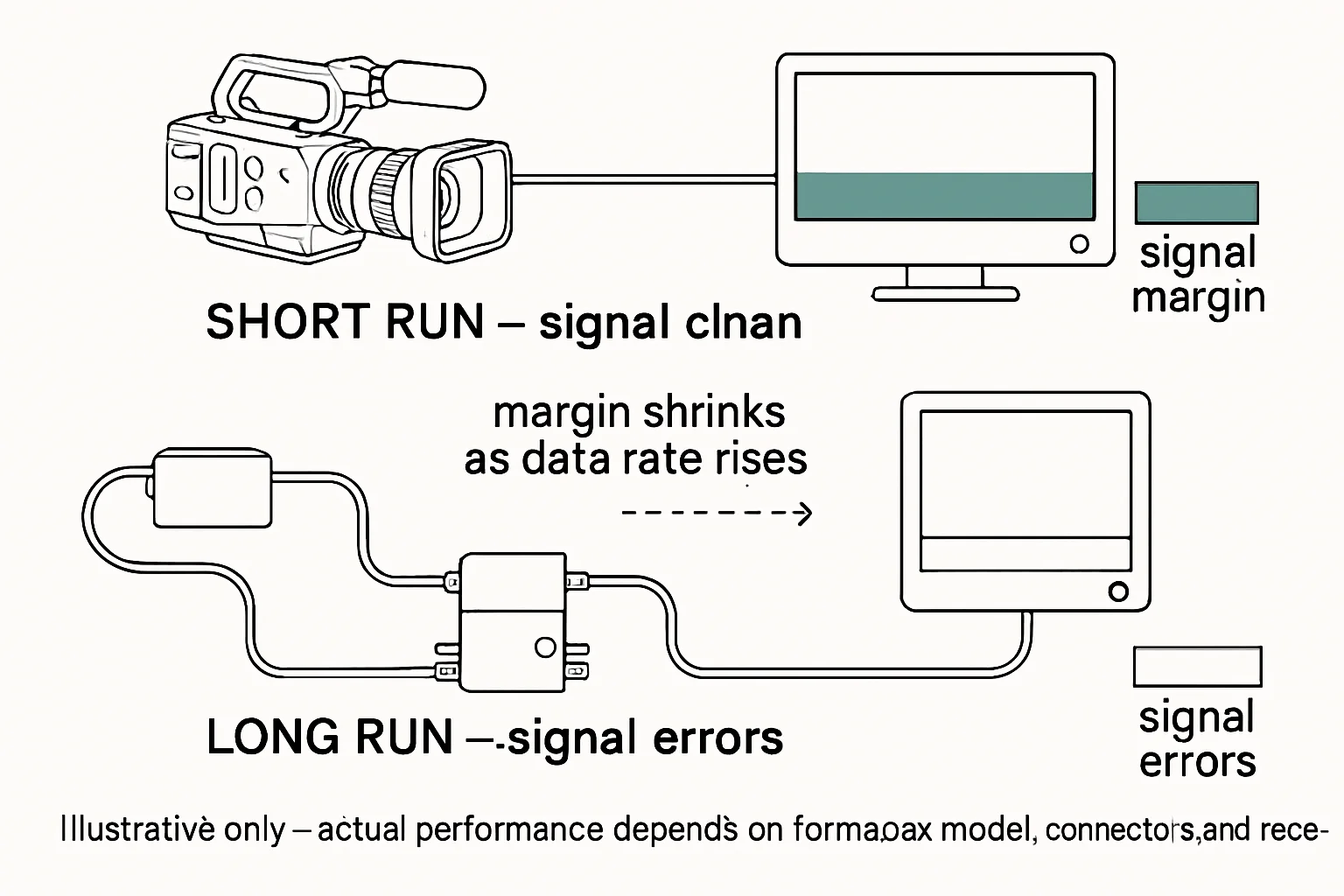
A cable that passes picture perfectly across the room can fall apart on a long run, and the instinct is to blame the camera or the switcher. Nine times out of ten the real culprit is the cable itself - not broken, but marginal. Every foot of cable eats a little signal. A short run has margin to spare; a long run doesn't. The physics that are invisible at ten feet become the whole story at a hundred.
Attenuation: the problem you can't see
Signal loss accumulates with length, and it hits high-data-rate formats first. That's the trap: a run that was rock-solid for one format can start dropping out the moment you move to a higher data rate, with nothing about the cable changed. Before you hang any long run, check the cable manufacturer's published length rating for your actual signal format - not a generic "good for SDI" claim, the rating for the format you're carrying. And test at full length, on the ground, before the cable goes up the tower. A ten-foot bench test tells you the terminations are good; it tells you nothing about whether a hundred feet of marginal construction will hold picture.
Impedance: the wrong rating in the path
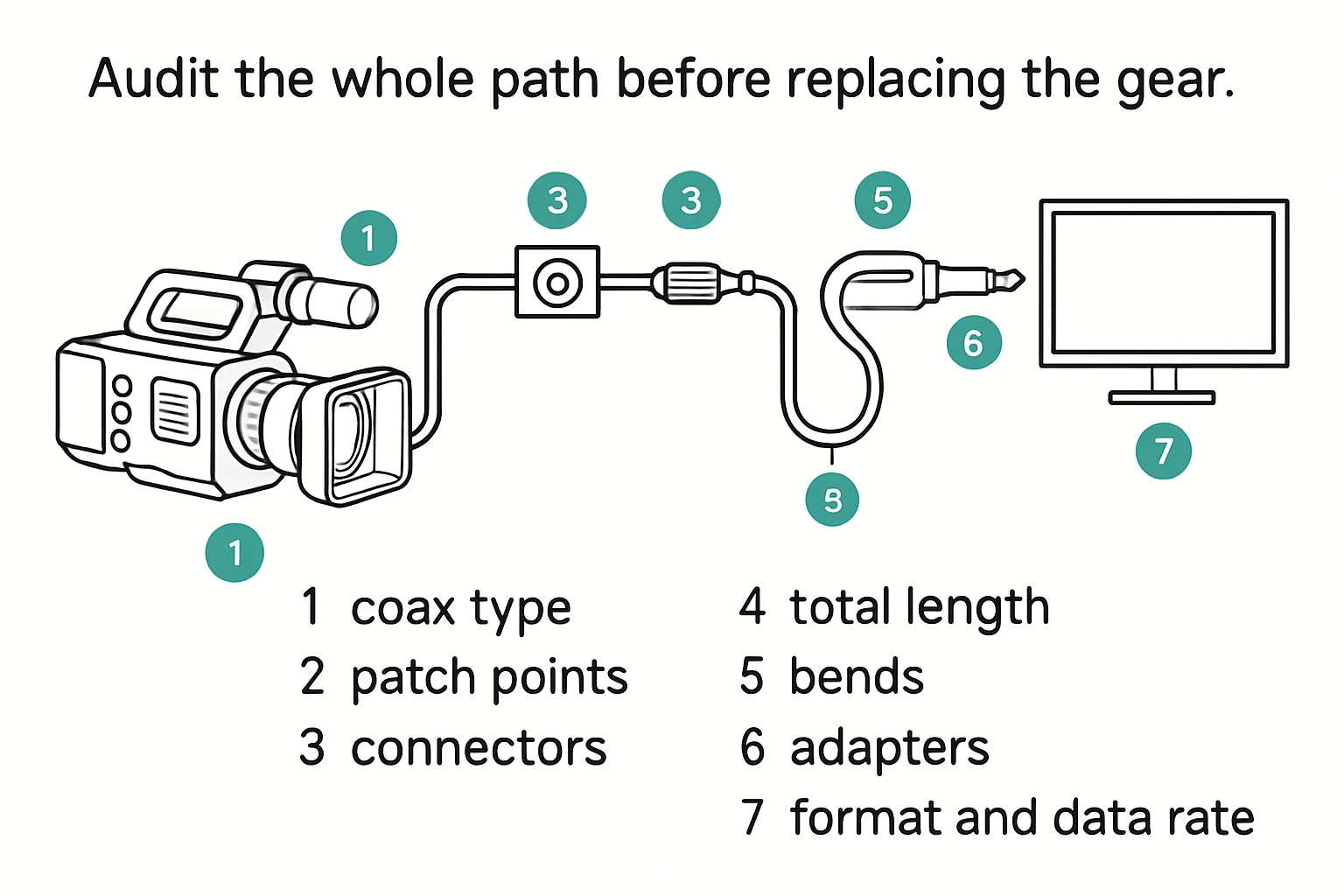
Here's the subtler killer. Coax cables and BNC connectors each carry an impedance rating, and when a component in the signal path is rated for a different impedance than the application expects, part of the signal reflects back toward the source instead of traveling cleanly down the line. Those reflections are noise on a short run and dropouts on a long one. The fix is unglamorous: rebuild long SDI runs with cable stock and connectors whose impedance ratings match the application's published spec - the vault's PB-BNC-BNC entry recommends RG-59/RG-6 class stock for SDI runs, and quality crimp or compression BNC terminations rather than cheap generic connectors whose barrels and pin dimensions are anyone's guess. (Note: we're still confirming some of the exact impedance ratings in the vault catalog against manufacturer spec sheets - check the product-database entries for the specific cable and connector in your hand rather than trusting a general rule.) A mismatched component mates just fine mechanically, which is exactly why this fault wastes whole troubleshooting sessions.
Handling: protect the marginal run
A long run that's close to its limit has no tolerance left for physical abuse. Coil it for transport with a proper over-under and keep the coil large - kinked or tightly bent coax changes its electrical characteristics at the bend, and one sharp kink in a marginal run can turn a passing test into an intermittent dropout. Inspect the run for kinks and crushed sections before you trust it at height, and treat the cable like the precision component it is: drag it across concrete, and it's no longer the cable you tested.
Bench takeaway: Test long runs at full length before they go up - short tests hide marginal cable, and kinks finish what marginal cable starts.
Pinout reference
| Pin | Carries |
|---|---|
| C | Center · signal |
| SH | Shell · shield / ground |
Related
Stop Using Mystery Cables: A Labeling System That Works · Your Cable Isn't a Garden Hose: Learn the Over-Under Coil · Course: Build a basic XLR cable