Bench Notes › Articles › Reference
Article · 1 min readStop Using Mystery Cables: A Labeling System That Works.
By Thomas Popp · Oct 7, 2026
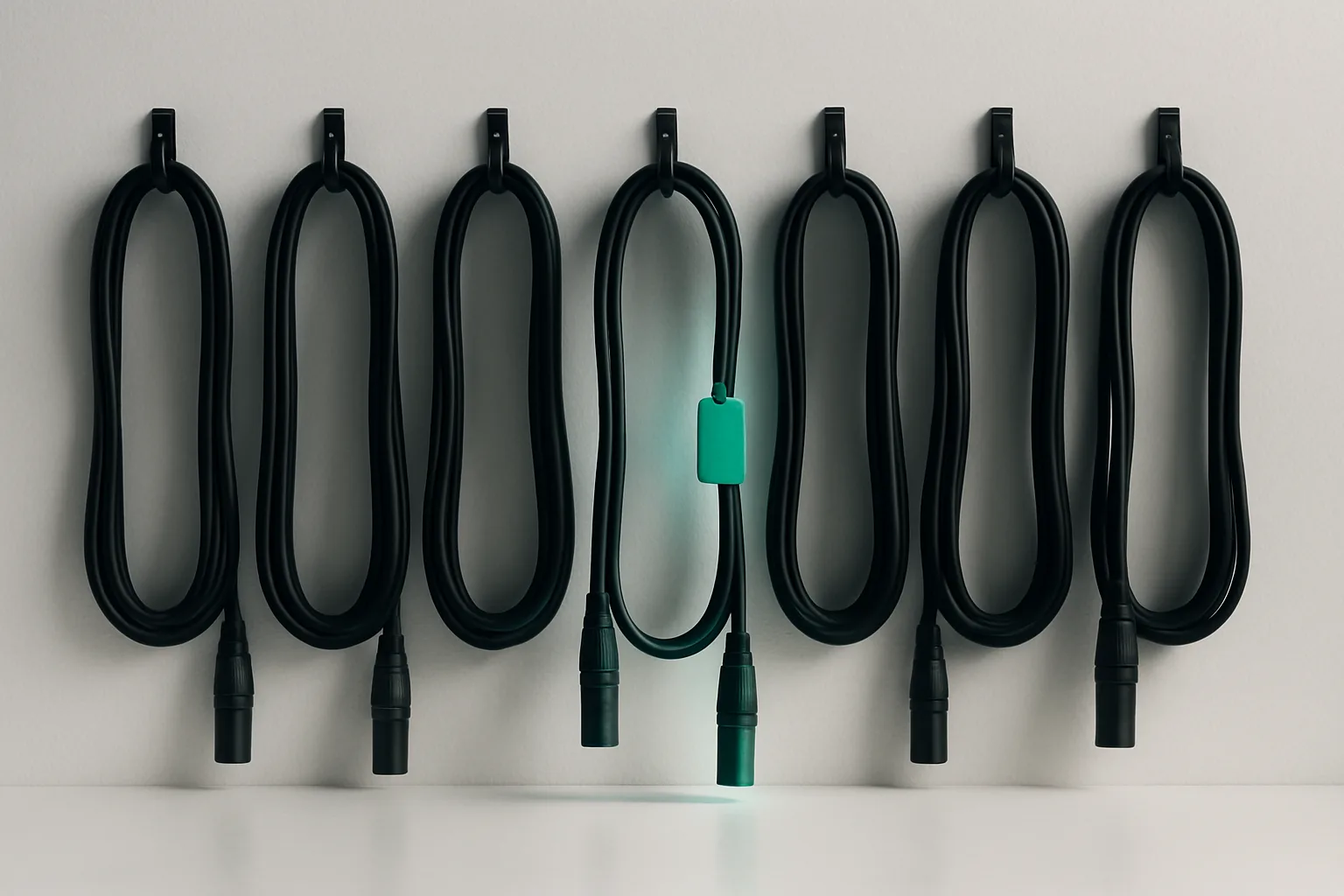
Every case has them: a tangle of black cables with no marks, no history, no identity. You lose time re-testing them because nobody knows which one is 25 feet and which one failed twice already. Worse, you re-deploy the bad one - because nothing on it says it's the bad one - and it fails again, on the clock, in front of the client. Nobody knows what actually lives in the inventory. The fix isn't fancy. It's a labeling habit that survives road work.
The four fields
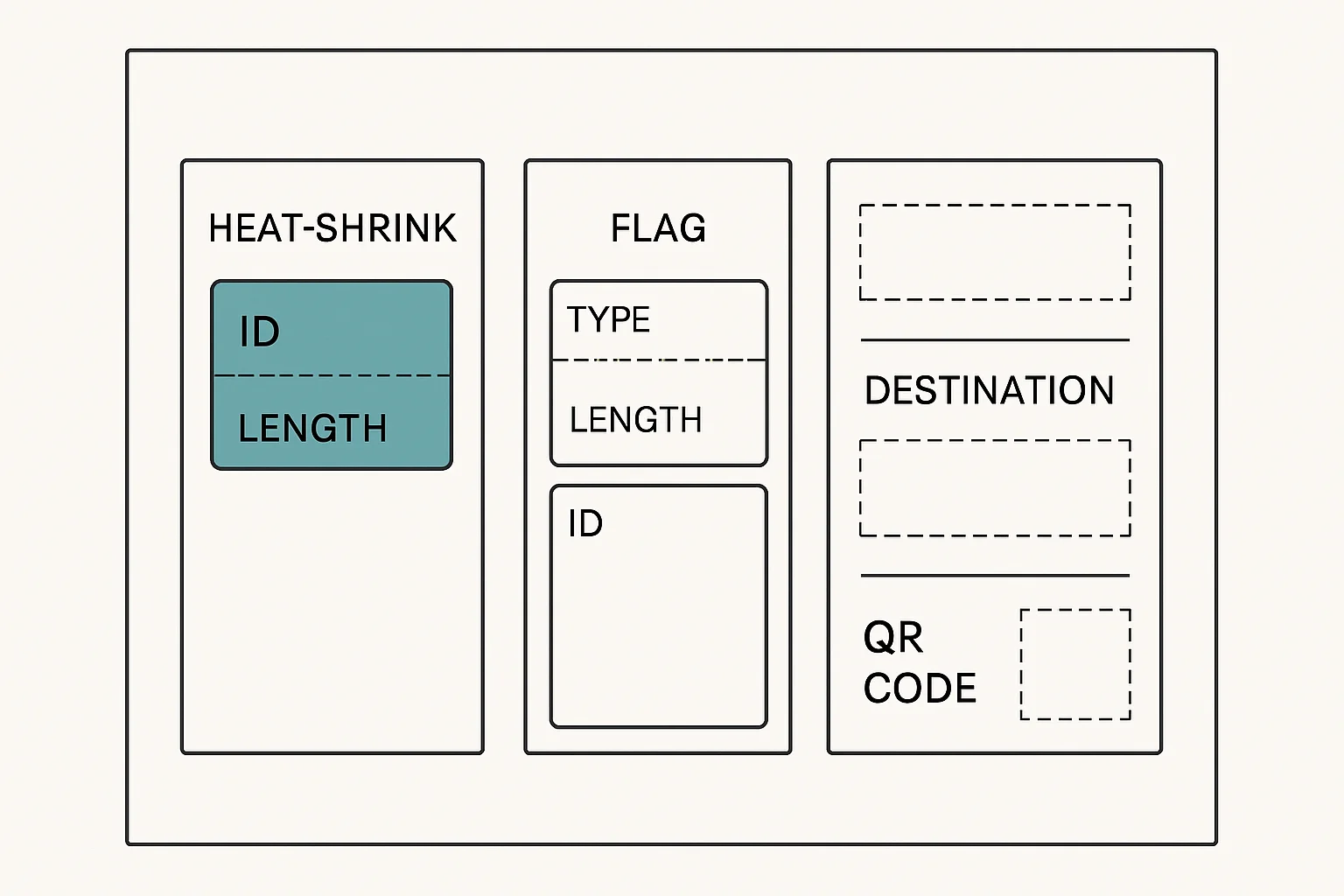
Label every cable with four fields: type (mic XLR, speaker, power, whatever it is), length, a unique ID, and where it lives or its destination. A tape label with those four written on it beats nothing by a mile. It's not fancy - it just answers the four questions someone will be asking about that cable at the worst possible moment: what is it, how long is it, which one is it, and where does it go. You don't need a system more complicated than that to start.
Make it survive road work
Tape is the fast answer, but on cables that get coiled and yanked daily, tape peels and marker smears. A heat-shrink or tag label that won't peel or smear holds up far longer. The label doesn't have to be permanent - it has to outlast the show, the strike, and the trip back into the case without turning illegible. Whatever you use, the test is simple: can you still read it after a month of real work? If not, upgrade the method, not the cable.
The unique ID is the whole system
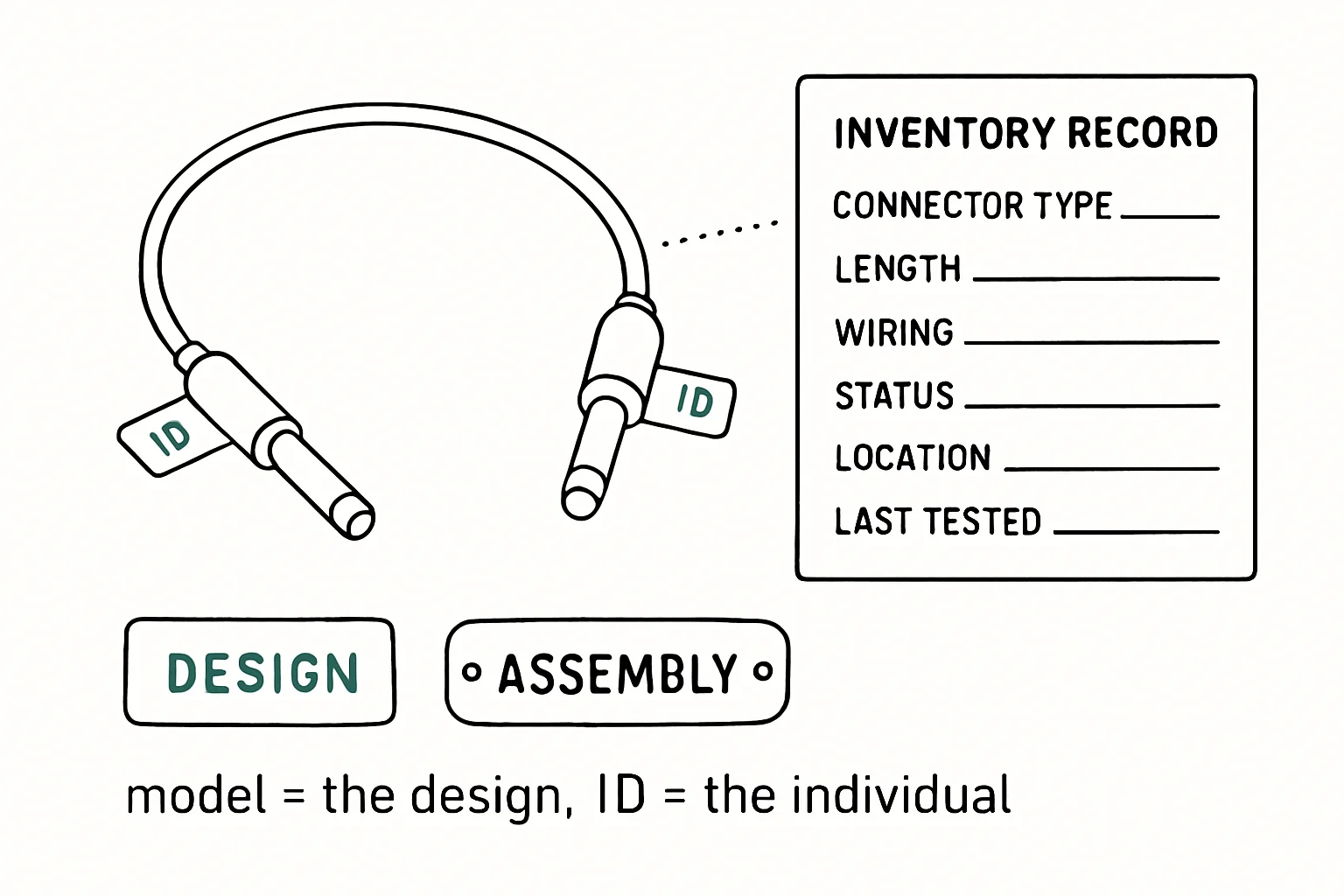
Here's where labeling stops being housekeeping and starts being a system. The unique ID ties the cable to its test history, its repair log, and the PB model number in the vault catalog. Once the label carries the ID, nothing about that cable is a mystery anymore - you can look it up and know what it is, whether it's been repaired, whether it's trusted. The cable with two failed outings on its record stops getting deployed to critical runs. The one that just got re-terminated stops getting re-tested from scratch every time somebody picks it up. The ID turns a pile of identical-looking black cables into an actual inventory.
Both ends, always
Label the cable at BOTH ends. When a run is strung through a set, the far end is the only end anyone can read - and the end you're holding is the one you already know about. If you only label one end, you'll discover it the day the labeled end is buried behind a rack and the visible end is blank. One label is no label.
Bench takeaway: Four fields on both ends - type, length, unique ID, destination - and let the ID carry the cable's whole history.
Pinout reference
| Pin | Carries |
|---|---|
| 1 | Shield / chassis reference |
| 2 | Hot (+), non-inverting |
| 3 | Cold (−), inverting |
Related
Your Cable Isn't a Garden Hose: Learn the Over-Under Coil · TRS Does Not Automatically Mean Stereo · Course: Build a basic XLR cable