Bench Notes › Articles › Reference
Article · 2 min readYour Cable Isn't a Garden Hose: Learn the Over-Under Coil.
By Thomas Popp · Oct 7, 2026
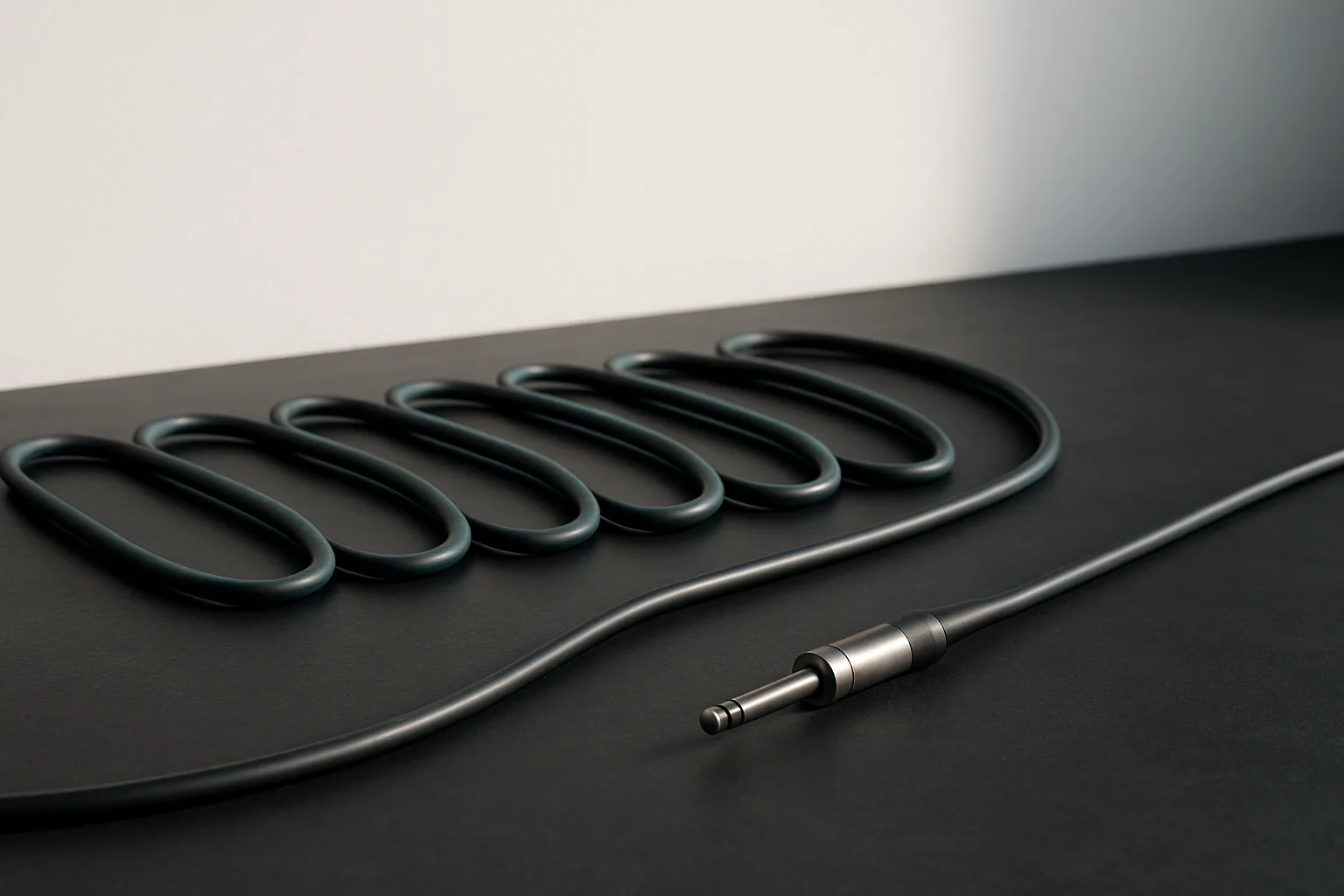
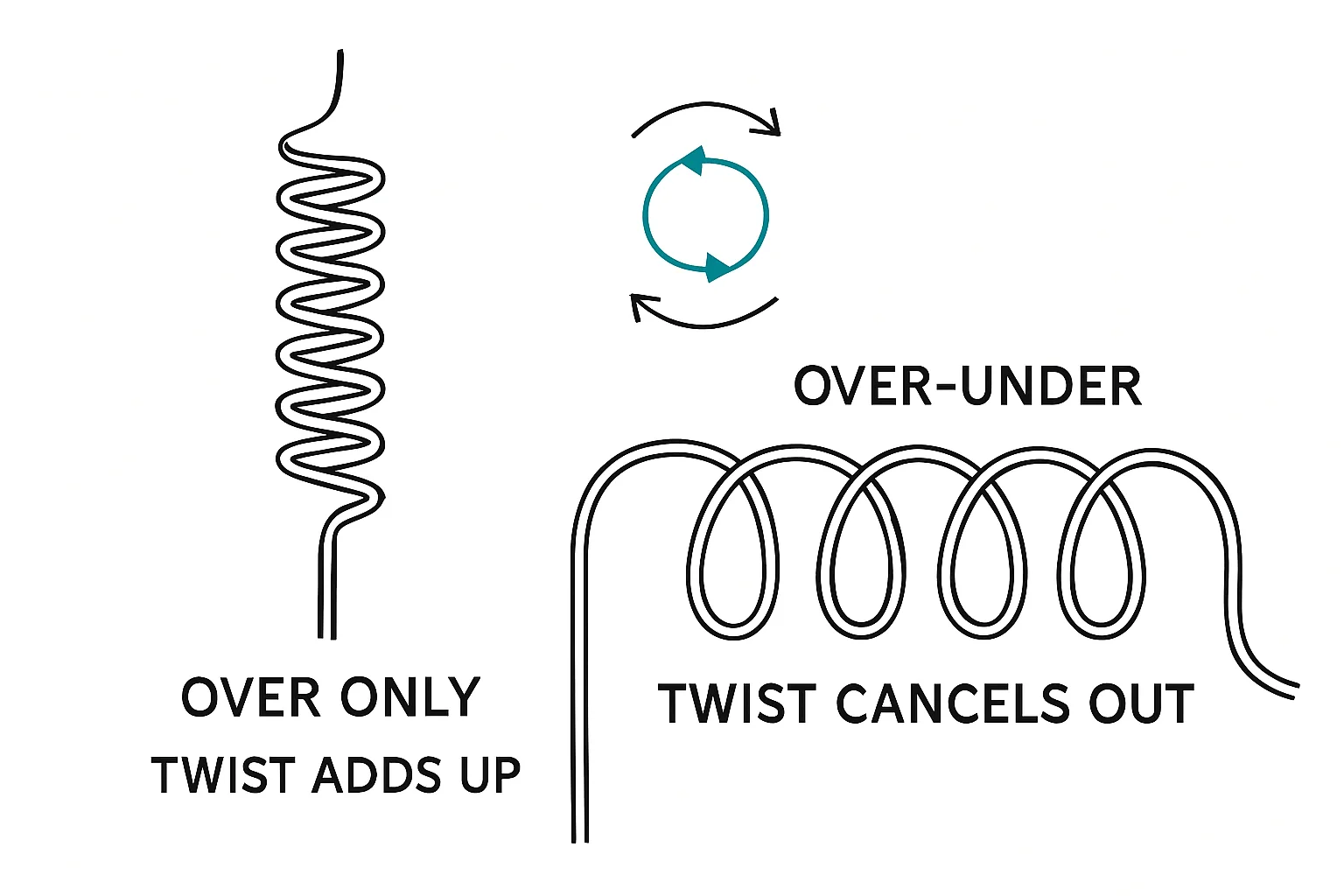
Coiling a cable elbow-to-elbow - looping it around your arm like a garden hose - twists every loop in the same direction. Do that enough times and the twist works its way into the cable itself: the jacket kinks, the shield bunches, and the conductors inside take repeated stress they were never built for. Then the cable comes off the coil in a tangled pretzel, gets yanked straight to untangle it, and a few more cycles later it fails near a connector. Bad coiling is slow-motion cable damage, and it's one of the most common ways perfectly good cables die young.
How over-under works
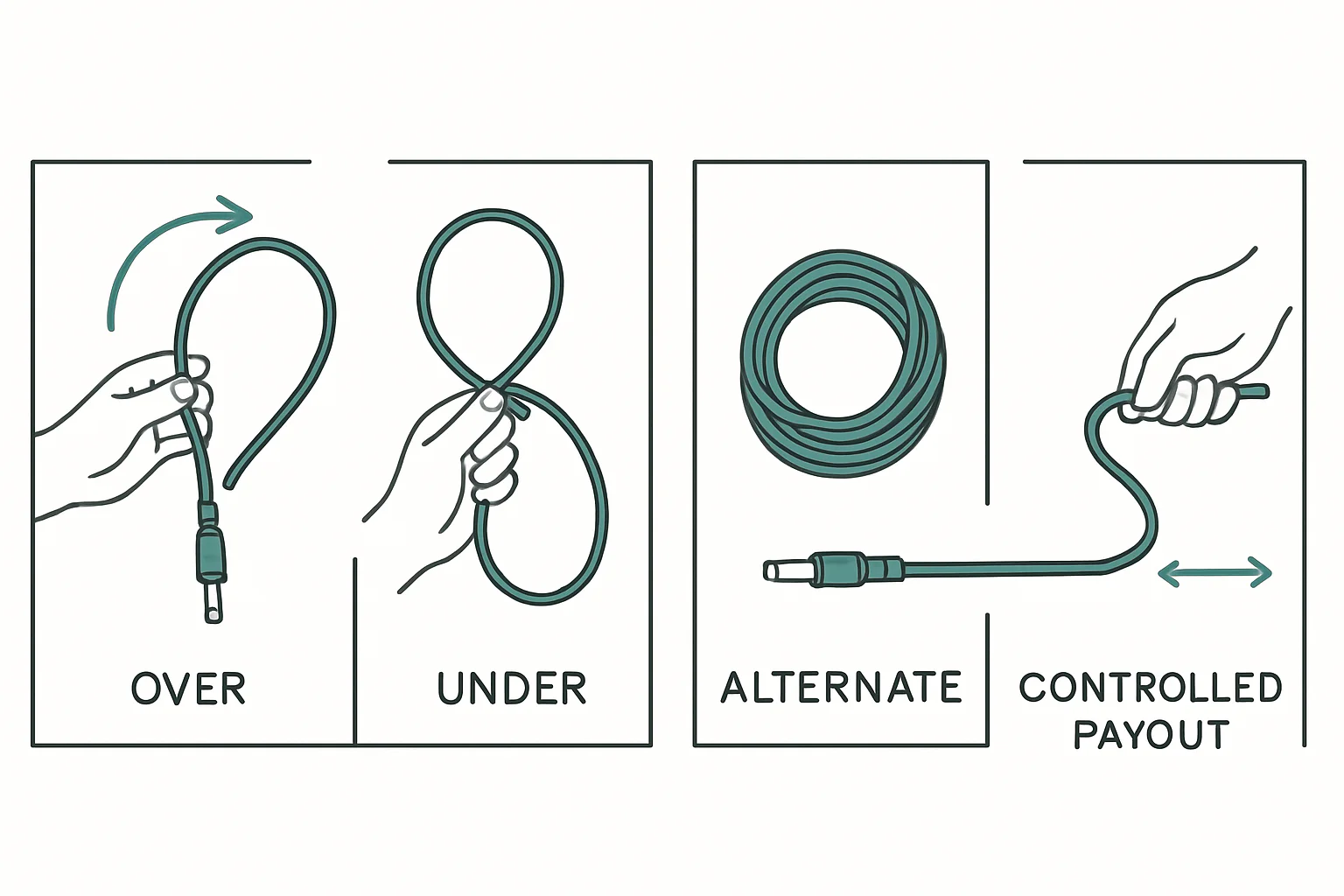
Alternate each loop. One loop coiled normally ("over"), the next given a half-twist the other way ("under"), so the twist cancels out instead of accumulating. Hold the cable, make your first loop over your hand, rotate your wrist the opposite way for the next loop, and keep alternating all the way down. It feels awkward for the first few cables - your hands will want to do the old elbow thing. Then the rhythm clicks, and after that it feels weirder to coil any other way.
The payoff
When you uncoil, grab one connector and throw it straight out - the cable pays out flat and twist-free because no net twist was ever stored in it. No pretzel, no fight, no standing on set yanking a coil apart while the clock runs. The crew that can lay a clean run in thirty seconds instead of three minutes is the crew that coiled over-under last time. And the cable that pays out flat is the cable whose conductors aren't being yanked sideways on every deploy.
The tell
Watch for the cable that refuses to lie flat and keeps curling back on itself. That's accumulated twist from bad coiling, and every elbow-to-elbow wrap added to it. The good news: it's fixable. Coil that cable over-under carefully and the stored twist unwinds itself as you work. A cable that lies flat is a cable that was treated right and now you can tell at a glance which cables in the case weren't.
Bench takeaway: Alternate every loop - over, under, over, under - and the cable pays out flat every time.
Related
Stop Using Mystery Cables: A Labeling System That Works · TRS Does Not Automatically Mean Stereo · Course: Build a basic XLR cable