Bench Notes › Articles › Repair
Article · 1 min readWhen Is a Cable Not Worth Repairing?
By Thomas Popp · Oct 7, 2026
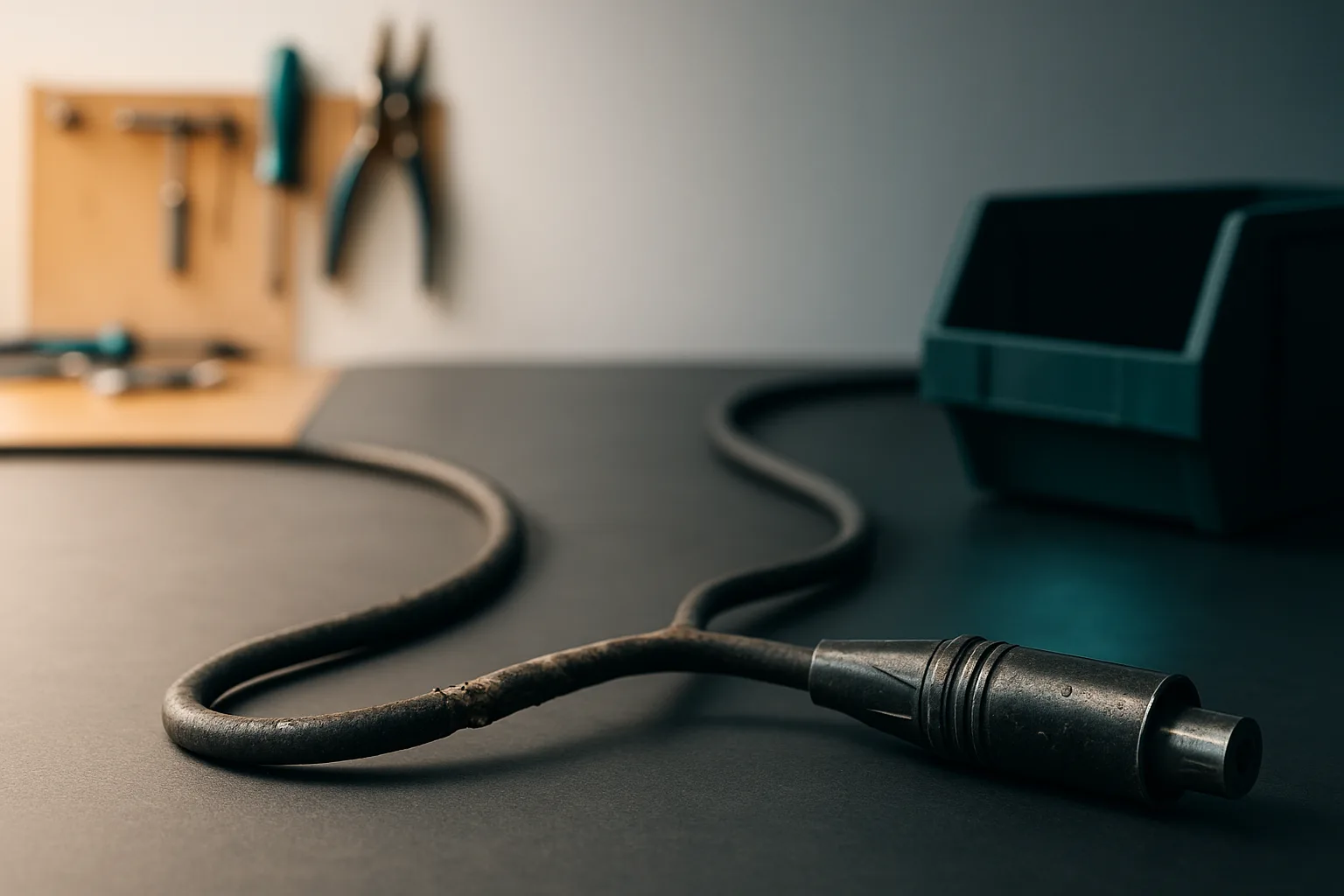
Bench pride says everything is fixable. Give a tech a broken cable and a quiet afternoon and they'll have it re-terminated, tested, and back on the shelf by dinner. Bench math says a forty-five minute repair on a cable you can replace for the price of lunch is a hobby, not a business decision. The question isn't whether you can fix it - it's whether the fix earns its place on the bench. A crushed-jacket section in the middle of a cheap cable, two damaged ends on a commodity XLR, a repair that takes longer than the cable's useful life justifies: these are replacements, and holding them on the bench delays the repairs that actually matter.
The five-factor check
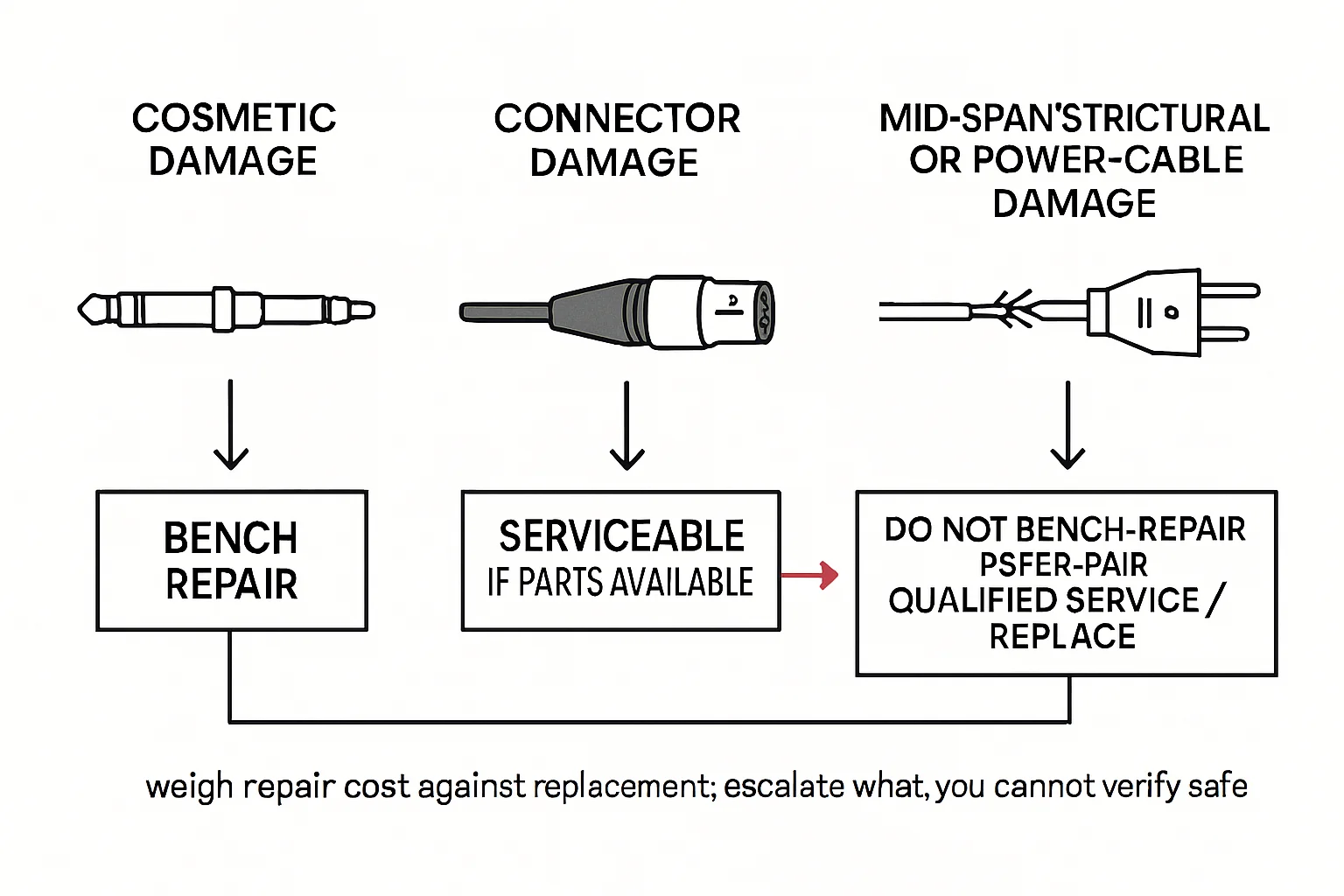
Run this before the soldering iron warms up, because once it's hot, momentum takes over and you've committed. (1) Replacement cost versus your bench time - if the repair costs more than roughly half the replacement, replace it. (2) Repair time, honestly estimated, including testing and QC - not just the soldering, the verification that makes it a repair instead of a guess. (3) Extent of damage: a failed connector is a repair, but a compromised jacket or crushed shielding mid-span usually isn't, because you can't un-crush a cable and the fault will haunt the run. (4) Reliability requirements for the cable's role: a cable that has to survive a paid gig gets a higher bar than a shop test lead, and a borderline repair that fails on a gig is the most expensive outcome of all. (5) Safety, which is non-negotiable: damaged power or mains wiring is never a repair job. It's a replacement, every time, no worksheet needed, no exceptions for "it's just the insulation." Electricity doesn't grade on effort.
When the worksheet says replace, don't just toss the carcass. Cut the connectors off for the parts bin and let the cable go. Good connectors are worth more than the dead cable, and the bin is how cheap parts stay on hand for the repairs that do pencil out.
Specialty cables break the rule in your favor
Here's the exception that proves the worksheet works. An expensive LEMO or Hirose assembly with a bad end is almost always worth the connector replacement - because the cable stock itself is the valuable part, and re-terminating one end is a fast, high-value repair. Commodity XLRs and TRS cables almost never are; the connector costs what a new cable costs, and the labor is pure overhead. This is the pair of worked examples the worksheet walks through: the $15 XLR with a bad end gets replaced (connectors salvaged), the $150 specialty LEMO with a crushed section gets evaluated on its real value and usually repaired.
The deeper point is about the bench queue. Every marginal repair you take on is bench time stolen from a repair that earns its place - the specialty cable, the mixer with the cracked joint, the unit with a paying gig on the line. Knowing when to let a cable die is what keeps the bench working on the right problems.
Bench takeaway: run the five-factor check before the iron is hot - cost vs. bench time, honest repair time, extent of damage, gig reliability, and safety as the hard line - and when it's a replace, strip the connectors and let the cable go.
Pinout reference
| Pin | Carries |
|---|---|
| T | Hot (+) |
| R | Cold (−) |
| S | Shield |
| Pin | Carries |
|---|---|
| L | Line (hot) |
| N | Neutral |
| E | Earth / ground |
Related
The Buzz You Hear Might Not Be Coming From the Microphone · Why Your Connector Keeps Coming Loose · Course: Build a basic XLR cable