Bench Notes › Articles › Test
Article · 2 min readThe Wiggle Test: Catching a Cable That Only Fails Sometimes.
By Thomas Popp · Oct 7, 2026
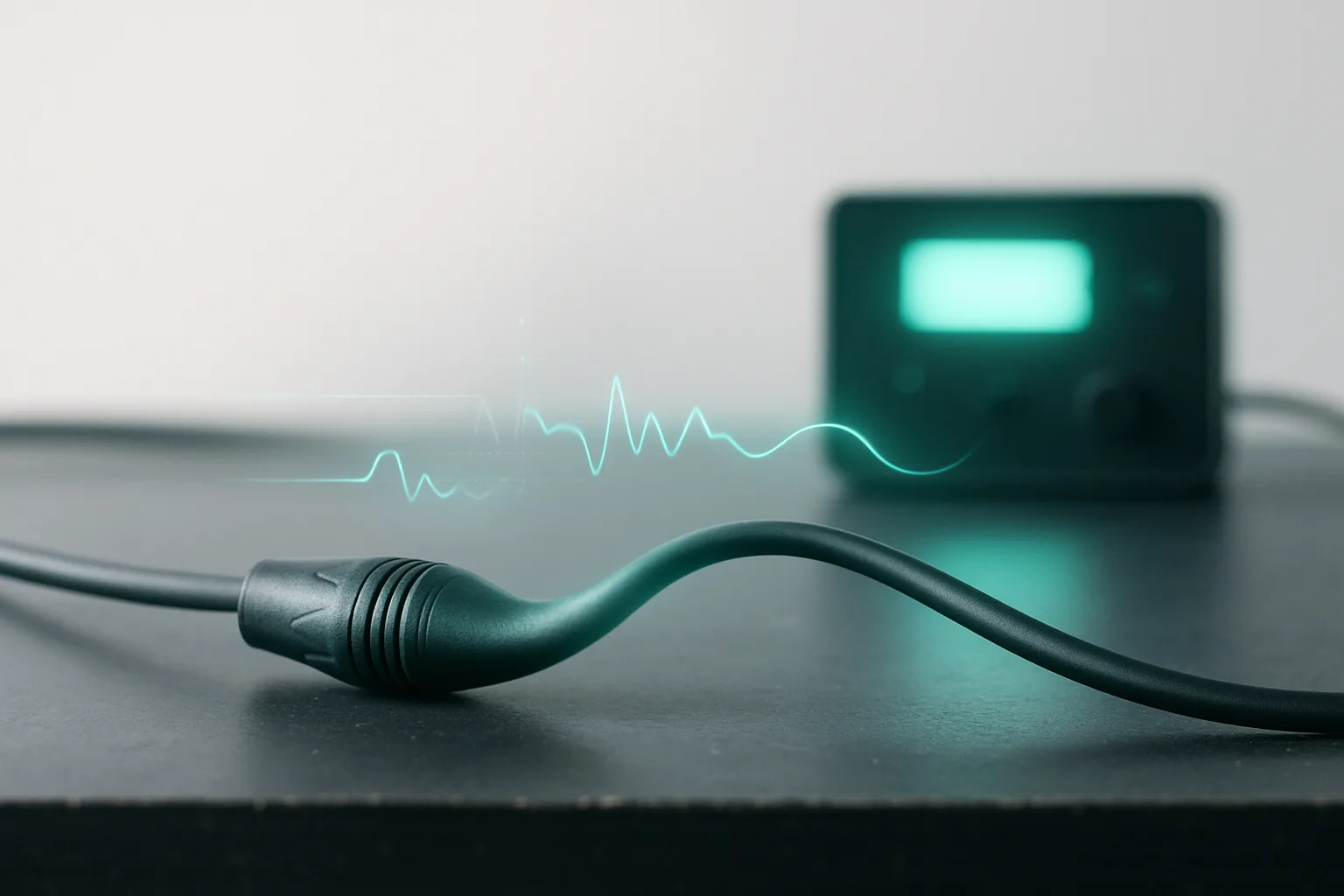
The most expensive cable failure is the intermittent one. It beeps clean on the meter, then drops audio when the boom swings, the camera op walks, or someone steps near the run. You re-test it, it passes. You put it back in service, it fails again. By the third round, nobody trusts the cable, nobody trusts the meter, and the troubleshooting session is eating the shoot.
What an intermittent fault actually is
Usually it's a fractured conductor or a cold solder joint right at the termination - two broken ends that still touch each other at rest and separate under the slightest movement. That's what makes it maddening: every test you run while the cable lies still says it's fine, because it is fine while it lies still. The failure only exists in motion. A static continuity test can never catch it.
How to run it
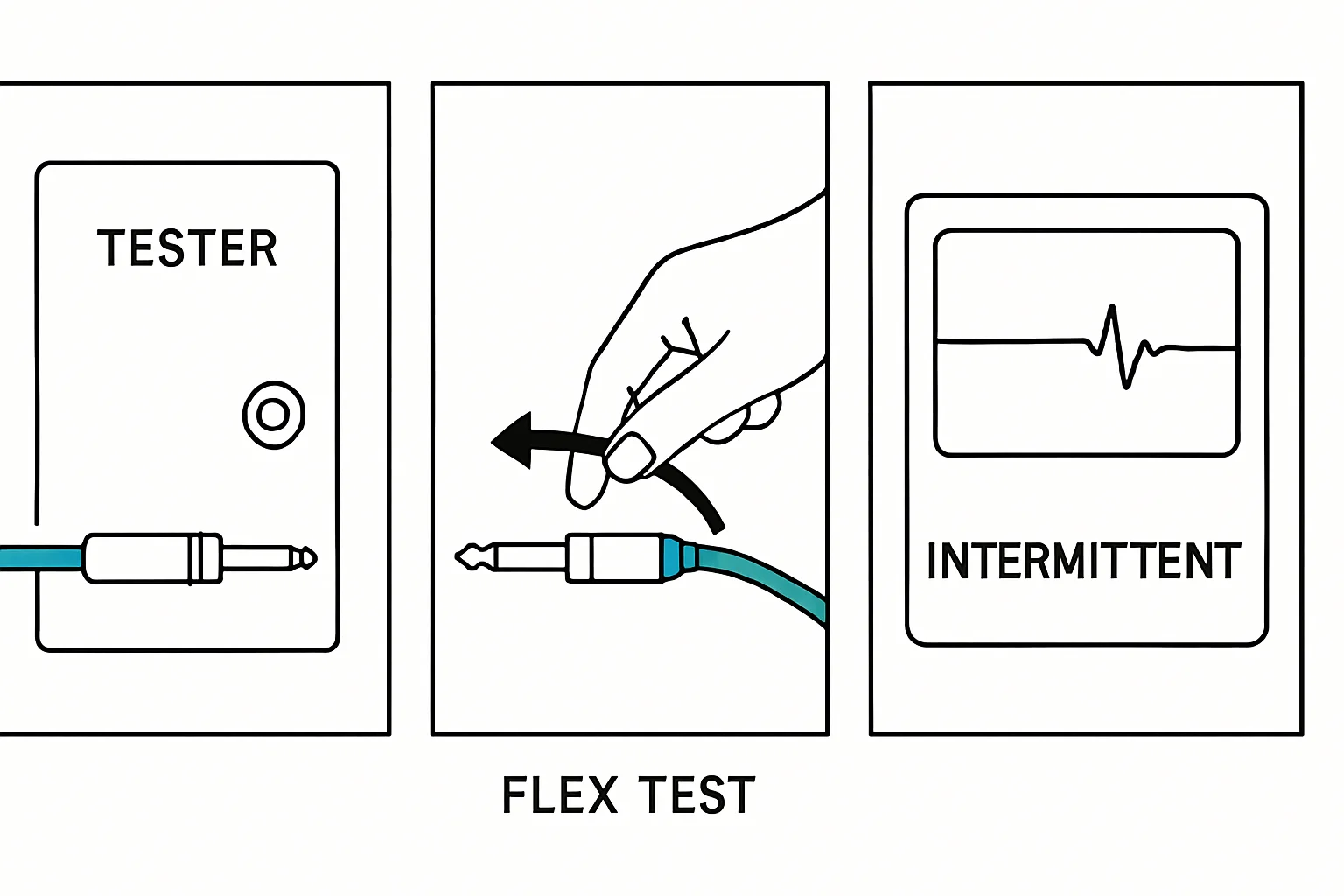
Test the cable disconnected, with a meter or tone on pin-to-pin continuity, and move it. Grip the cable a few inches from one connector and slowly flex it in every direction - bend, twist, push toward the shell, pull away from it - while watching the meter. Work both ends. If the continuity reading drops out or flickers during any movement, you've found it: a broken conductor or failing termination at that spot.
Start the flex test with the connector at the source end. Most intermittent failures live within a couple of inches of a connector, where the strain relief ends and the conductor takes the abuse, so that's the highest-probability ground to cover first.
Mark it the second you find it
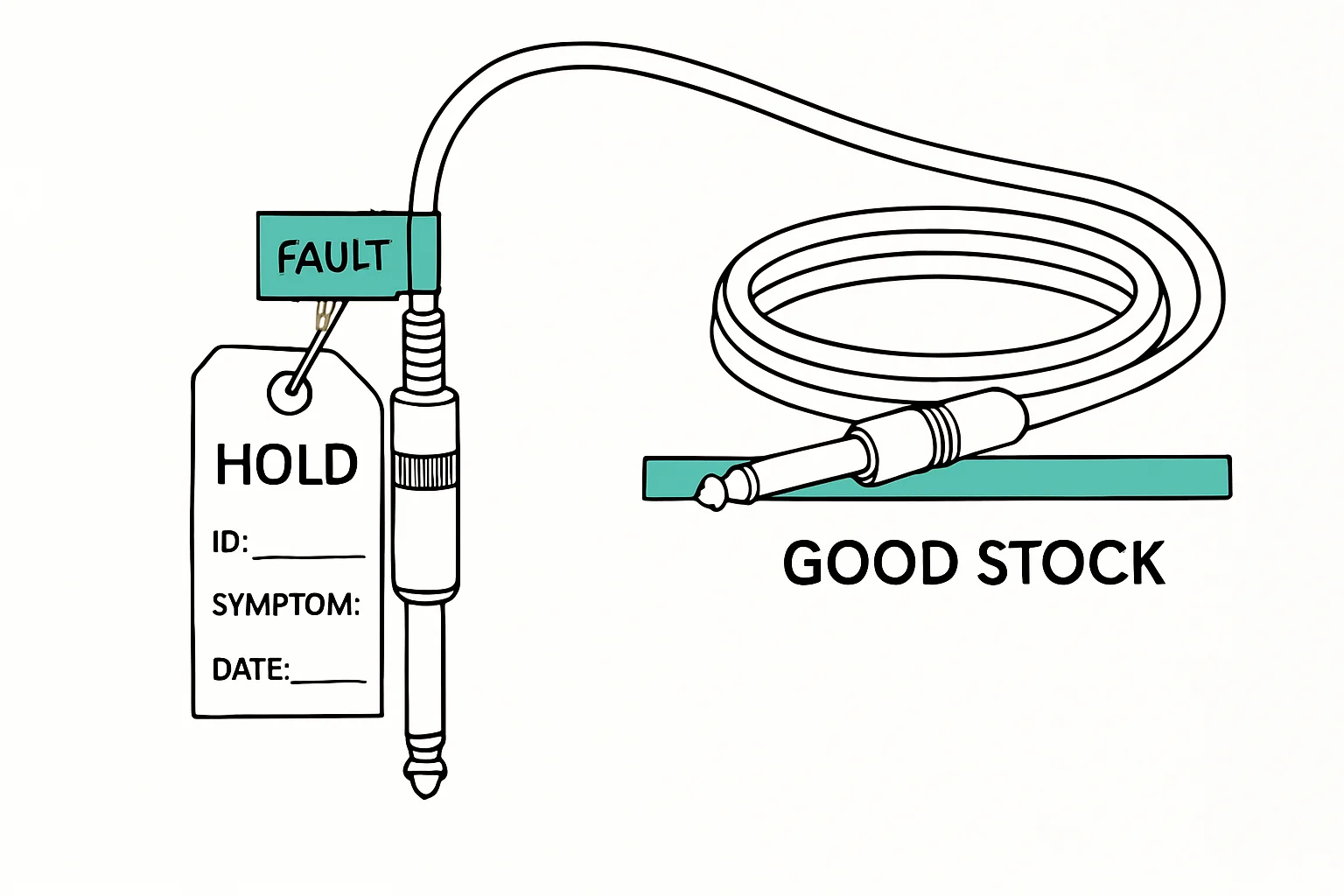
The moment the meter flickers, mark the cable - tape at the fault point. The location you just found will be gone from your memory the second you set the cable down, and re-running the test to find it again is exactly the kind of wasted time this test is supposed to eliminate.
Then what
A cable that fails the wiggle test has two futures: cut back and re-terminate that end, or pull it from service. Because most of these faults sit right behind a connector, cutting back a few inches and re-terminating often saves the whole cable. Either way, no intermittent cable goes back in the case unrepaired - not labeled, not "for non-critical use." Repaired or retired.
Bench takeaway: Meter it while you move it - bend, twist, push, pull both ends - and any cable that flickers gets marked and repaired before it goes back in the case.
Related
Your Cable Looks Fine. So Why Doesn't It Work? · Five Things to Check Before Putting Cables Back in the Case · Course: Build a basic XLR cable