Bench Notes › Articles › Test
Article · 1 min readThe Reversed Wires That Can Make Two Microphones Sound Wrong Together.
By Thomas Popp · Oct 7, 2026
A stereo pair goes up on a source and the result sounds thin and hollow. Solo either mic and it sounds perfectly normal. The room gets blamed, the mixer gets blamed, mic position gets reworked for an hour - and the whole time the fault is two crossed wires in one cable.
Why a single mic sounds fine
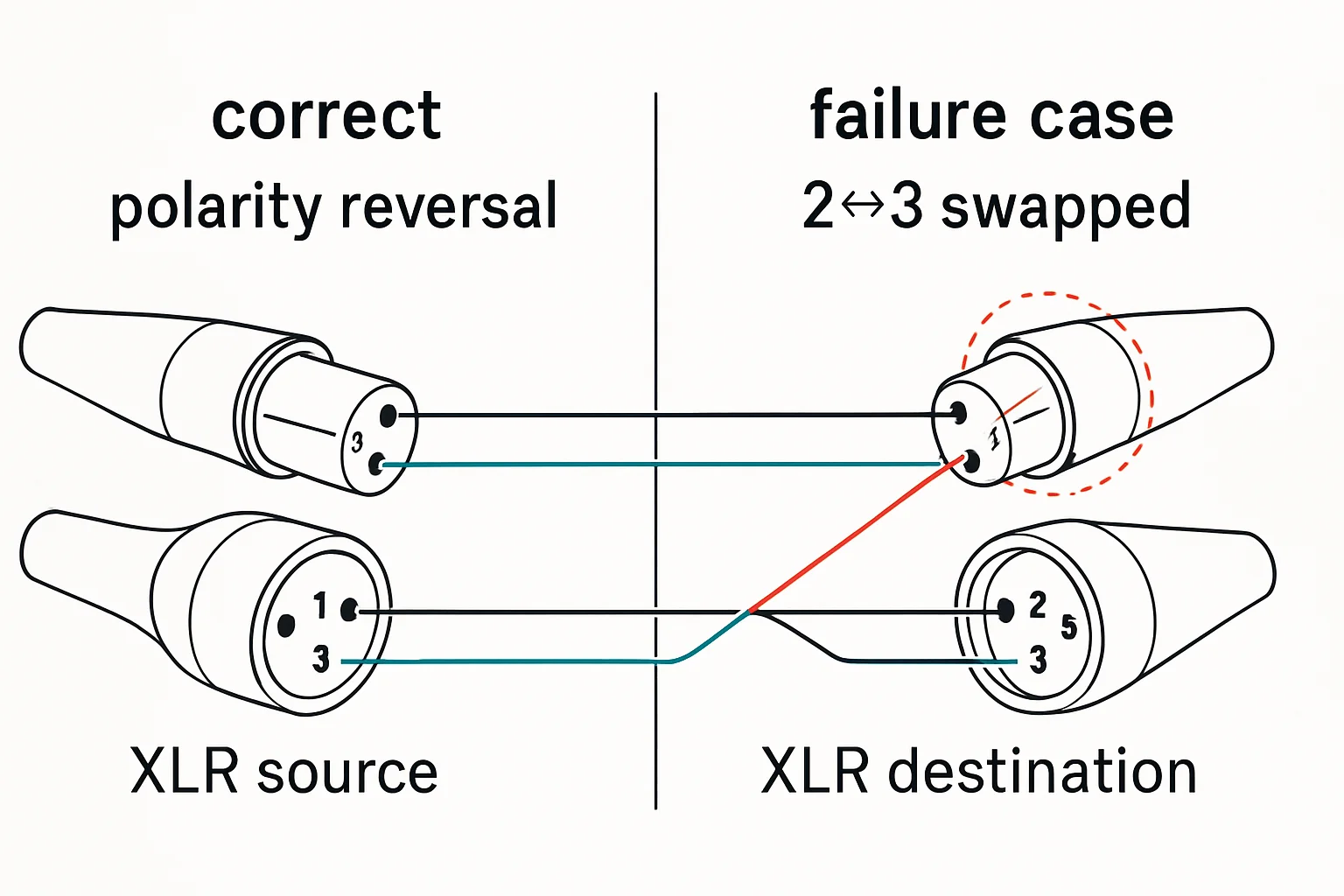
A polarity-reversed cable has pin 2 connected to pin 3 and pin 3 to pin 2 at one end. It still passes a basic continuity beep, because every pin still connects to a pin at the other end. It still carries a clean, full-strength signal, because a single channel doesn't care which conductor the input calls hot - the audio waveform is the same shape, just flipped upside down. One flipped waveform through one speaker sounds identical to the original, so the cable survives every casual listen.
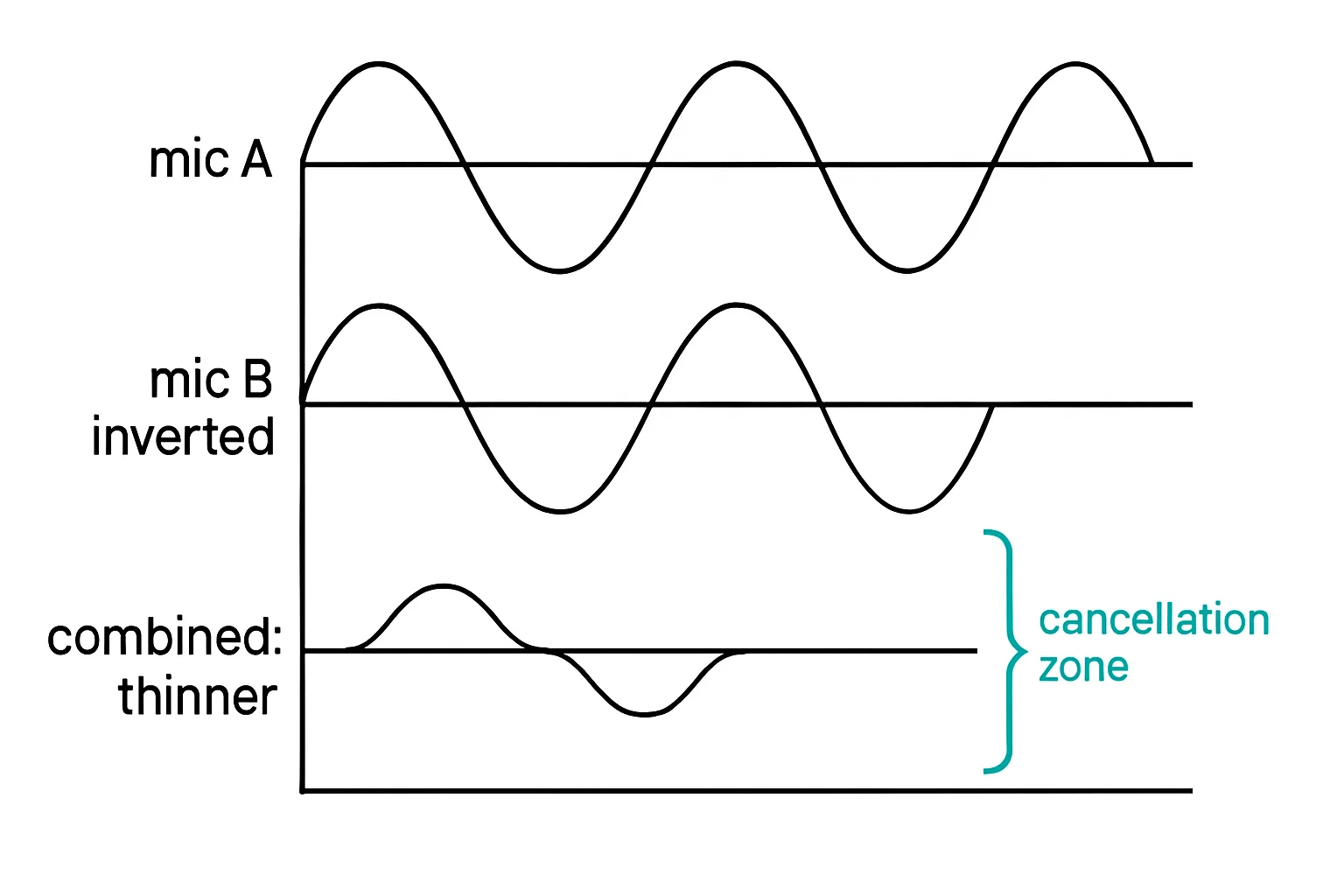
The trouble starts when two correlated signals combine. Put that reversed mic next to a correctly wired one on the same source - a stereo pair, an A/B setup, a doubled channel you're blending - and the two waveforms partially cancel against each other. You lose low end and body first, which is exactly the "thin" or "weird phase" read that sends you chasing mic position and room treatment instead of the cable.
The thirty-second bench test
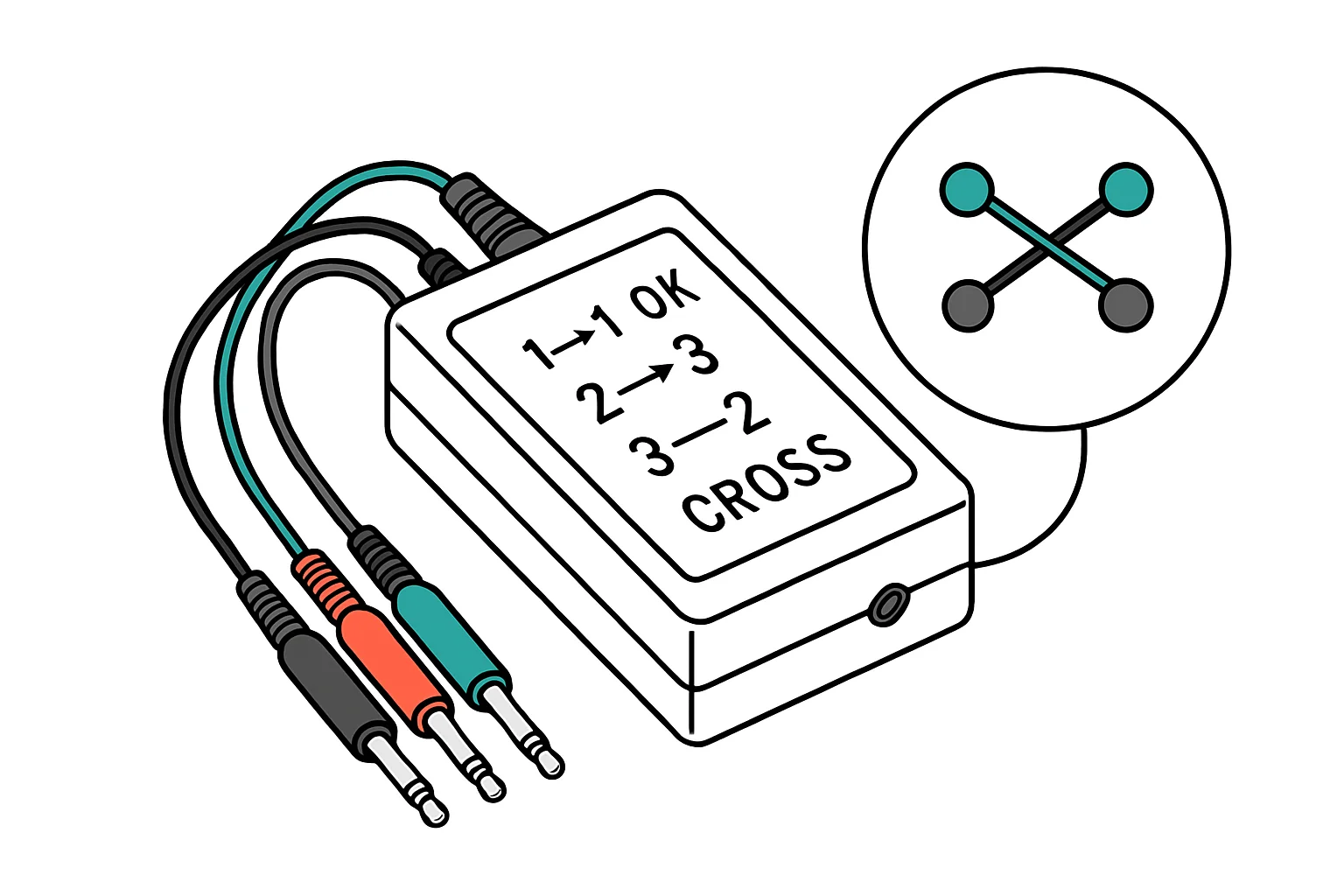
Continuity alone won't catch it, so polarity has to be part of the test every time. Put the meter across pin 2 at one end and pin 2 at the other, then pin 3 to pin 3. Straight through means good. Pin 2 arriving at pin 3 means the cable is reversed - pull it out of service and re-terminate it now, before it ever reaches a shoot. That's the whole fix, and it belongs in the routine from issue 43: pinout, no shorts, polarity, done.
The usual mistake is treating the continuity beep as a full pass. Make polarity a separate step on your bench card and you'll never carry a reversed cable onto set again.
The no-meter field test
Stuck on location with no meter? Do the two-channel test: point two mics at the same loud source (a speaker playing pink noise works), pan both center, and listen while you drop or re-patch one mic. If the bass suddenly comes back when one mic leaves the mix, that mic's cable was reversed. It's not as tidy as a meter, but it settles the argument in seconds and tells you which cable to swap.
bench takeaway: Continuity beeps can't catch a reversed cable - test pin 2 to pin 2 and pin 3 to pin 3, every cable, before every shoot.
Related
Your Cable Looks Fine. So Why Doesn't It Work? · The Wiggle Test: Catching a Cable That Only Fails Sometimes · Course: Build a basic XLR cable