Bench Notes › Articles › Repair
Article · 1 min readThe Repair Log You'll Wish You Started Six Months Ago.
By Thomas Popp · Oct 7, 2026
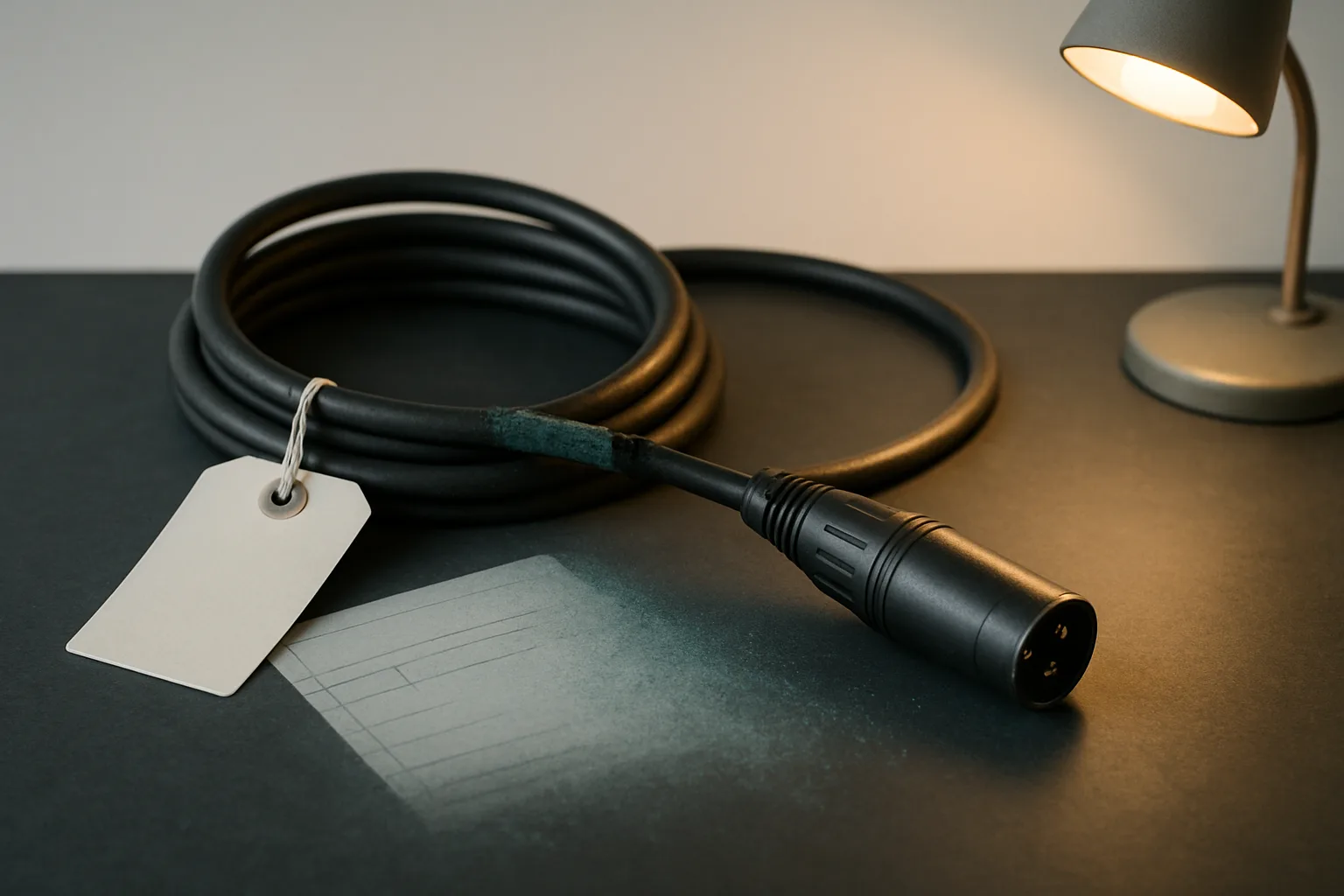
Six months ago you opened that mixer, found the cracked solder joint, reflowed it, and closed it up. Today it's back on the bench with a similar symptom and you remember nothing. Which joint was it? What did you reflow it with - did you even add fresh solder, or just wet the old stuff? Did you replace anything else while you were in there? You get to diagnose it all over again, from zero, on your own time. Every undocumented repair is a repair you'll pay for twice.
Seven fields, three minutes, while the iron is hot
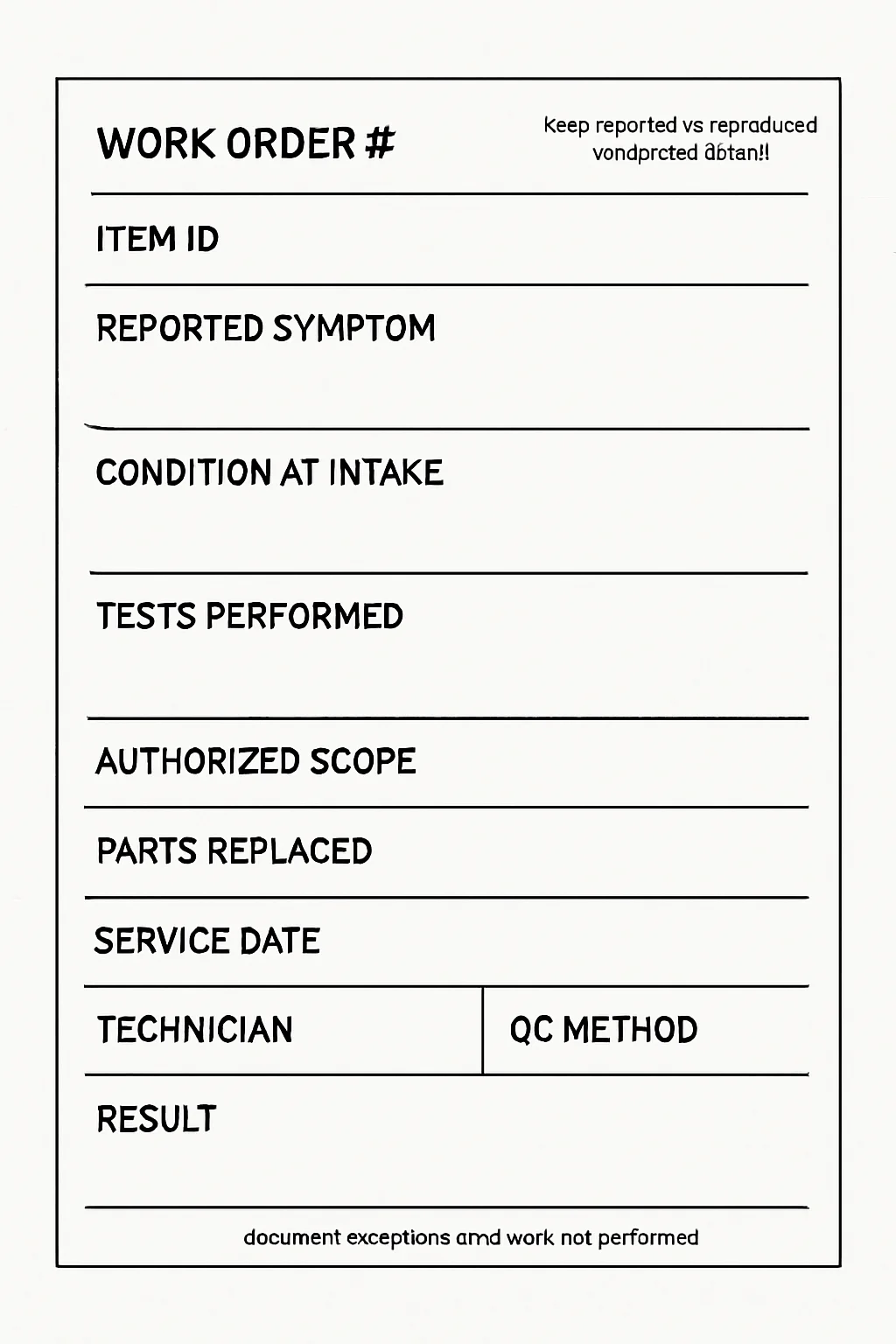
The fix is a template and a habit. Log every repair at the bench, the same seven fields every time: equipment ID, reported fault in the user's words, your bench test results, the approved work scope, parts replaced (with part or PB model numbers), final QC result, and the service date with your initials. It takes three minutes with a printed template, and the right time is while the unit cools - the details are freshest, the iron's already out, and the alternative is "I'll write it up later," which means never.
The equipment ID deserves special attention because the whole system keys off it. Physically label the unit - a durable tag that survives gig bags - so the log entry and the gear match unambiguously. The reported fault goes down in the user's words, not yours, because "it cuts out when it gets hot" and "intermittent right channel" are different failure modes, and your translated version loses the original symptom. The approved work scope matters because benches drift: without it, a "check the connector" job quietly becomes a full recap that nobody authorized, and the log is the only thing that keeps the job honest.
The payoff is compounding
A logbook isn't paperwork for its own sake - it's pattern data. Recurring faults reveal themselves: the same connector failing on the same class of unit tells you to change the build, not the part. Maybe one model of cable always breaks at the same stress point, and the log is what turns six isolated repairs into a design fix. And the next repair on that unit starts with a history instead of a mystery. Half the diagnostic time disappears when you open the binder and read "reflowed U4, replaced C12, passed QC 2027-11-03" instead of starting cold.
None of this works if the log lives only in your head or on a bench napkin. A napkin doesn't exist. File it so it survives the gig: a binder, or a shared spreadsheet with the equipment ID as the lookup key, so anyone on the crew can pull the unit's history before they open it. The log you can't find on the gig is the log you never wrote.
Bench takeaway: seven fields, written while the unit cools, keyed to a physical equipment ID - because every repair you don't document is a repair you'll do twice.
Related
The Buzz You Hear Might Not Be Coming From the Microphone · Why Your Connector Keeps Coming Loose · Course: Build a basic XLR cable