Bench Notes › Articles › Test
Article · 1 min readThe Quarterly Cable Audit That Can Prevent Show-Day Surprises.
By Thomas Popp · Oct 7, 2026
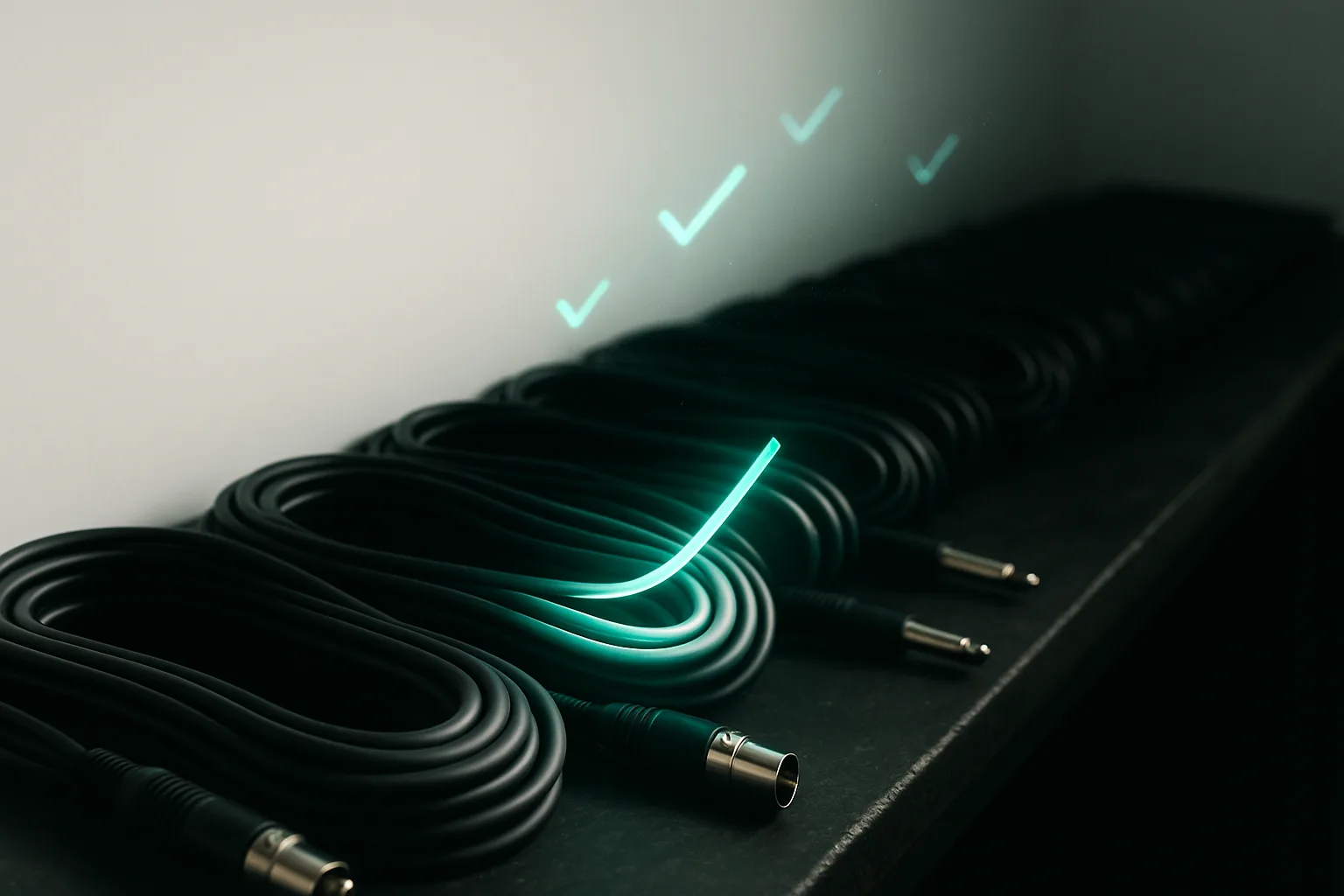
Cables don't usually die dramatically. They degrade: an intermittent short that only shows up when the cable is bent a certain way, a strain relief that has worked loose from months of yanks off the cart, shield strands fatiguing one by one until the shield is a suggestion. Each one is invisible on a casual coiling. Then one of them fails on the one day you can't afford it, and you swear you'll "go through them all" later. Later never comes.
The batch routine
The audit doesn't have to be fancy, but it does have to be scheduled. Once a quarter, pull every mic cable off the wall and run each through a tester - or a meter with the full routine: continuity 1-1, 2-2, 3-3, no shorts between pins, polarity pin-2-hot per the vault standard. Log the result against each cable's ID as you go: pass, or fail with the failure mode written down.
When a cable fails, it goes straight into a labeled quarantine box with the failure written on the tag - red tag, failure, date, your initials. Not back into the pile "for later." The pile is where failures hide; the quarantine box is where they wait for repair or retirement. The distinction matters more than the container.
Work in rotation, not in one heroic Saturday
Audit the daily-use cables this quarter, the turnarounds and adapters next quarter, the spares after that.
Prioritize the cables that earn their keep first - your most-used lengths, then the rest - so the high-risk ones never slip. Small, regular batches actually get finished. The "test everything Saturday" plan collapses by noon because it's too much work to start, and the only audit that prevents surprises is the one that actually happens.
Let the failure log pay for itself
Over a few quarters, the log becomes genuinely useful data. You'll see which lengths fail most - maybe the 50-footers that get dragged across floors keep dying at the strain relief - and which cable stock wears out fastest. That's not trivia; it's your next purchase order written by evidence. When the budget conversation comes around, "we lose two 50-foot mic cables per quarter to strain-relief failure" beats "I think we need more cables" every time. The audit sheet from this issue's subscriber extra gives you the columns to capture it: cable ID, type, length, pins tested, pass/fail, failure mode, disposition.
bench takeaway: Test in rotation every quarter, quarantine every failure with a tagged note, and let the failure log tell you what to buy next.
Related
Your Cable Looks Fine. So Why Doesn't It Work? · The Wiggle Test: Catching a Cable That Only Fails Sometimes · Course: Build a basic XLR cable