Bench Notes › Articles › Teach
Article · 1 min readThe Production Bench Master Checklist: 12 Habits Worth Keeping.
By Thomas Popp · Oct 7, 2026
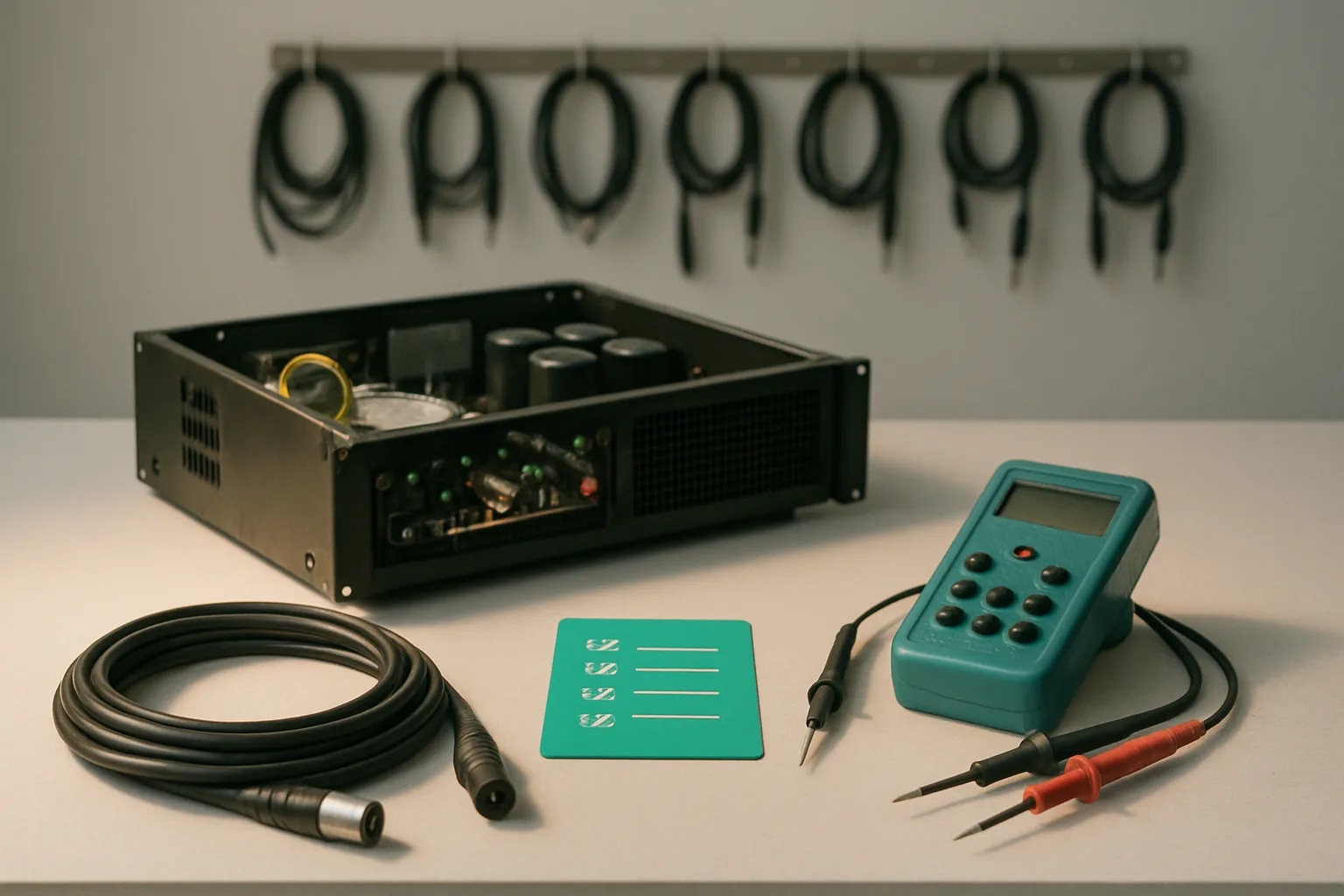
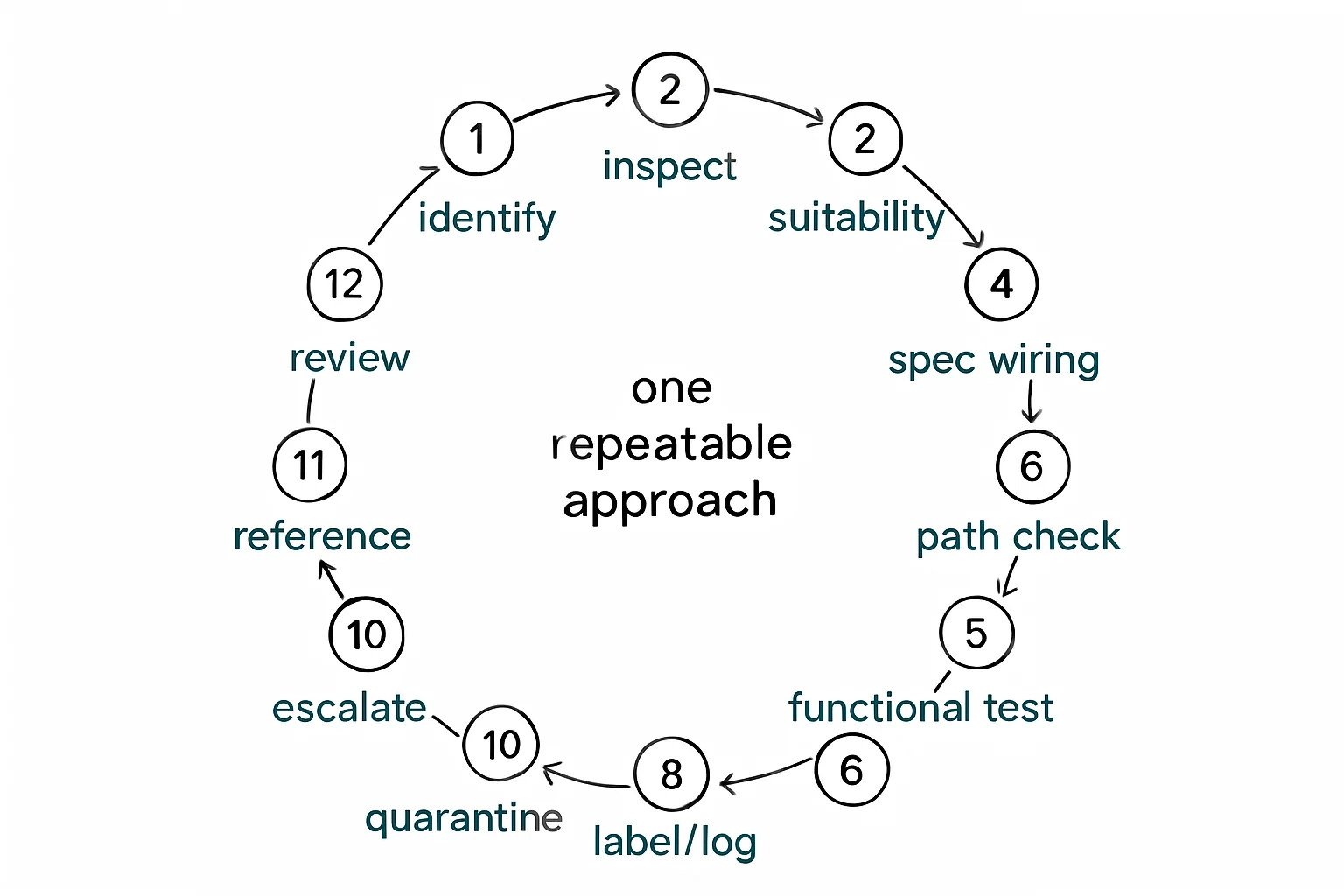
Two years of Bench Notes comes down to this: reliability isn't a piece of gear, it's a set of habits. The techs whose kits work every time aren't lucky - they inspect, test, label, and log. Here are the strongest of those lessons as one reusable workflow, grouped by where they bite.
Before every use
Inspect before you pack - look at the cable, don't assume its history. Continuity-test every cable: 1-to-1, 2-to-2, 3-to-3, no shorts between pins. Verify polarity - pin 2 hot, every time - because a continuity beep won't catch a reversed cable and your stereo pair will tell you about it on set instead. Label every cable with a unique ID so anyone can read it and log it. And quarantine failures immediately, tagged with what failed and when - a failure back in the pile is a failure waiting for its second chance to ruin a show day.
Power discipline
Check wiring before applying 48 V to anything unfamiliar - phantom's whole scheme depends on the pinout being exactly right, and a lifted shield or partial short breaks its assumptions. Never hot-patch with phantom on if you can avoid it; power off before you touch the connector so a spike can't reach anything downstream. And keep ribbons and vintage gear on the no-phantom list unless the manual explicitly says otherwise - most vintage ribbons can be damaged by 48 V, and that is not a lesson to learn from experience.
Reference and logging
Keep one verified reference cable for troubleshooting, off the daily-use pile, stored apart and used only to answer "is it the cable or the gear?" Audit in quarterly batches - highest-use cables first, rotation over heroic Saturdays - because small regular batches actually get finished. Log everything in one shared inventory with a unique ID per cable, so anyone can pack the truck without you. And re-verify the reference cable on the same quarterly schedule - even the reference takes abuse, but yours gets re-tested on a calendar while the pile doesn't.
None of these take long. Together, they're the difference between a show day and a show-day surprise.
bench takeaway: Print the master card, pin it where the cables live, and run all twelve the same way every time - habits survive where the work happens.
Related
Teach a Student to Test a Cable Without Guessing · Your Cable Looks Fine. So Why Doesn't It Work? · Course: Build a basic XLR cable