Bench Notes › Articles › Build
Article · 1 min readThe One Thing Everyone Forgets Before Soldering.
By Thomas Popp · Oct 7, 2026
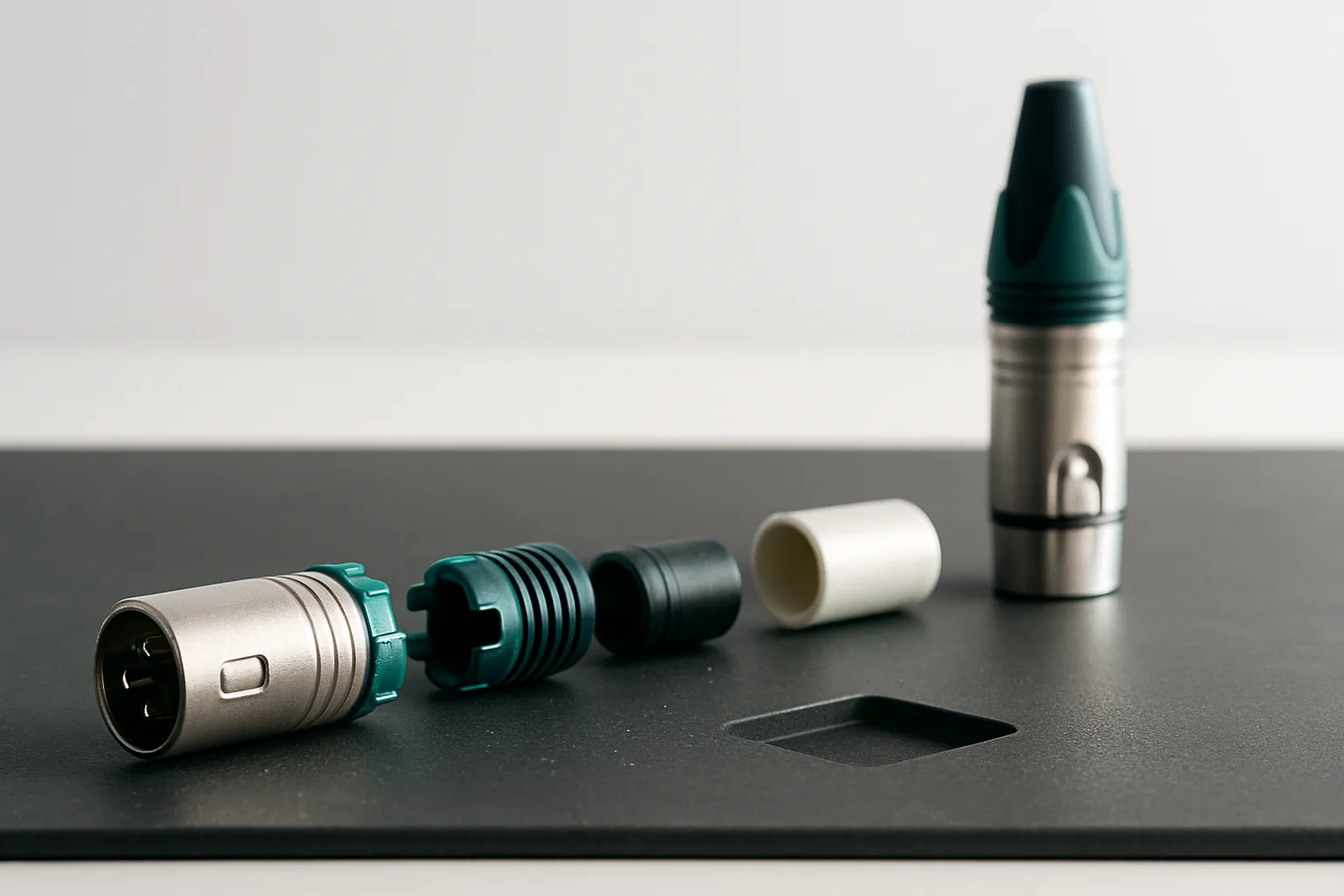
Everyone has done it. You lay perfect beads on three XLR pins, admire your work, reach for the connector shell - and it is sitting on the bench, empty. The cable ends are soldered, the shell cannot get on anymore, and your beautiful joint work is about to be desoldered and redone. Every connector body, boot, sleeve, and piece of heat shrink has to be loaded onto the cable BEFORE the first wire is terminated. No exceptions.
The order that never fails
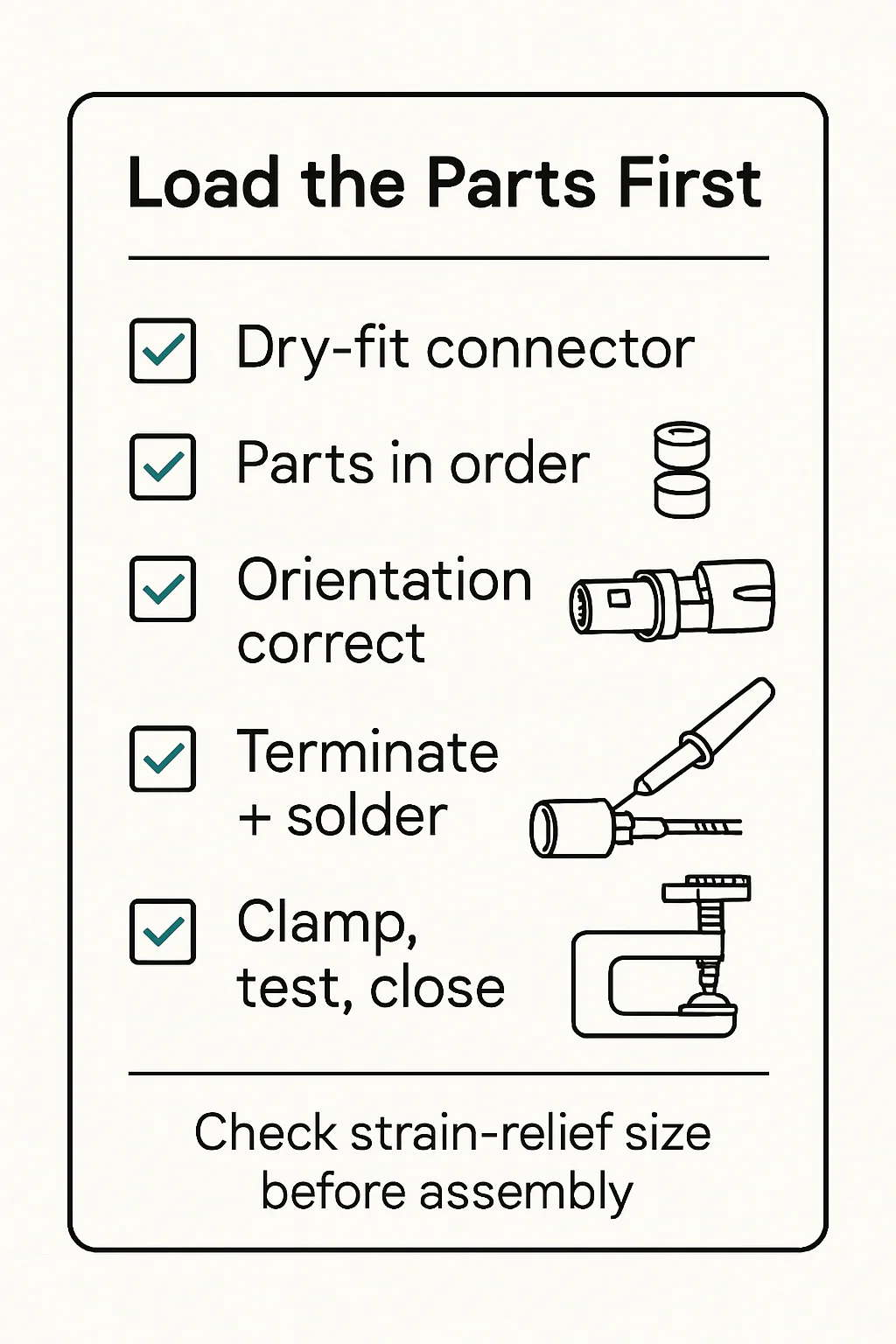
Work in this order and it never happens again: strip the cable, then slide the shell, boot, sleeve, and heat shrink onto the cable - in assembly order, right now, before you touch the iron. Tin the wires, solder the pins, slide the parts up into position, tighten, and test. The order is not arbitrary: a Neutrik XLR shell, a right-angle TRS boot, and a length of adhesive heat shrink all share one trait. Once the conductors are soldered to the pins, there is no way to thread them on without desoldering the whole job.
Make it a physical ritual, not just a remembered intention. Lay the parts out in a row next to the connector, count them, then thread them on. If you build with a checklist, put "parts loaded?" as step zero - before stripping, before tinning, before anything. Step zero is the right place for it because the mistake is only cheap to fix before any other step happens. After the iron is involved, the fix costs you a full rework.
The heat-shrink trap
Heat shrink has its own version of this mistake, and it is subtler. Slide it on with the shrink positioned far back from the solder point, and keep a spare length on the bench. Heat from the iron will start to shrink it early if it creeps too close, and a half-shrunk sleeve is trash - it cannot be un-shrunk, stretched, or salvaged. Position it back, out of the heat zone, and only bring it forward once the joint is cool and tested.
It is worth noting that this whole class of mistake - forgetting the shell, creeping the heat shrink - has nothing to do with soldering skill. The most experienced builders on the bench make it when they are in a hurry. That is exactly why the ritual matters more than memory: parts laid out in a row and counted is a system that survives a bad day. Relying on your memory of the order is a system that fails on one.
Bench takeaway: the shell goes on before the iron comes out - build the ritual, not just the cable.
Pinout reference
| Pin | Carries |
|---|---|
| T | Hot (+) |
| R | Cold (−) |
| S | Shield |
| Pin | Carries |
|---|---|
| 1 | Shield / chassis reference |
| 2 | Hot (+), non-inverting |
| 3 | Cold (−), inverting |
Related
The XLR Wiring Mistake That Keeps Coming Back · Bad Solder Joints: What to Look For Before They Fail · Course: Build a basic XLR cable