Bench Notes › Articles › Repair
Article · 1 min readThe Five-Minute Cable Emergency Kit.
By Thomas Popp · Oct 7, 2026
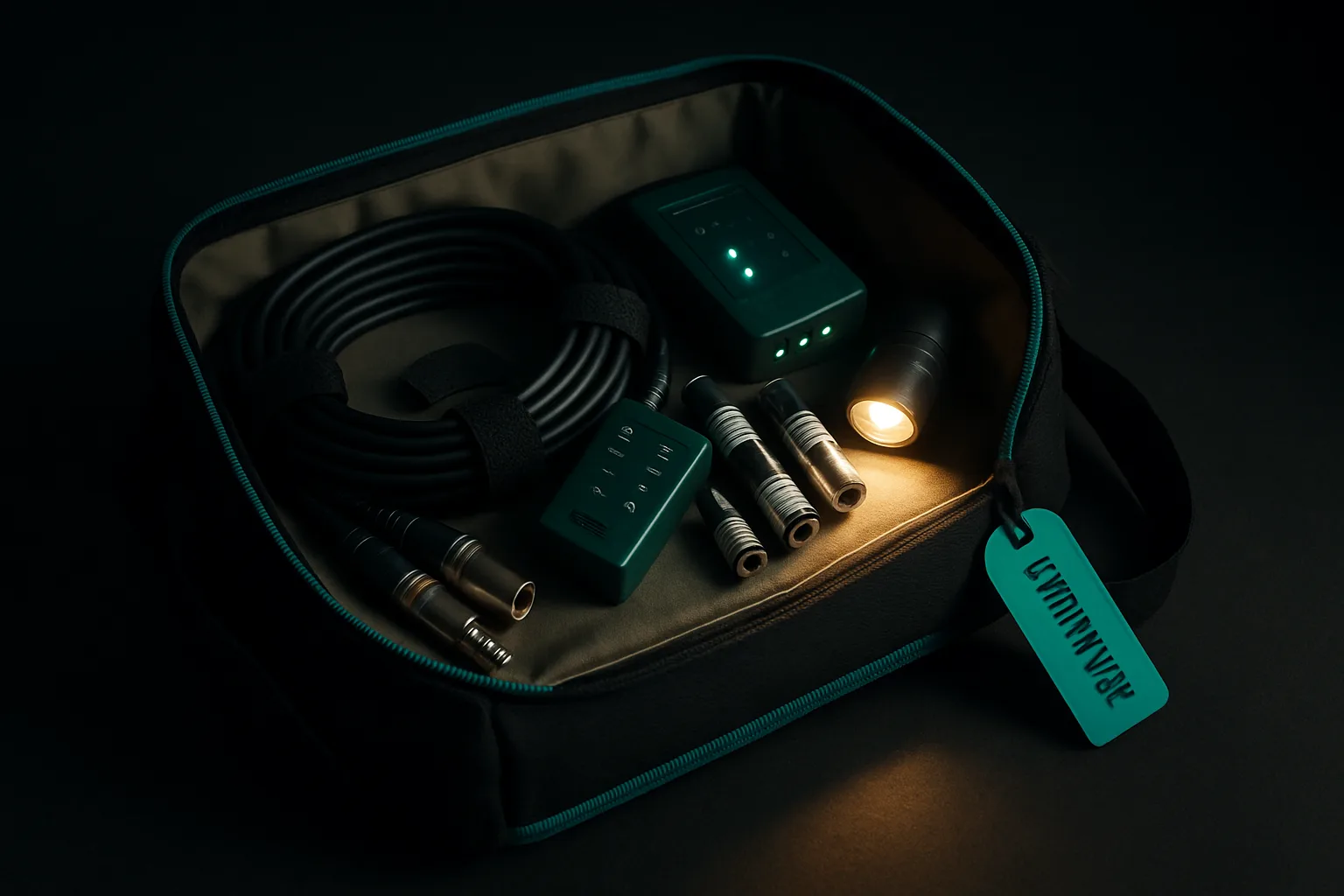
Every failure happens at the worst moment - load-in is finished, the client is standing behind you, and a channel dies. What separates a two-minute fix from a dead channel for the whole show is not skill; it's whether the spare you need is already in a bag by the door. A real emergency kit isn't a box of random cables. It's a curated set where every item is known-good, labeled, and in the same place every time, so a stressed operator can find it with a headlamp and one free hand.
What's in the bag
Think in categories, and stock only what your productions actually use. Signal cables: two or three known-good short XLRs and a couple of TRS - short runs are the ones that fail most and get borrowed most. Turnarounds:
XLR male-male and female-female, the cheapest insurance in the bag. Adapters: XLR-to-TRS and whatever small adapters your shows rely on - the ones that are impossible to buy at 6 PM in a strange city. Labeling supplies: gaffer tape, a permanent marker, and pre-made cable ID tags, because the spare that fixes the show should go back in the kit marked, not anonymous. Then the tools: a compact cable tester, flush cutters, small screwdrivers, tweezers, and a headlamp. The headlamp earns its place the first time a jack panel goes dark and both your hands are on the tester.
"Known-good" has an expiration date
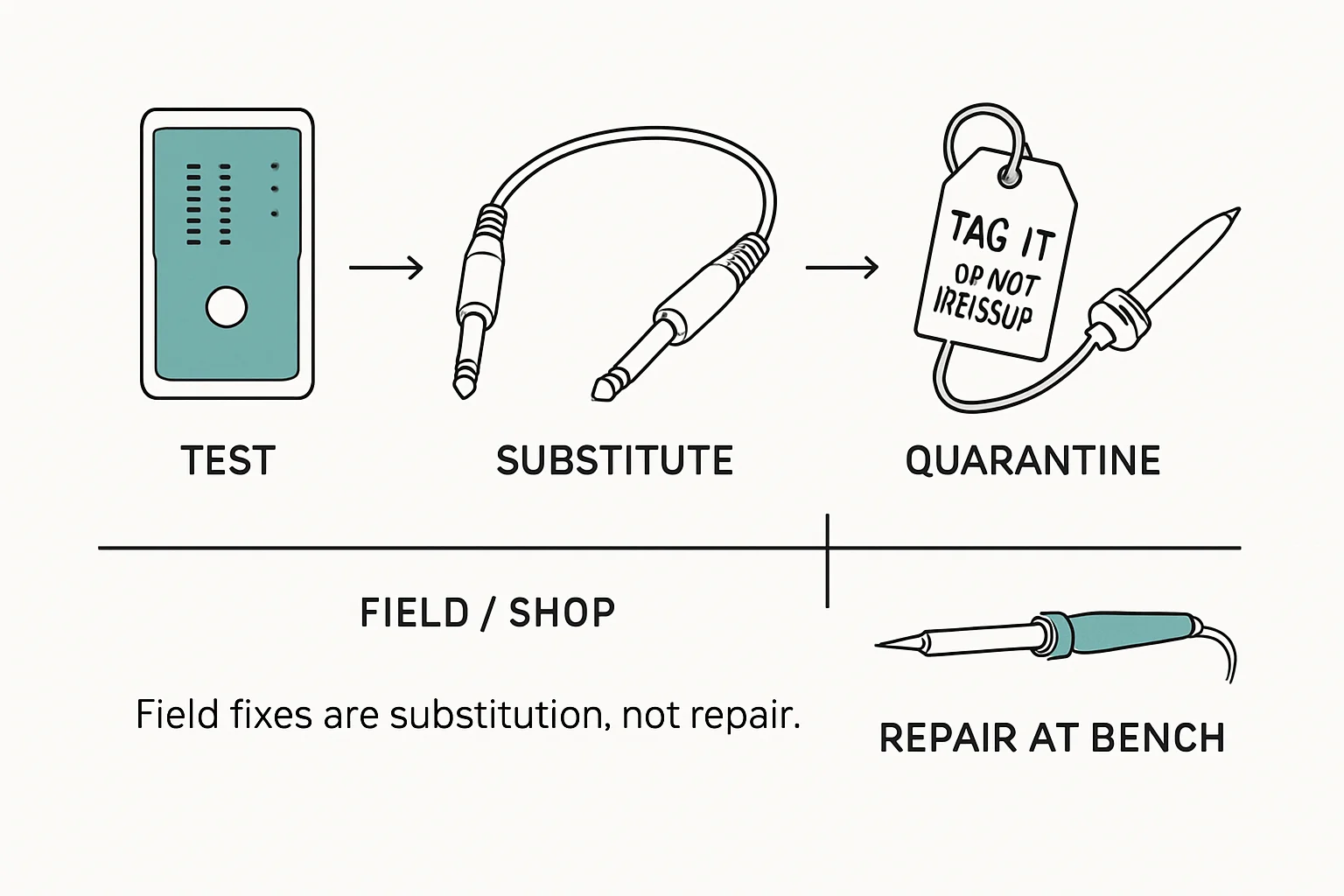
This is where most kits quietly fail. Cables get borrowed for a quick fix, tossed back in without testing, and the kit fills up with spares of unknown condition - a heavier box of mysteries, not a rescue bag. The rule: pull the kit once a month and re-test every cable on the tester. Anything that fails leaves the kit the same day, no "I'll fix it later" pile. Log the test date on the packing card so you can see at a glance whether the bag you're grabbing has actually been checked recently. A five-minute monthly habit is the difference between reaching for a spare and reaching for a gamble.
The after-show ritual
Kits also die by slow attrition: an adapter walks off with a guest engineer, a marker dries out, the spare TRS ends up living in someone's gig bag. The fix is boring and it works - tape a laminated copy of the packing list to the inside of the bag lid, and after every show, check the kit against the card before it goes back on the shelf. Anything missing gets hunted down immediately, while the show is still fresh in everyone's mind. Missing items are discovered at the next load-in, never at the one after. If a kit loses an item at every show for six months, there is no kit left - just a bag.
Bench takeaway: An emergency kit isn't what you own, it's what you maintain - test it monthly, inventory it after every show.
Pinout reference
| Pin | Carries |
|---|---|
| T | Hot (+) |
| R | Cold (−) |
| S | Shield |
| Pin | Carries |
|---|---|
| 1 | Shield / chassis reference |
| 2 | Hot (+), non-inverting |
| 3 | Cold (−), inverting |
Related
The Buzz You Hear Might Not Be Coming From the Microphone · Why Your Connector Keeps Coming Loose · Course: Build a basic XLR cable