Bench Notes › Articles › Reference
Article · 1 min readThe Adapter Tower Hanging Off Your Camera Is a Disaster Waiting to Happen.
By Thomas Popp · Oct 7, 2026
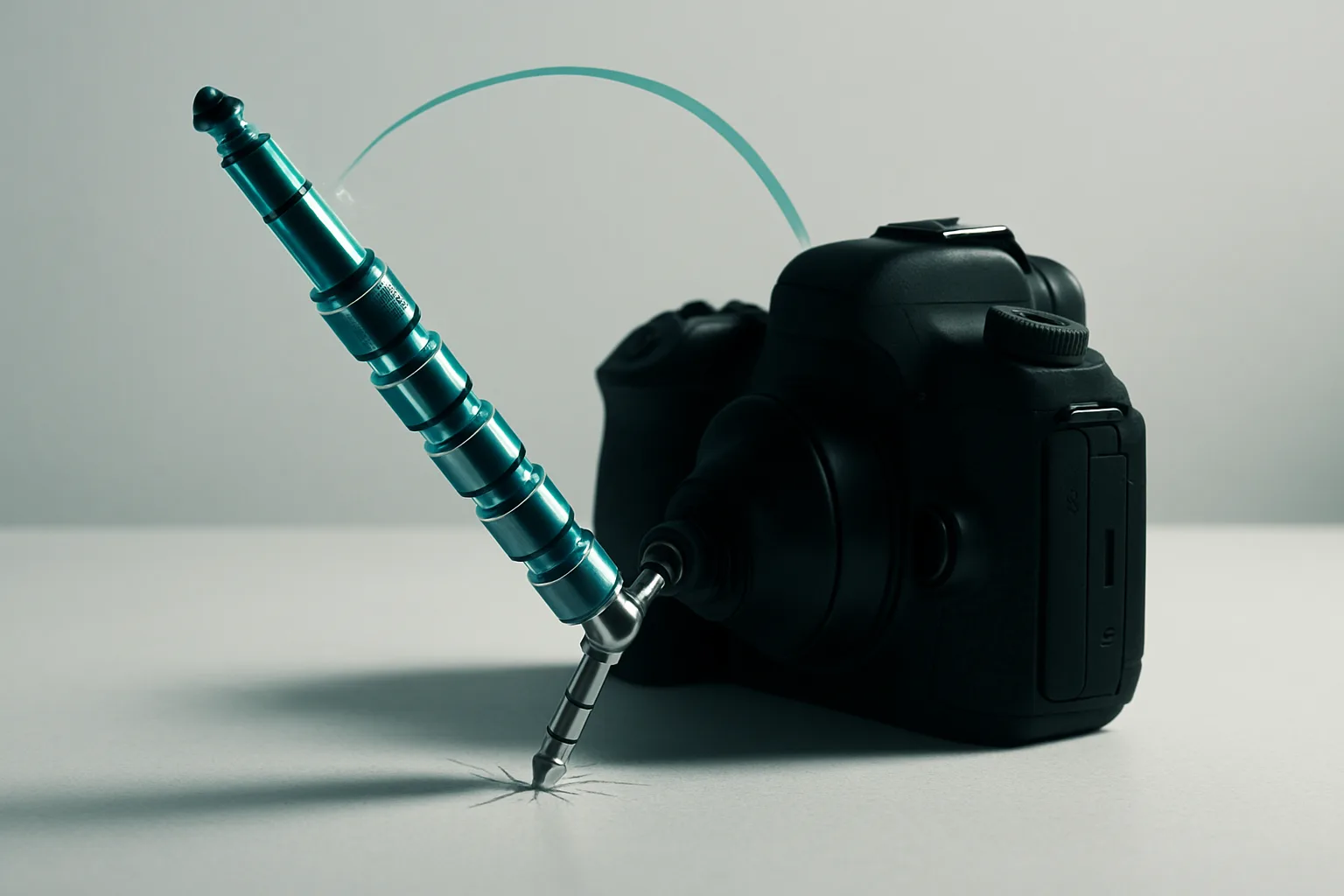
Picture the rig: XLR-to-quarter-inch-to-3.5mm, three adapters deep, hanging off the camera's audio input and swaying every time the operator moves. It works, so nobody touches it. But every adapter in that stack adds length, and length adds leverage. The modest weight of the connectors multiplies into real torque on the camera's jack, and it does it constantly - not just on the bump you're afraid of, but on every step, every pan, every handoff of the camera. One good knock and you're not replacing an adapter. You're replacing a PCB-mounted input socket, which means opening the body, and the repair bill dwarfs the cable you were too lazy to build.
Why vibration is worse than the one big bump
Everyone pictures the disaster scenario: the rig gets knocked against a doorframe and the jack snaps. That happens. But the quieter killer is vibration. Run-and-gun work feeds the connector a constant stream of micro-movement - handheld shake, footsteps, the operator shifting grip. Each adapter joint in the stack is another pivot point amplifying that movement at the jack. Vibration kills jacks before shock does, because it never stops; it's thousands of tiny bending cycles on the solder joints inside the camera instead of one dramatic event. A stack that "survived" six months of handheld work may have fatigued the socket the whole time, so the eventual failure looks sudden when it was actually cumulative.
One cable, two connectors, zero leverage
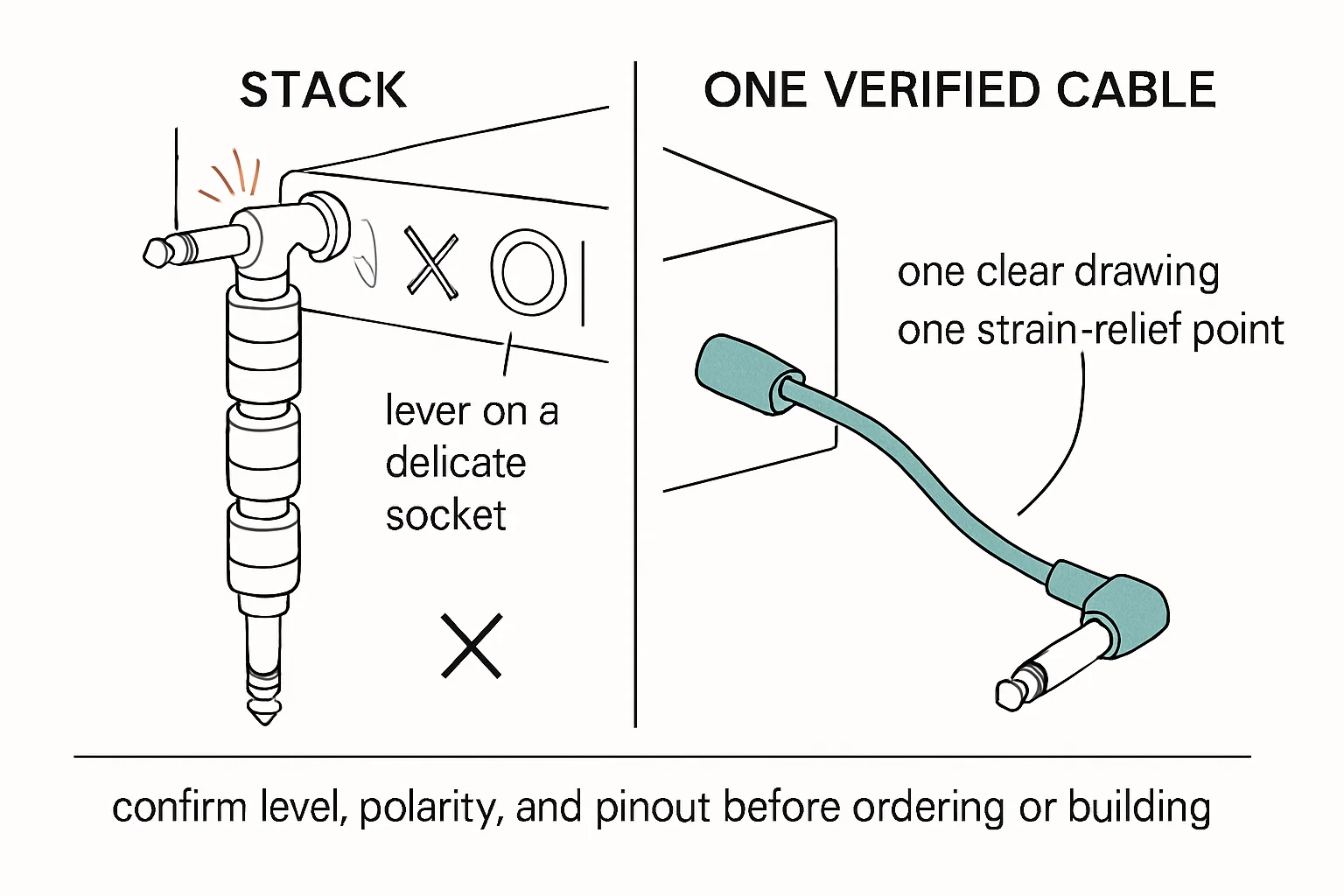
The fix is to replace the adapter stack with one purpose-built cable. If the camera wants a 3.5 mm TRS and the mixer hands you a TA3, build or order a single TA3-to-TRS cable instead of bridging with adapters. The vault carries 115 cables with PB model numbers covering exactly these combinations, pinout-verified - the common stacks are already solved and don't need reinventing. One cable, two connectors, zero leverage: the connection goes from a swaying tower to a single short run that weighs almost nothing at the jack.
When you do reach for a connector, reach for the smallest footprint you can. A right-angle XLR and a TA3 mini-XLR are the two smallest-footprint connectors worth keeping on the bench for this job. The right-angle exit matters: when the cable leaves the connector along the camera body instead of sticking straight out, the lever arm collapses and the whole connection profile drops.
When an adapter is genuinely unavoidable
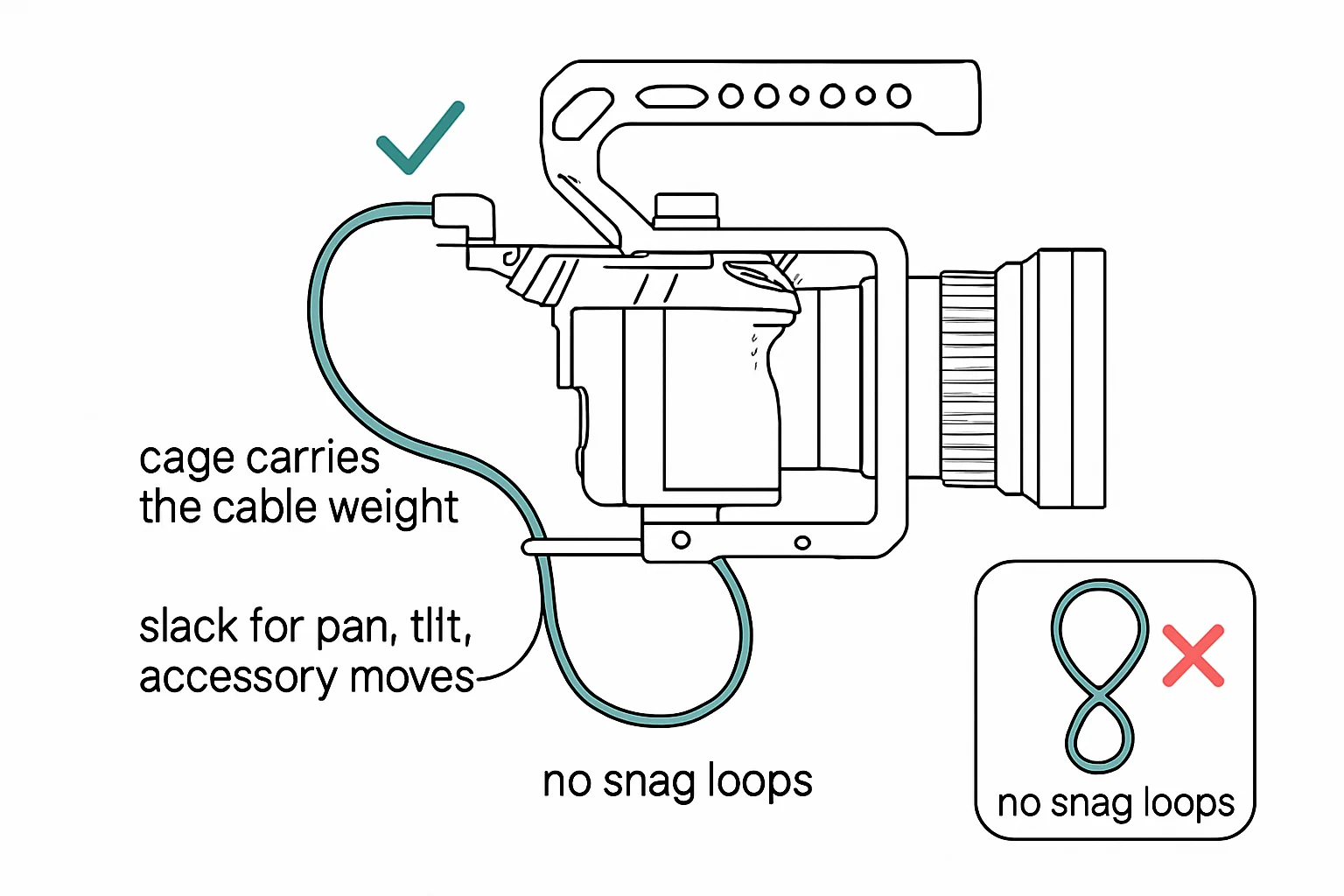
Sometimes the one-off gig doesn't justify a new cable and you have to adapt. In that case, make the single adapter a right-angle one, and tie the cable off to the rig or cage within a few inches of the jack so nothing hangs from the connector itself. On run-and-gun rigs, a zip-tie loop on the cage that the cable passes through before reaching the jack works beautifully - it absorbs the constant micro-movement of handheld work before it reaches the socket. It's ugly, it takes ten seconds, and it saves input sockets. The rule underneath both tricks is the same: the connector is a signal contact, and its job is to never know the cable has weight.
Bench takeaway: every adapter is a lever on your camera's jack - replace the stack with one purpose-built cable, and if you must adapt, go right-angle and tie off to the cage.
Pinout reference
| Pin | Carries |
|---|---|
| 1 | Ground |
| 2 | Bias, +5 V DC |
| 3 | Audio |
| 4 | Tied to pin 3 through a resistor (per Shure wiring guide) |
| Pin | Carries |
|---|---|
| T | Hot (+) |
| R | Cold (−) |
| S | Shield |
Related
Stop Using Mystery Cables: A Labeling System That Works · Your Cable Isn't a Garden Hose: Learn the Over-Under Coil · Course: Build a basic XLR cable