Bench Notes › Articles › Repair
Article · 1 min readTake These Four Photos Before You Repair Anything.
By Thomas Popp · Oct 7, 2026
The most expensive argument in a repair shop isn't about the fix - it's about whether that scratch, that bent pin, that cracked connector housing was already there when the gear arrived. Memory is unreliable, stories drift, and "I'm sure it was like that when it came in" loses to a timestamped photo every time. Intake photography protects both sides of the counter: the owner can't be charged for pre-existing damage, and you can't be blamed for it. Five minutes at intake saves a five-day argument later, and it costs you nothing but discipline.
The four shots, every time
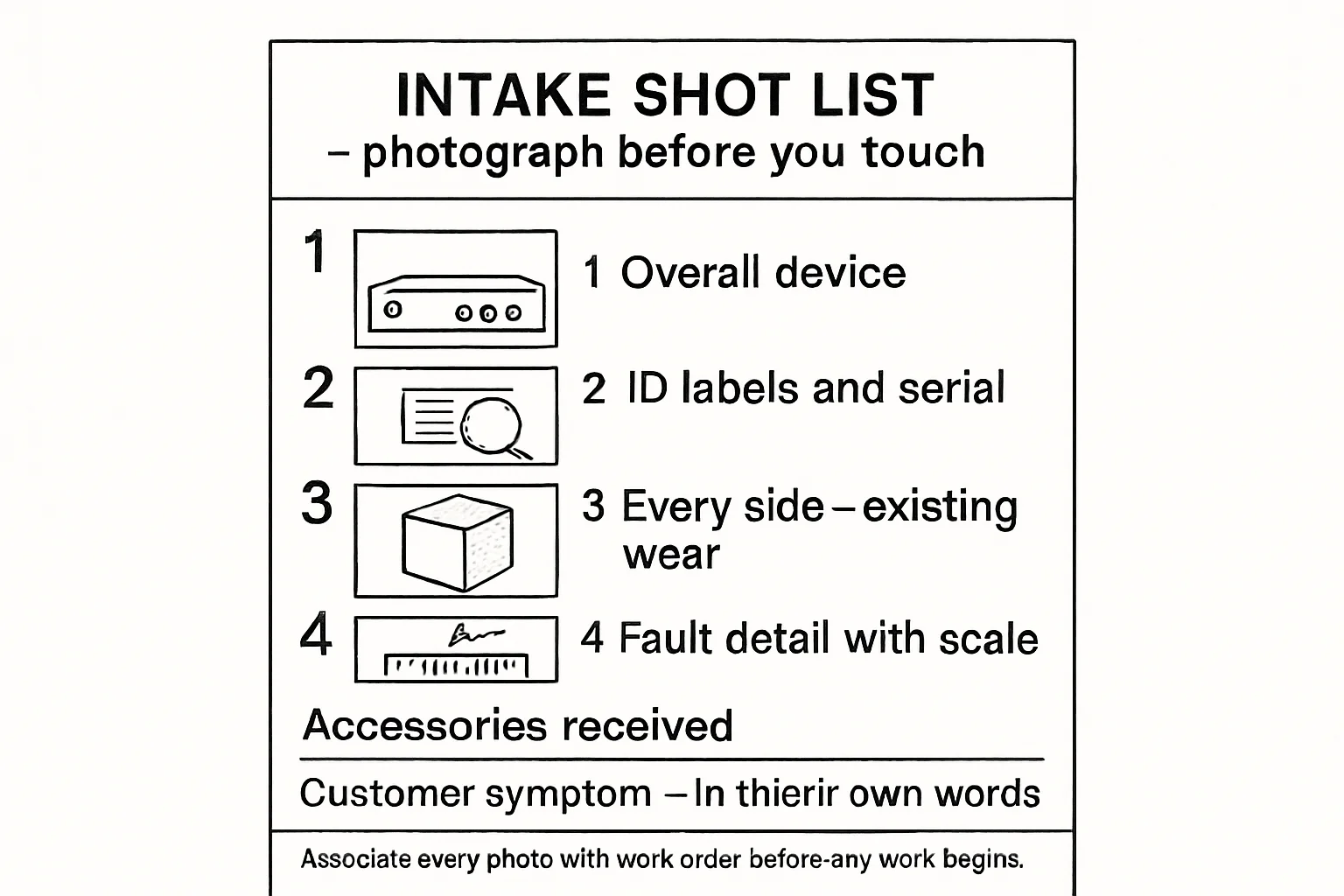
Make this a non-negotiable ritual before any repair begins - before you pick up a screwdriver. Shot one: the full item, as received, showing its overall condition in one frame. Shot two: any existing damage in close-up - dents, scratches, cracked housings, worn paint at the exact spot. Shot three: connector detail - bent pins, corrosion, wobbly barrels, the mating faces that take the abuse on every cable swap. Shot four: the ID markings - make, model, and serial number, legible in the frame. The serial number shot is the one people skip and the one that matters most when a unit's identity is disputed later. No repair, no teardown, no bench time until all four are filed.
Make the photos actually useful
A blurry photo of a scratch proves nothing. Give the close-ups good light - a headlamp or bench light angled across the damage shows texture that flat overhead light hides. Hold the camera still or set the item on the bench so you're not shooting one-handed in the dark. And put a scale reference in the damage shot: a coin or a small ruler next to the scratch. "Small scratch" is an opinion; a scratch measured against a quarter is a fact, and it makes the before-and-after comparison unambiguous when the repair is done. Date-stamped, consistent filenames do the rest - something like item-serial plus the date, so the photos sort themselves when a dispute surfaces months later.
File before you touch
Photos that live on a phone camera roll might as well not exist when the question comes up. Timestamp everything and attach the set to the work order before the repair begins - a shared folder per job, or the ticket system your shop uses. The discipline is the filing, not the photographing: an unattached photo set is just as lost as a missing one when the owner asks what happened to their gear. This applies to the quick "just tighten this connector" jobs most of all - the five-minute favor is exactly the job with no paperwork and the highest chance of a disputed scratch.
Bench takeaway: Four photos, filed with the work order, before the screwdriver - full item, damage, connectors, serial number.
Related
The Buzz You Hear Might Not Be Coming From the Microphone · Why Your Connector Keeps Coming Loose · Course: Build a basic XLR cable