Bench Notes › Articles › Reference
Article · 1 min readStop Pulling the Cable When You Mean to Unplug It.
By Thomas Popp · Oct 7, 2026
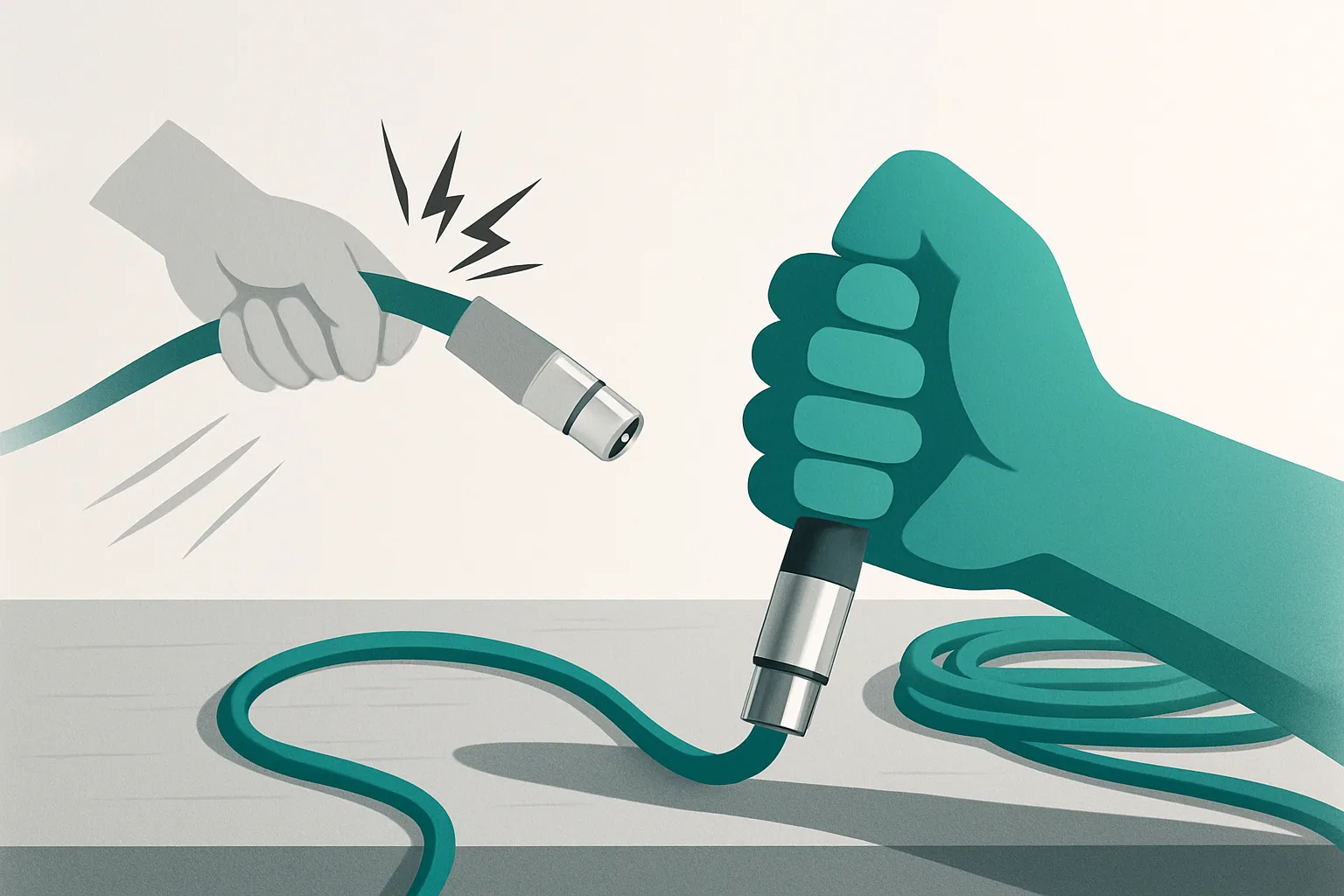
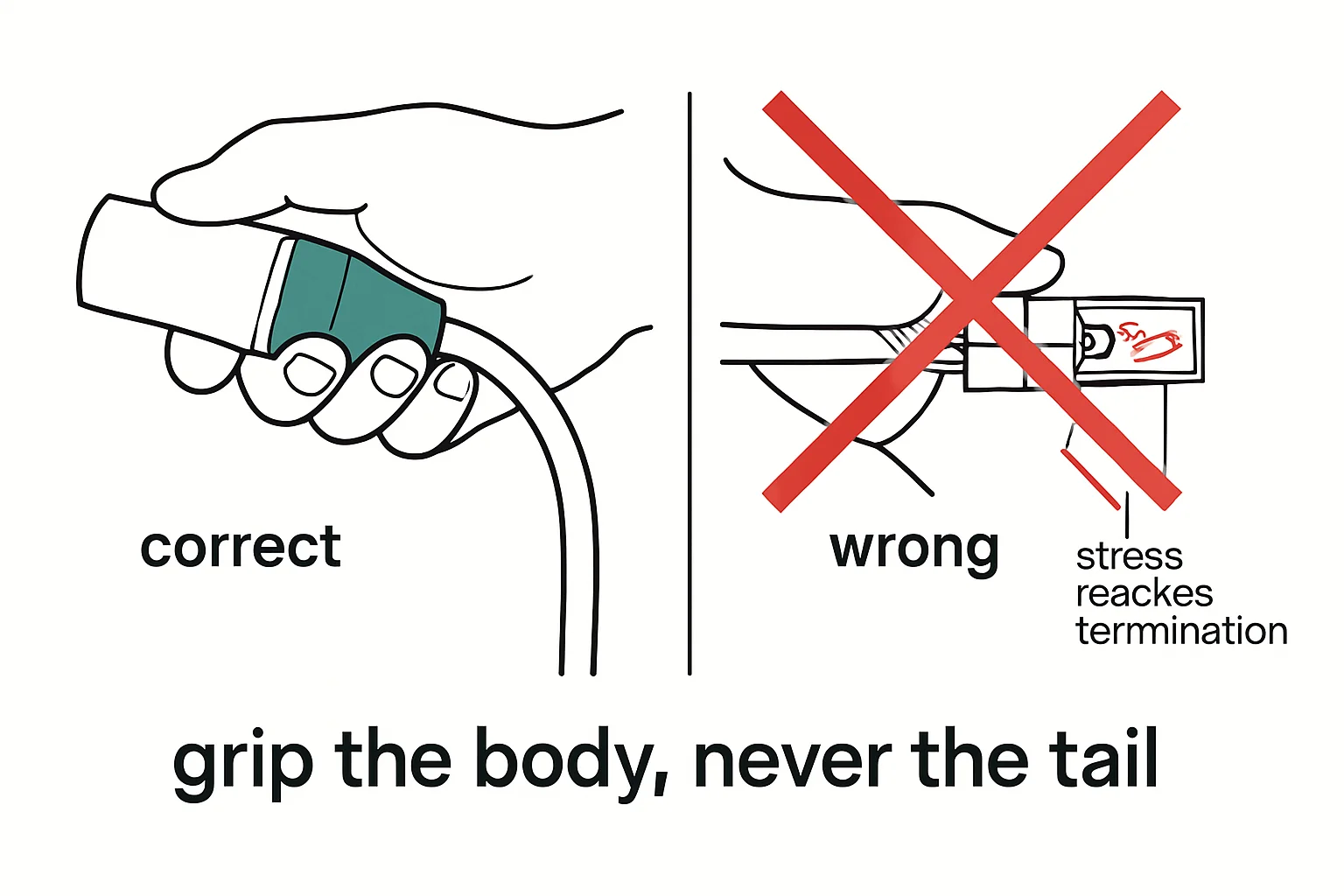
Every cable you've ever retired early died the same way: yanked by the jacket instead of released by its latch. The cable is not the handle. Every connector type has a designed disconnect motion - a specific way its engineers intended it to come apart - and the difference between using it and ignoring it is measured in years of cable life. Jack longevity starts with the disconnect, because every forced removal stresses both the connector you hold and the panel jack you're yanking it out of.
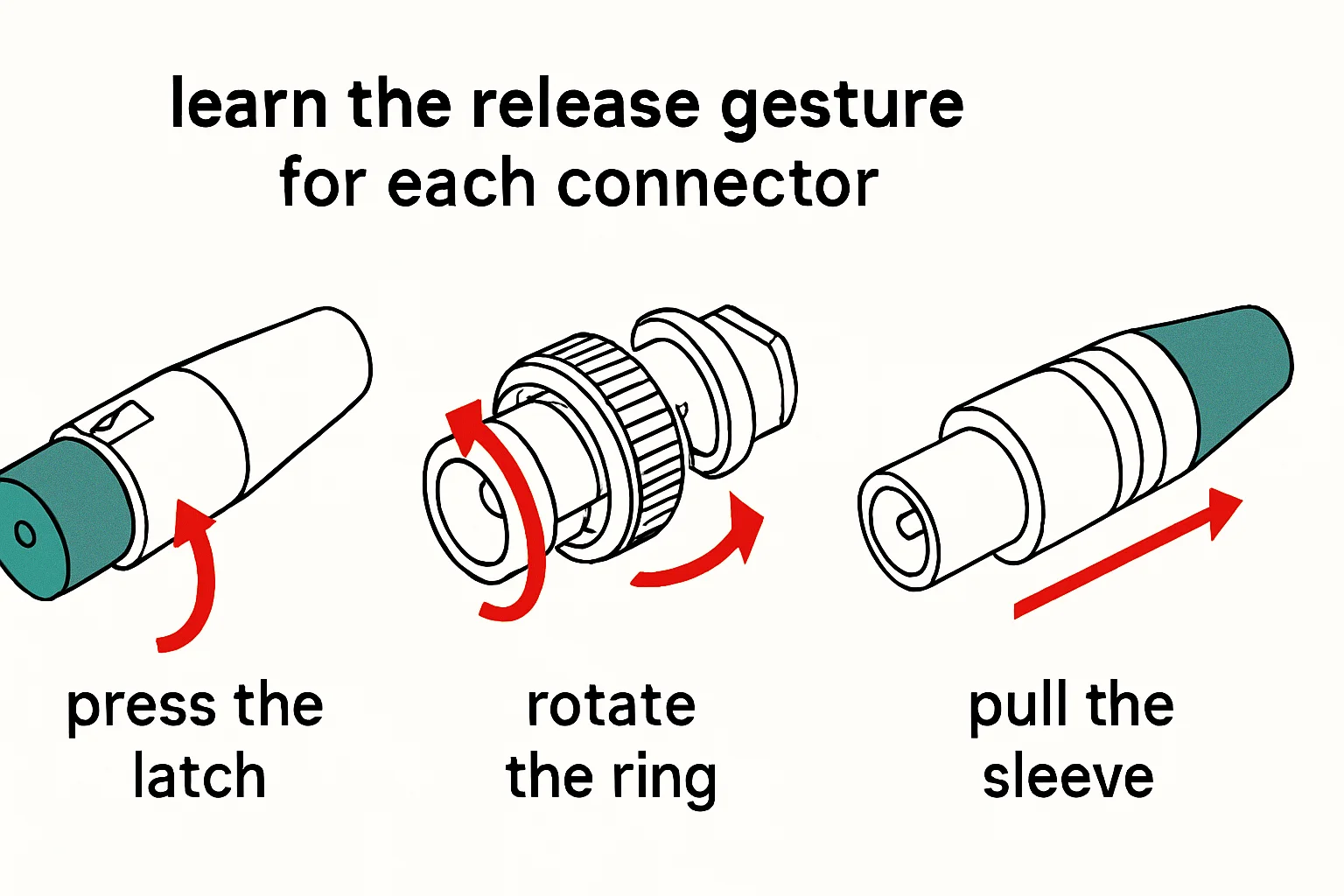
XLR: press the latch, then pull straight
The female XLR locks with a latch release tab. Press it, then pull straight. Two mistakes kill these: forcing a latched XLR off without pressing the tab, which wears out the tab and chews up the mating jack; and twisting while pulling, which the latch was never designed to tolerate. Grip the plug body, thumb on the tab, press, pull. It's a two-second motion once it's muscle memory. If a latched XLR won't release with the tab pressed, the tab is bent or jammed - that's a repair item, not a signal to pull harder.
TRS: a straight pull, no twist
A standard 1/4" plug like the Neutrik NP3X has no latch to defeat - it's friction fit, so disconnect is a firm straight pull on the plug body. The temptation here is twisting, which does nothing to release it and wears the contact surfaces unevenly. Straight in, straight out. The grip point matters more here than on latching connectors, because there's no release mechanism to absorb the force: pulling the cable instead of the plug body loads the solder joints directly, and that's exactly how you get the classic "works when I hold it at this angle" cable.
LEMO: pull the shell straight back
LEMO's S-series is push-pull self-latching - nothing to unscrew. To disconnect, grip the plug's outer shell and pull it straight back; the sleeve motion unlatches it and the plug pops off. The common mistake is grabbing the cable behind the plug and dragging. That pulls against the collet that grips the jacket - the same collet sizing we covered last issue - and over time it works the collet loose or drags the cable through the backshell. Shell, straight back, done.
Locking rings: unlock before you pull
BNCs and the Hirose HR10 (the 4-pin DC plug on monitors and battery plates) both use locking rings rather than friction fit, so the rule is the same for both: release the lock first, then pull. A BNC has a coupling ring that twists to unlock; the HR10 is bayonet-locking, so unlock the ring before drawing it straight off a panel receptacle - never force it. Forcing a locked connector straight off damages the receptacle, and panel receptacles are somebody else's expensive repair. The release motion takes a second; fighting a lock you haven't released takes a panel with it.
Bench takeaway: one sentence for everyone who touches your kit - "Shell, not cable. Latch, not force." If someone can't name the release on the connector in their hand, they shouldn't be unplugging it yet.
Pinout reference
| Pin | Carries |
|---|---|
| T | Hot (+) |
| R | Cold (−) |
| S | Shield |
| Pin | Carries |
|---|---|
| C | Center · signal |
| SH | Shell · shield / ground |
Related
Stop Using Mystery Cables: A Labeling System That Works · Your Cable Isn't a Garden Hose: Learn the Over-Under Coil · Course: Build a basic XLR cable