Bench Notes › Articles › Reference
Article · 1 min readStop Letting the Cable Hang From the Connector.
By Thomas Popp · Oct 7, 2026
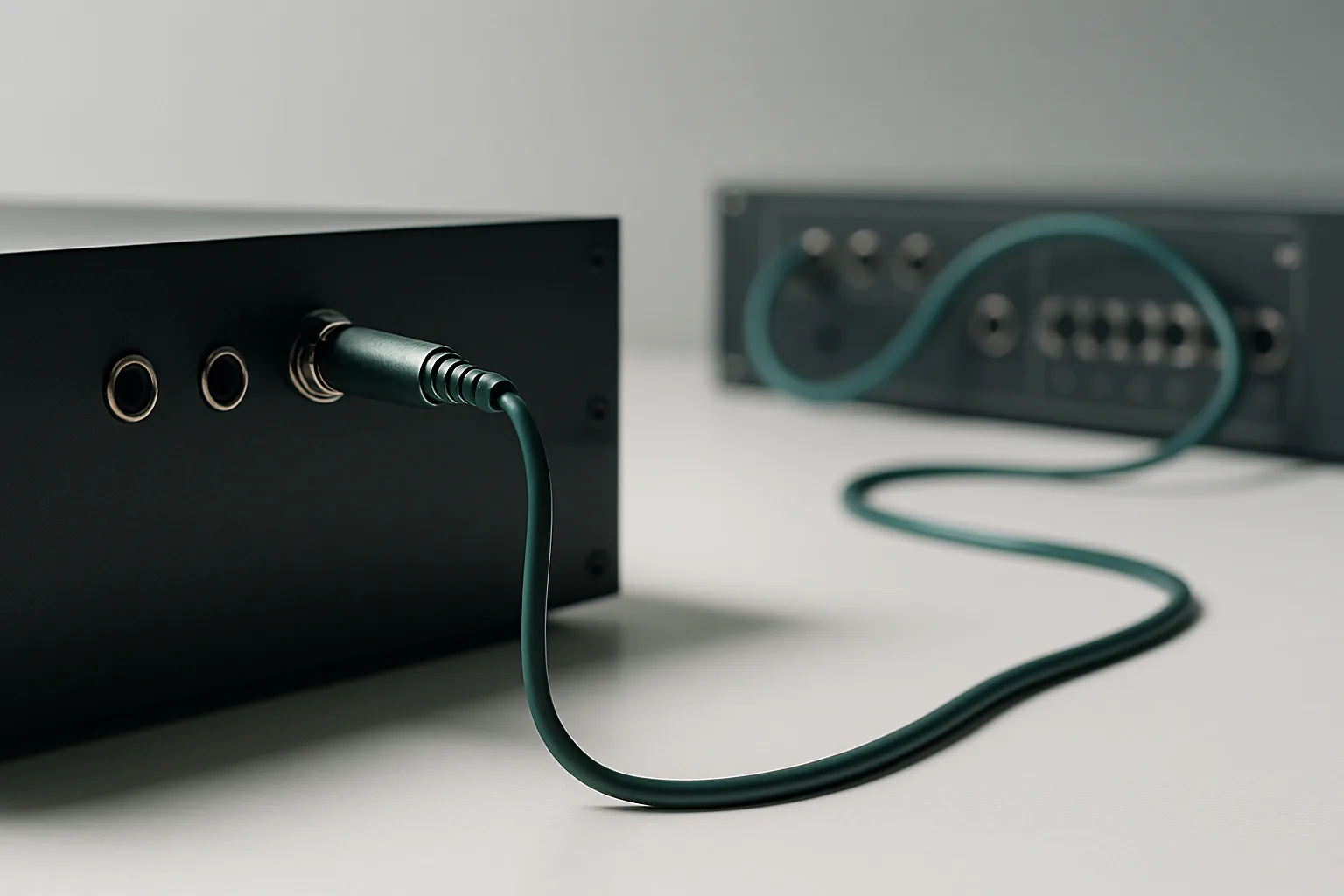
Open the back of most racks and you'll see it: cables dropping straight down from the patch panel, the full weight of the run hanging from the connector contacts. Nobody planned it that way - the cable went in during a busy build, it reached the jack, and gravity did the rest. Over months, gravity plus vibration plus temperature movement works the contact pins loose, and you get the intermittent crackle that takes an hour to trace and thirty seconds to fix once you find it. The connector is a signal contact, not a hook. It was never designed to hold the cable up.
Give every cable a home before the jack
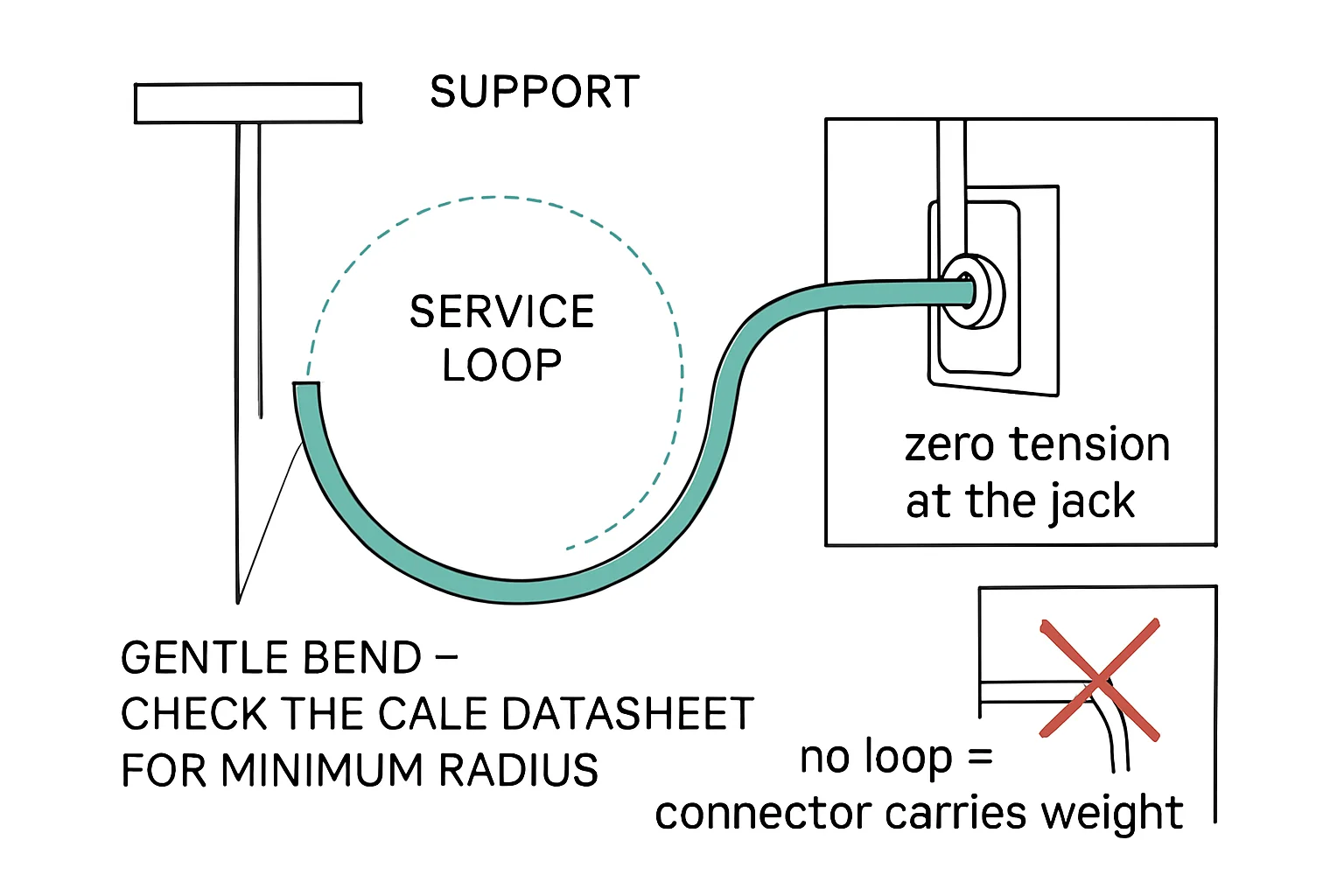
The fix is structural, not cosmetic. Dress the run so the weight is carried by a support - a horizontal bar, lacing, or cable manager - positioned within reach of the jack, so the cable arrives at the connector already supported and unstressed. Between the support and the connector, leave a service loop: a gentle loop of slack that lets the connector sit with zero strain and gives the next technician working slack when they need to re-seat or re-terminate.
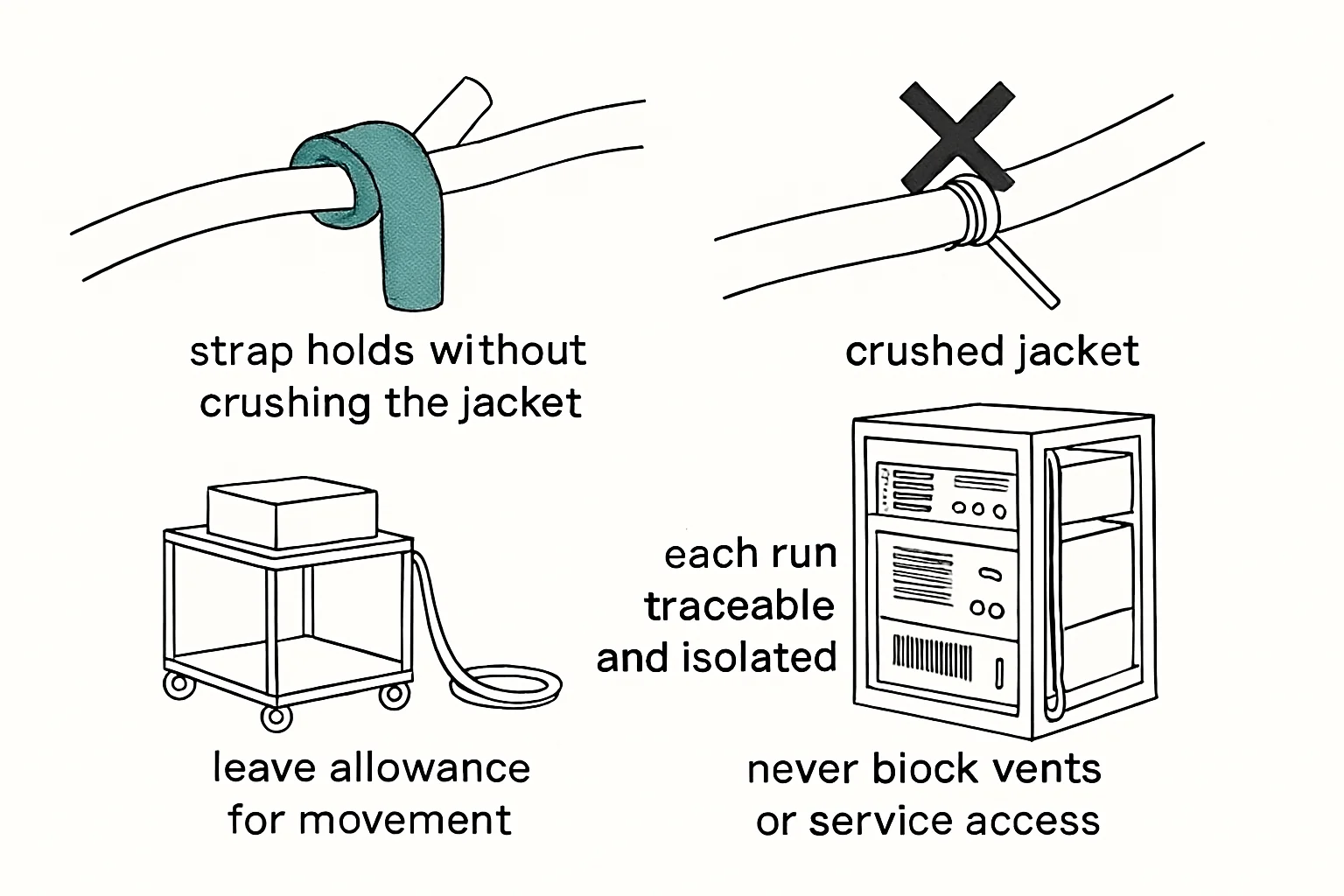
Keep bends generous through all of this - no kinks, no sharp creases around the tie-off, no flattened jacket where a zip tie went on like a tourniquet. (Exact minimum bend-radius multiples vary by cable construction and manufacturer guidance, so the rule here is deliberately qualitative: if the jacket looks stressed, the bend is too tight.) And don't cinch zip ties hard enough to deform the jacket - the tie is holding position, not strangling the cable, and a crushed jacket under a tie is a future fault you're installing yourself.
The pull-test
Then verify the whole thing with the pull-test, which is the only part of this you can skip and shouldn't. Tug the cable on the support side and watch the connector. If the connector moves, the support isn't doing its job - the strain is still reaching the contacts, and you've built a tidy-looking version of the original problem. A dressed cable that passes the pull-test is one you can walk away from for years. One that fails is a crackle waiting for a deadline.
Plan the slack for the worst day
Size the service loop for the worst day, not today. Enough slack to pull the equipment forward on its rails without unplugging the neighborhood. Enough to re-terminate a connector without discovering the cable is now six inches too short. Racks only get more packed and schedules only get tighter, so the loop you wish you'd left is always longer than the one you thought was enough. Extra cable is cheap; a re-pull through a packed rack at midnight is not.
Bench takeaway: support the run, loop before the jack, keep the bends generous, and pull-test it - if the connector moves when you tug the cable, the support failed.
Related
Stop Using Mystery Cables: A Labeling System That Works · Your Cable Isn't a Garden Hose: Learn the Over-Under Coil · Course: Build a basic XLR cable