Bench Notes › Articles › Repair
Article · 2 min readPhantom Power Isn't the Problem. Bad Wiring Might Be.
By Thomas Popp · Oct 7, 2026
A condenser mic goes silent on set. Phantom is on at the mixer, the fader is up, and the producer is watching. The instinct is to blame the console or the mic, but the one thing phantom power touches on its way to that capsule is the cable - and cables are where these failures usually live.
What phantom power actually is
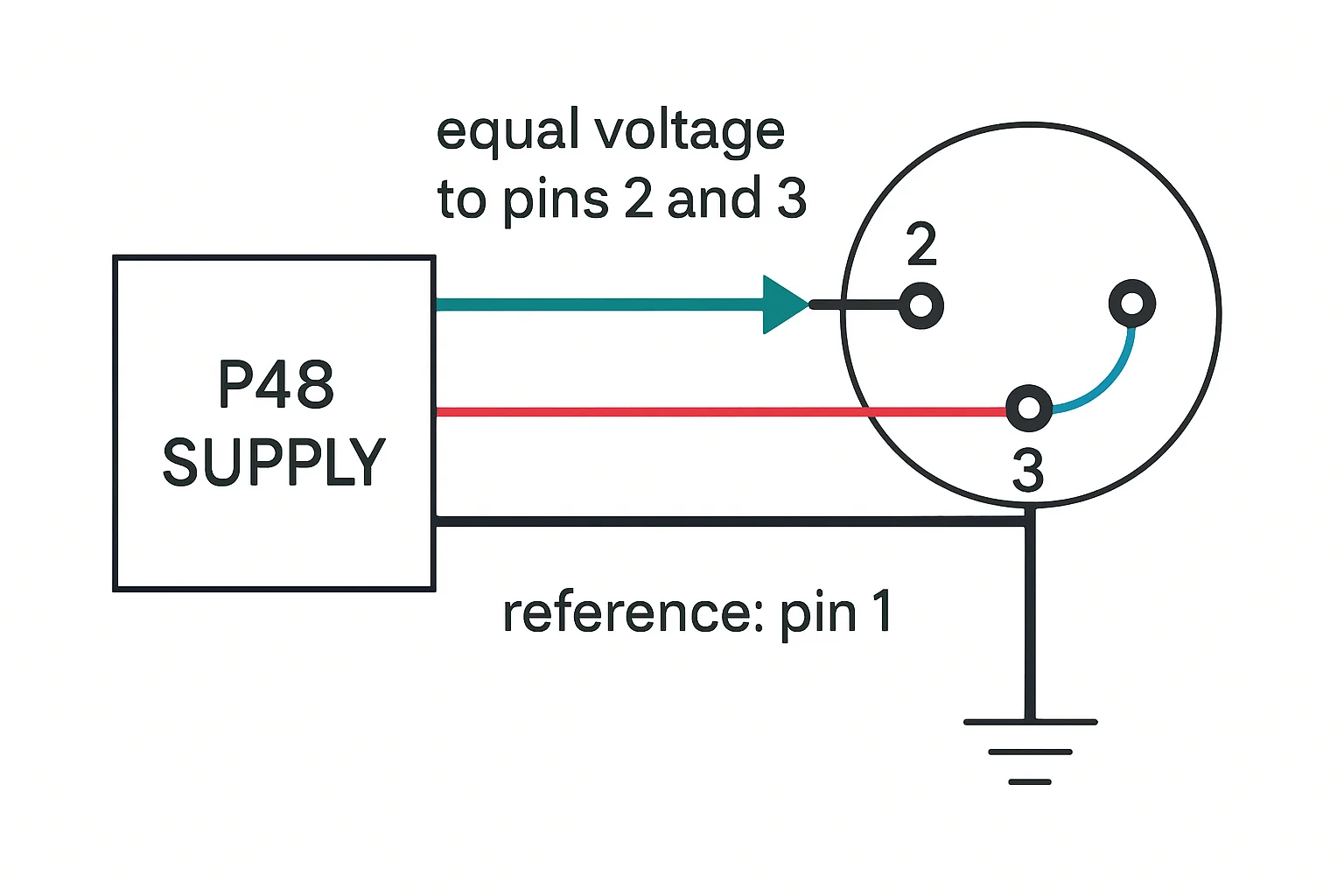
Phantom power (P48) sends +48 V DC down the balanced pair - pins 2 and 3 together, referenced to pin 1 and the shield. That's the whole trick: because the voltage is identical on both signal conductors, a correctly wired balanced input sees zero difference between them, so the audio passes while the mic's electronics sip the DC. The entire scheme depends on the wiring being exactly right: pin 1 = GND/shield, pin 2 = HOT (+), pin 3 = COLD (-), straight through on both ends. The vault's standard mic-cable wiring (PB-XLRF3-XLRM3) confirms this is the pinout everything assumes.
The cable is the suspect list
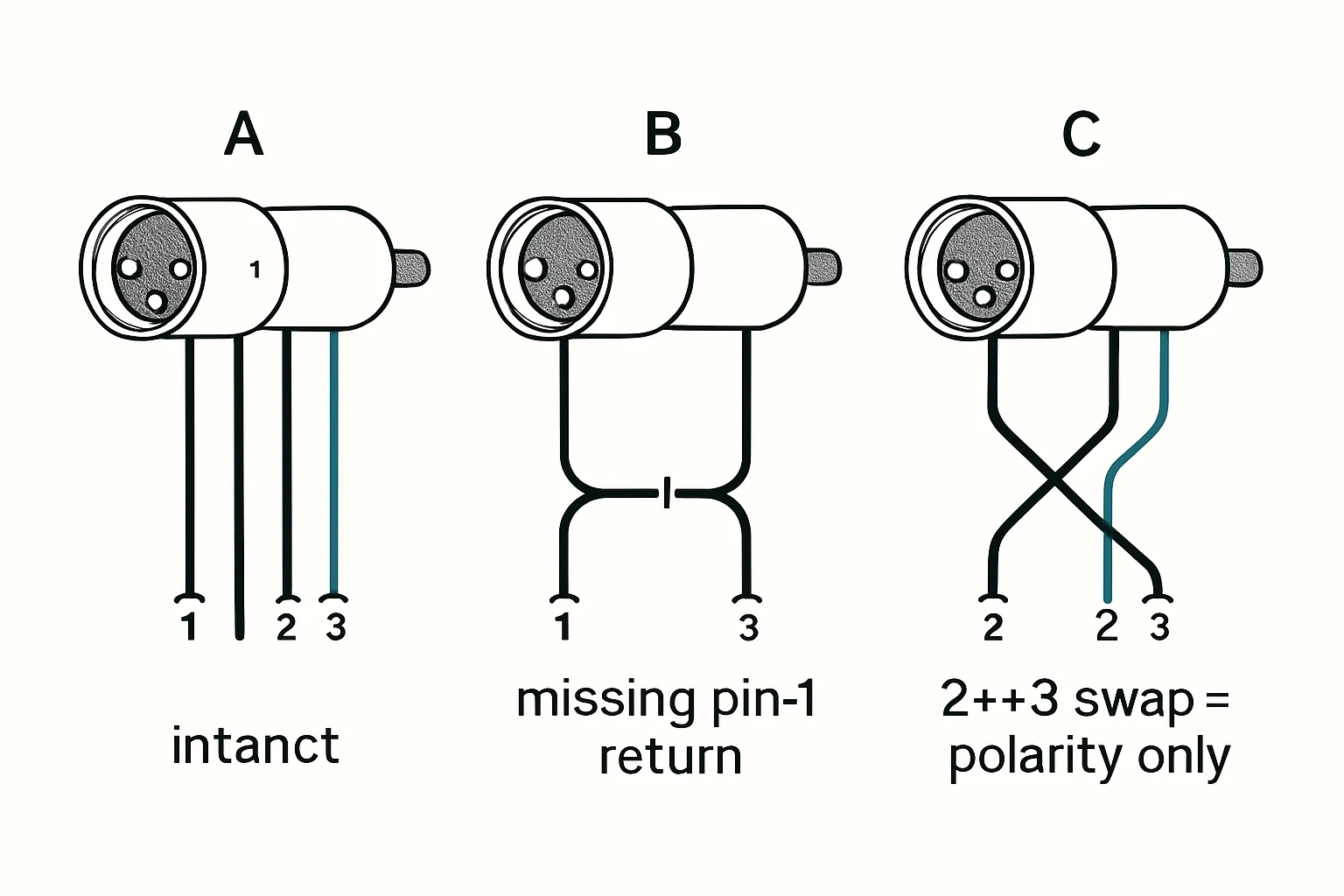
Anything off in that wiring breaks phantom's assumptions. A lifted shield means the reference is gone. Pins 2 and 3 swapped means the mic gets unbalanced power delivery and odd behavior. A partial short between pins bleeds voltage where it doesn't belong. None of these faults necessarily kills the audio path outright - a dynamic mic can pass sound through the same damaged cable for years, which is why the fault hides until a condenser shows up.
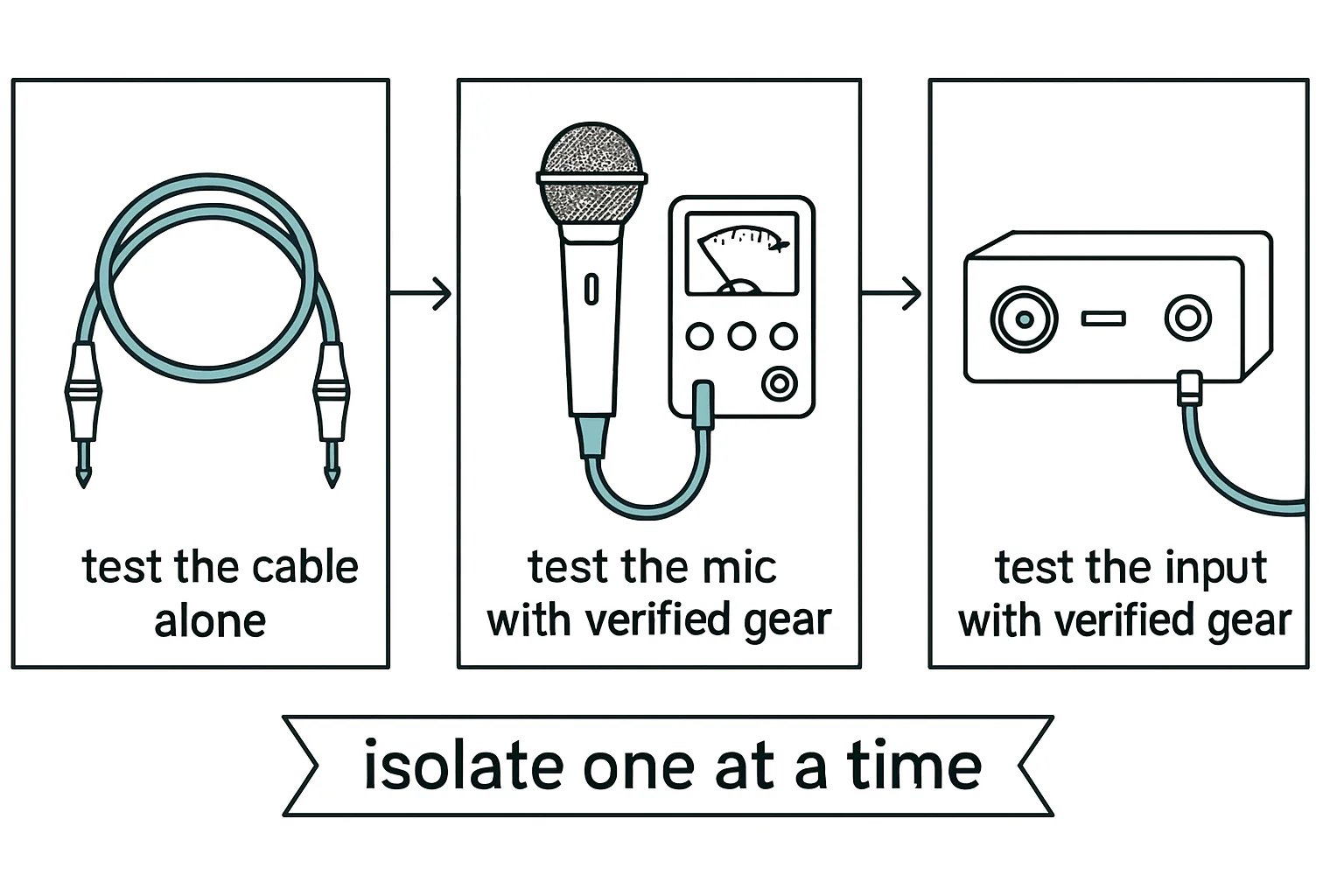
The routine is cheap insurance. Unplug the mic, plug in the cable, and meter it: continuity 1-to-1, 2-to-2, 3-to-3, and no shorts between any pair. That is thirty seconds at the bench and it answers the whole question before anyone's time is on the clock. Then confirm the mic actually wants phantom - Shure's vault entries spell it out plainly: the Beta 87A needs 11-52 V, the KSM32 and KSM44A need 48 V, and the SM58, SM57, and SM7B dynamics need none at all. Knowing which mics in your kit are in each column stops you from powering things that should never see voltage.
Safe powering habits
Three rules, in order. Check the wiring before 48 V goes anywhere near an unfamiliar cable. Never apply phantom to a ribbon mic unless its manual explicitly says it tolerates it - most vintage ribbons can be damaged by 48 V, and that is not a lesson worth learning from experience. And don't hot-patch: plugging or unplugging with power applied can send a spike into whatever is connected, so the default is power off before you touch the connector. Switch phantom on last, after everything is plugged and verified.
bench takeaway: Meter the cable, confirm the mic wants power, then switch 48 V on last - and keep ribbons far away from it.
Related
The Buzz You Hear Might Not Be Coming From the Microphone · Why Your Connector Keeps Coming Loose · Course: Build a basic XLR cable