Bench Notes › Articles › Repair
Article · 1 min readOne Channel Is Dead. Don't Replace Everything Yet.
By Thomas Popp · Oct 7, 2026

One Channel Is Dead. Don't Replace Everything Yet.
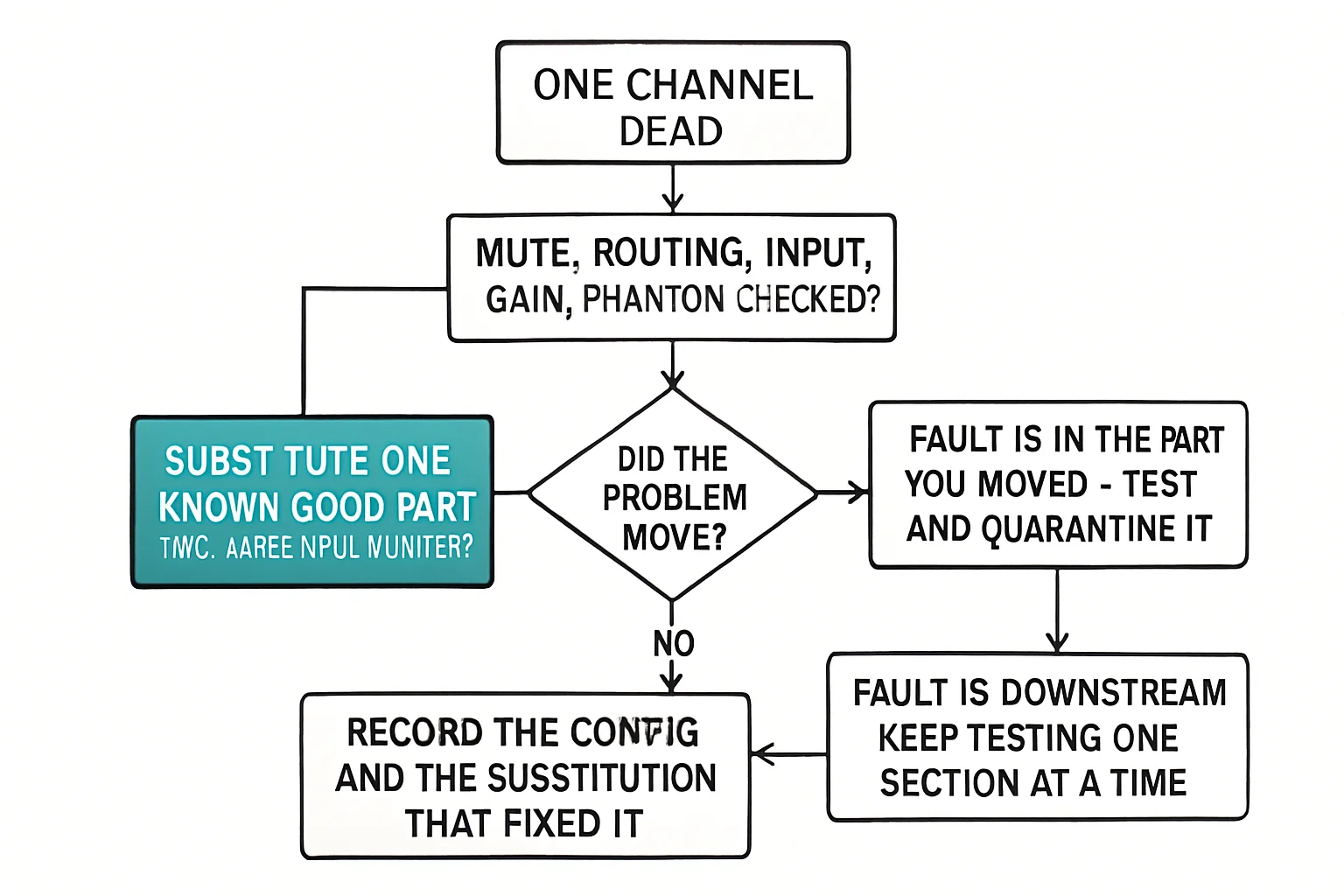
Left is gone, right is fine. The instinct is to tear the whole path apart - new cable, new source, new input - and hope the problem lands somewhere in the pile of replaced parts. That approach sometimes fixes things and never teaches you anything, and it wastes good spares on a cable that might be fine. Thirty seconds of substitution tells you exactly which box is guilty, as long as you change only one thing at a time.
Swap at the destination first
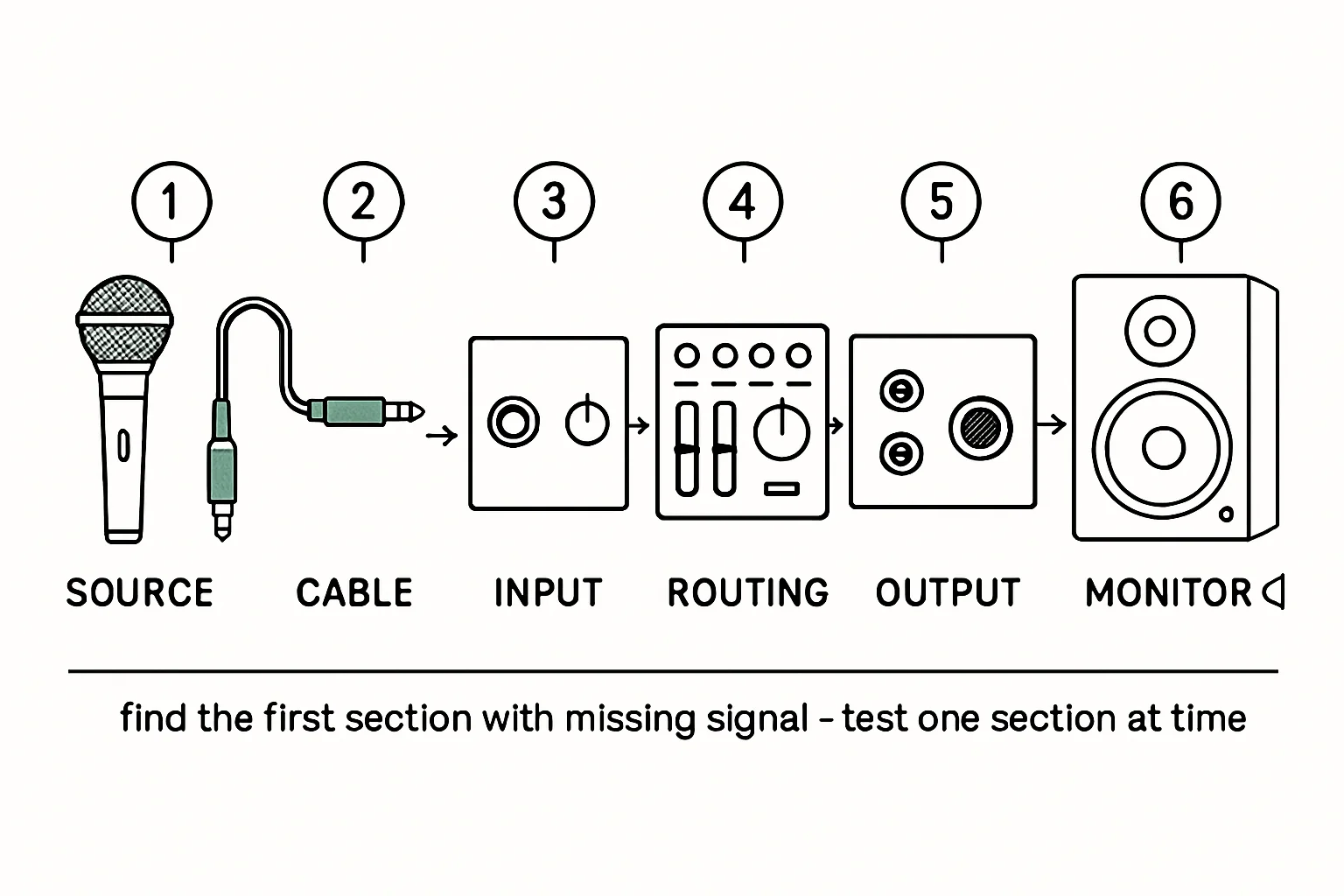
If you suspect the cable, swap the left and right cables where they land at the destination - the mixer, recorder, or interface inputs. Now watch which side is dead. If the dead channel follows the cable, it's the cable: pull it, tag it, bench it later. If the dead channel stays on the same side, the cable is innocent - your fault is upstream (the source) or at the input itself. This single swap eliminates a third of the signal path in seconds, and it costs you nothing but the time it takes to move two plugs.
Then swap at the source
The dead channel stayed put, so now you swap left and right at the source side instead. Same logic, second question: if the fault follows, it's the source; if it stays, it's the input channel. One swap, one question, one answer, every time. The discipline is in the order - destination first, then source - because changing both ends at once tells you nothing. Two simultaneous swaps and a fixed channel leave you guessing whether you fixed it or moved it, and the problem will be back on the next gig.
Keep a known-good kit
The whole method depends on one thing: your substitutions have to be trustworthy. Your QC-passed bench stock - the cables that cleared all three tests from the cable QC routine - is your diagnostic kit, and it needs to be clearly marked so you never substitute in another suspect cable. A known-bad cable swapped in as a "test" is how you spend an hour proving your mixer is broken when it was the spare all along. Keep the diagnostic cables separate from the field stock, label them as bench spares, and re-test them on a schedule, because a spare that sits in a workbox for a year is a suspect again.
Start cheap, end expensive
Begin every fault hunt with the cheapest substitution first - cables before mixers, patch leads before interfaces. Most "dead outputs" turn out to be dead cables, and you'll never learn that if you rebuild the whole chain at once. There's a second reason beyond cost: every component you swap in untested becomes a new unknown in the chain. Work from the most likely and cheapest fault outward, and the fix usually shows up before you reach the expensive boxes.
Bench takeaway: change one thing at a time, swap at the destination before the source, and only ever substitute in cables you know are good.
Related
The Buzz You Hear Might Not Be Coming From the Microphone · Why Your Connector Keeps Coming Loose · Course: Build a basic XLR cable