Bench Notes › Articles › Build
Article · 1 min readMore Solder Doesn't Mean a Stronger Connection.
By Thomas Popp · Oct 7, 2026
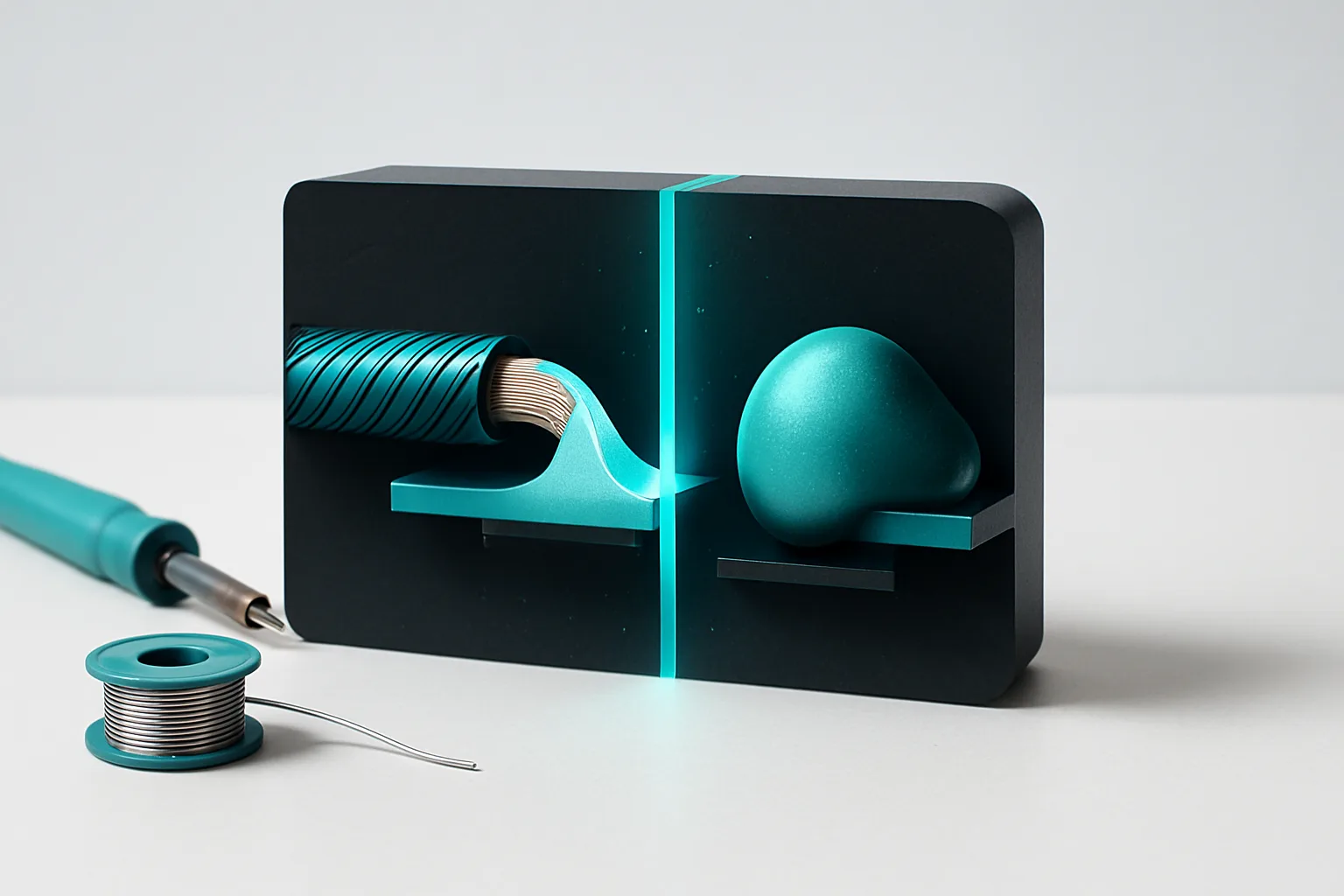
When a joint looks weak, the instinct is to pile on more solder. The instinct is wrong. A big blob is usually hiding the exact problem it was meant to fix - and while it sits there looking reassuring, it makes the failure invisible until it opens up mid-shoot.
Strength comes from wetting, not volume
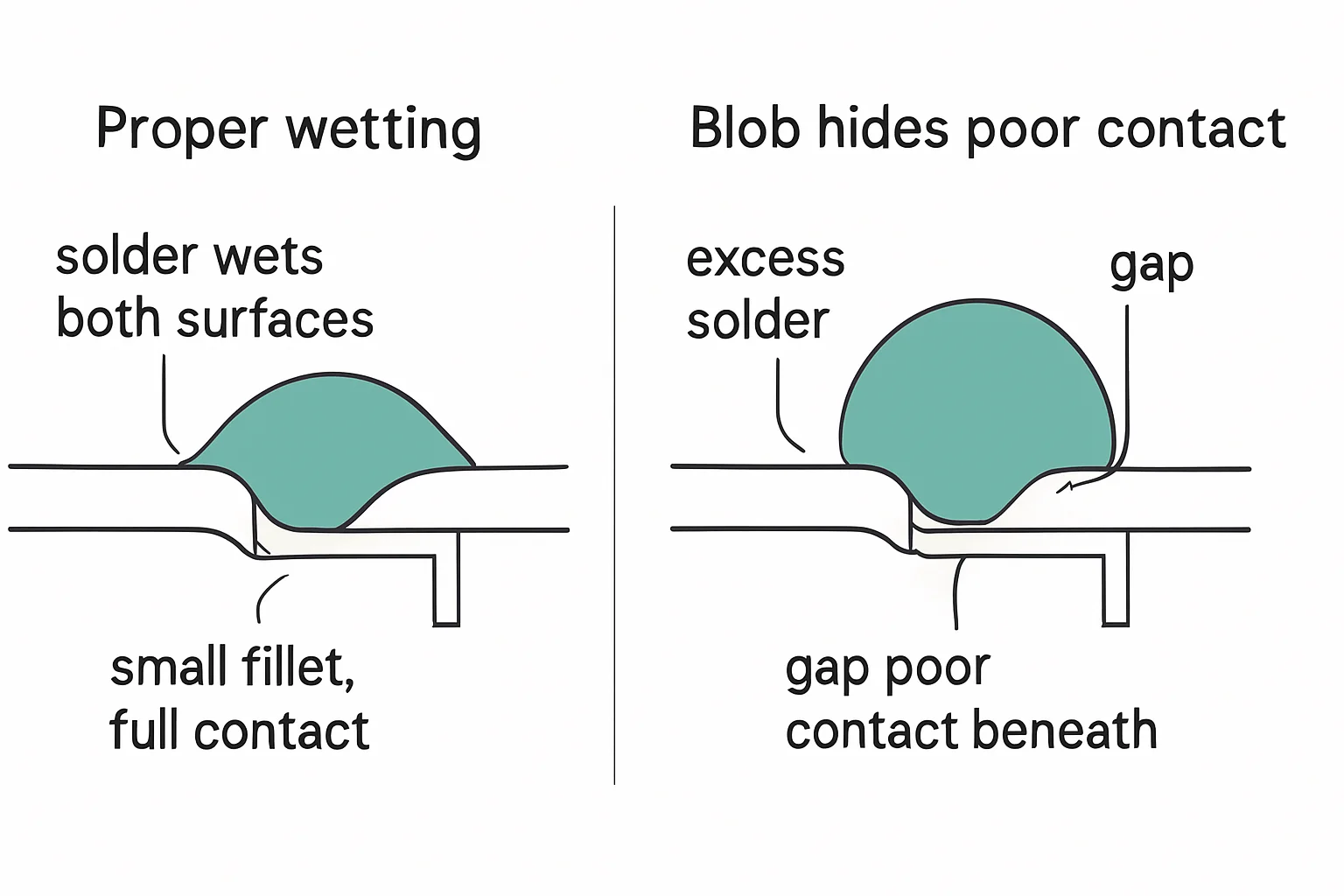
A strong joint is built from three things, in order. First, conductor prep: strip cleanly, twist the stranded conductors tight, tin the wire so the solder wets it before it ever meets the pin. Second, heat on the work: heat the pin and the wire, then feed solder into the heated joint - never melt solder onto a cold pin and hope it sticks. Third, a thin, fully wetted fillet that flows between both surfaces with feathered edges. That thin layer of solder, fully wetting both metals, is the whole joint. Everything past it is decoration.
The blob does the opposite of what you wanted. It buries a joint that never wetted, it bridges to the neighboring pin, and it turns a reworkable problem into a hidden one. Here is the rule that ends the argument: if your joint needs more solder to look right, it needs rework, not reinforcement. Desolder it, clean it, re-prep, and do it properly. Another scoop of solder on top just buys the failure a better disguise.
Give the mechanical job to the right part
The reason more solder feels like strength is a category error: solder's job in the assembly is primarily electrical, and the mechanical load belongs somewhere else entirely. That somewhere is the connector's strain-relief clamp or cable clamp. It grips the cable jacket and takes every tug, so the solder joint never carries load. (A purist will note that a properly wetted joint does have real shear strength - and it does. The point is assembly practice: the joint should never be the thing carrying the cable's mechanical stress, because the clamp is designed for it and the joint is not.)
This is why the blob habit is so persistent. It looks like mechanical insurance. In reality the insurance is the clamp: seat the jacket in it, tighten it down, and the conductors inside stay relaxed no matter what happens to the cable outside.
Watch the solder, not the iron
The practical tell, the one you can use on your very next joint: watch the solder, not the iron. The moment the solder stops flowing toward the heat and starts piling up, you have enough - everything after that is cosmetic at best, concealing at worst. A joint that flows, feathers, and stops is a joint you can trust. A joint that keeps growing is a joint telling you something went wrong underneath.
Bench takeaway: if the joint needs more solder to look right, it needs rework, not reinforcement.
Related
The XLR Wiring Mistake That Keeps Coming Back · Bad Solder Joints: What to Look For Before They Fail · Course: Build a basic XLR cable