Bench Notes › Articles › Test
Article · 1 min readIt Beeped on the Tester. That Doesn't Mean It's Good.
By Thomas Popp · Oct 7, 2026
It Beeped on the Tester. That Doesn't Mean It's Good.
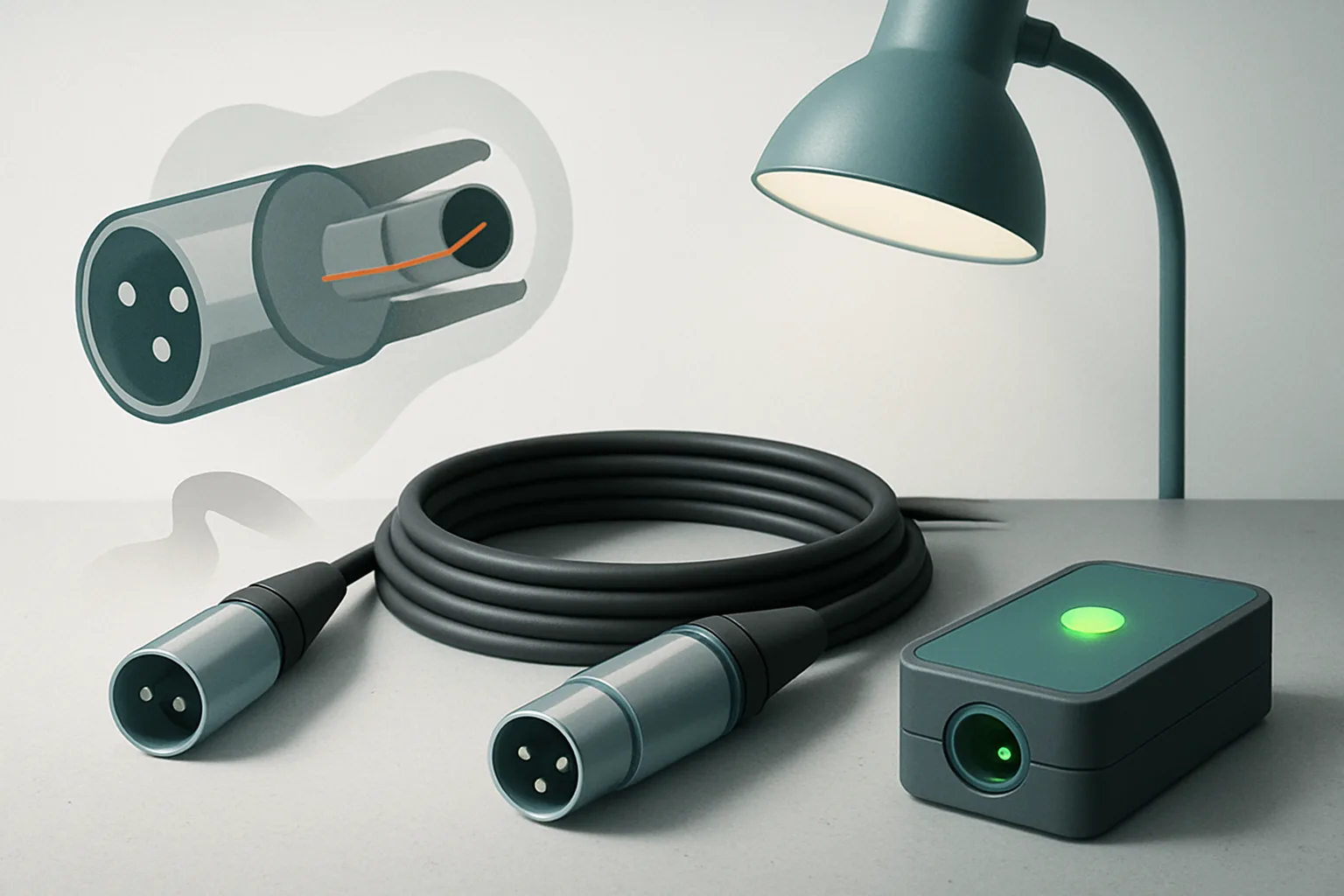
A cable passes the continuity beep at the bench and still crackles on set. This is one of the most common and most trusted false passes in the equipment room, and it happens because most people treat the beep as the whole test. It is not. The beep is one question answered. A good cable needs three.
What the beep actually tells you
A continuity beeper answers exactly one question: is there some path between the ends? The beep threshold varies from tester to tester, and cheap testers keep beeping across resistance that would make any engineer wince. That is the trap. A corroded connector barrel, a conductor with half its strands broken, a solder joint that barely wetted - all of them can still present enough of a path to trigger the beep, and then drop signal the moment real current flows or the connector gets nudged.
Think of it this way: the beep confirms a connection exists. It says nothing about whether it is a good connection. The most common mistake at the bench is testing once, hearing the tone, and coiling the cable back into the box. On a quiet bench with the cable lying flat, a dying joint can behave just well enough to lie to you.
The three checks after the beep
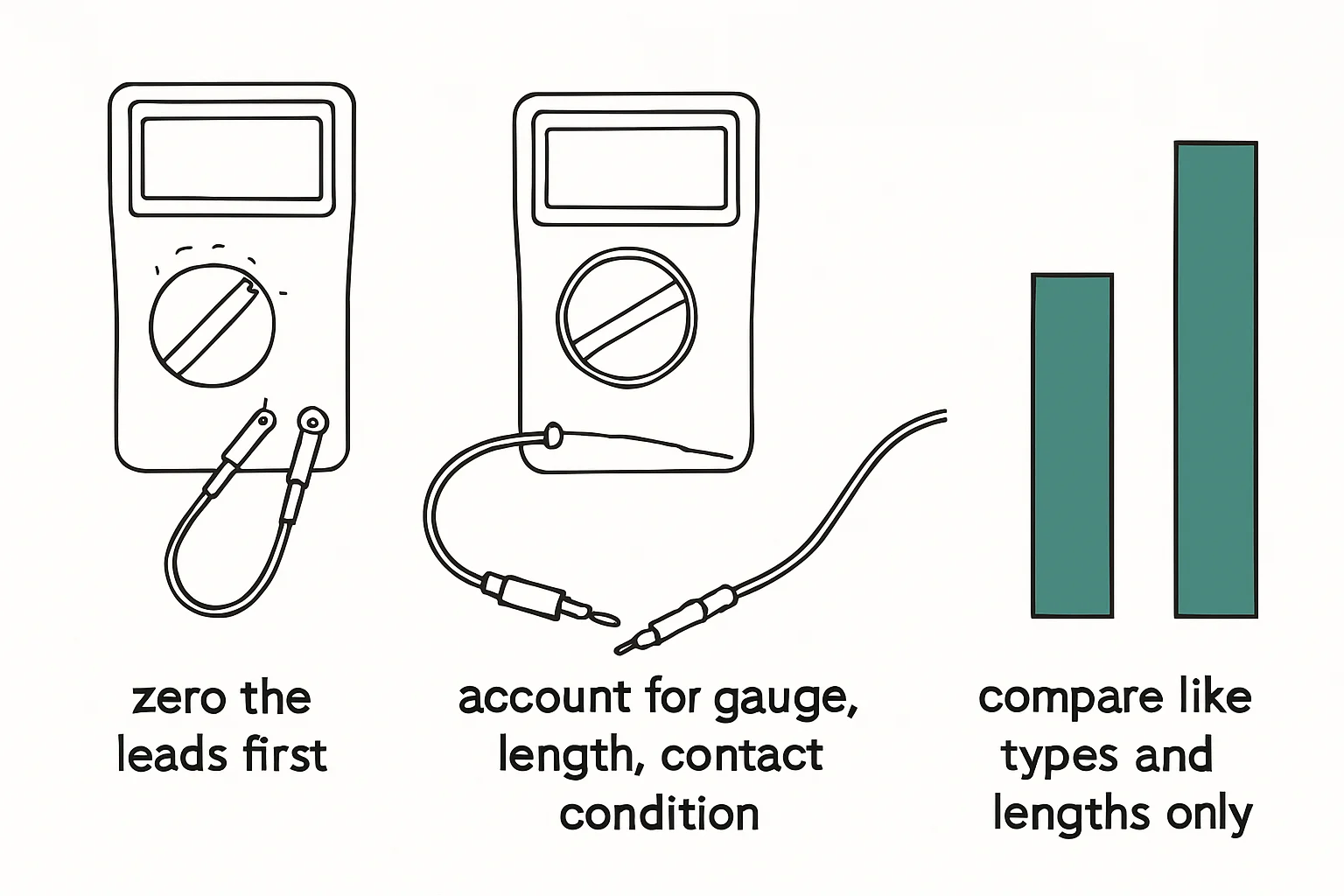
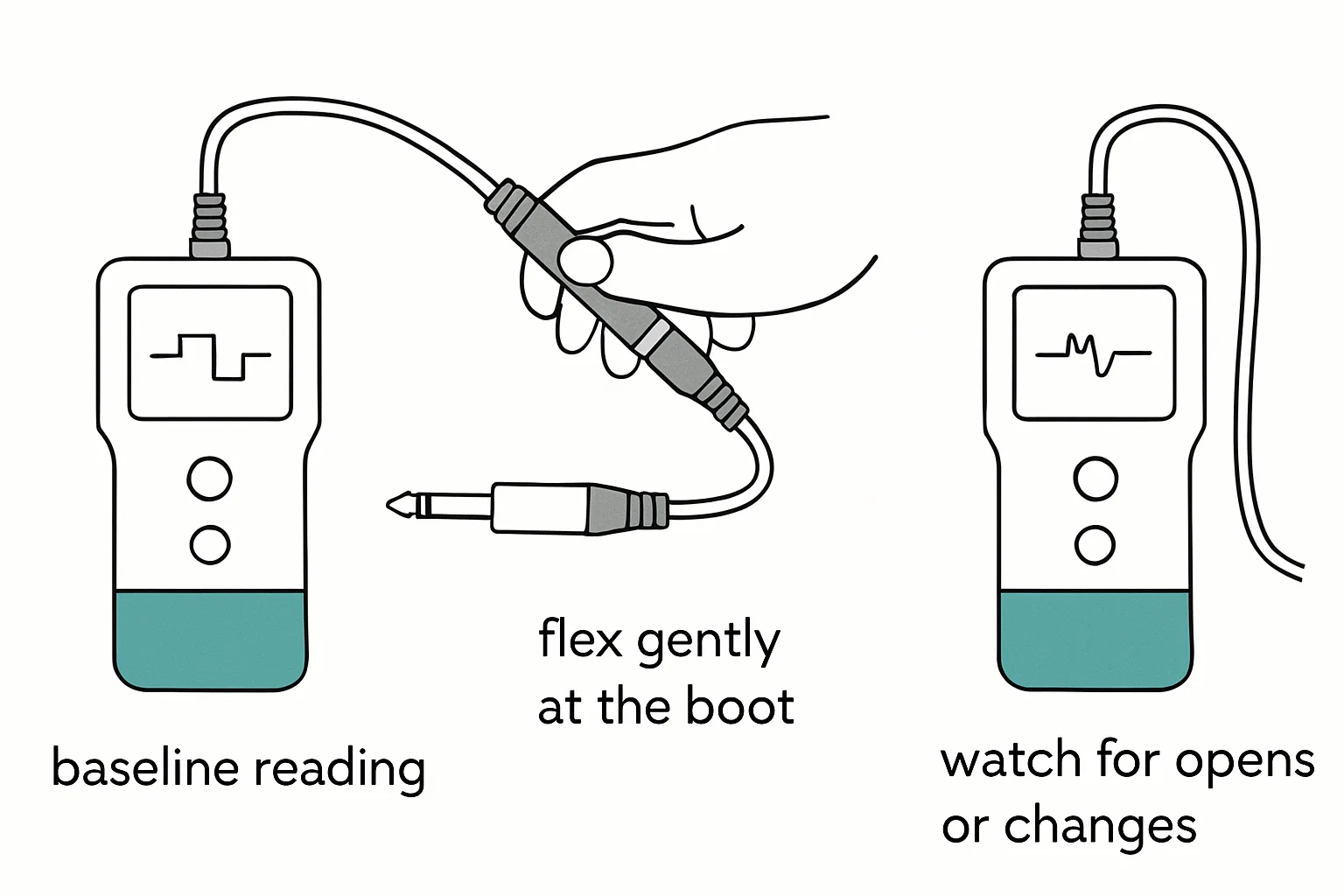
Make this the habit and the false passes stop. First, switch the meter to ohms and read the actual resistance on each conductor, end to end. A good conductor on a typical short mic cable reads well under an ohm, and exact expectations shift with cable length and gauge, so learn what your own stock reads when it is healthy and flag anything that drifts. Second, check the shield like it is a conductor - it is one, electrically. The shield should read about the same as the signal conductors; a shield that reads high is a shield that is failing. Third, flex and wiggle the connector bodies while watching the meter. Intermittent faults live in movement. A joint that opens when the connector twists will beep reliably at rest forever, and it will ruin a take the first time someone shifts the cable. Beep for speed, read resistance for truth, wiggle for the faults that only show up under movement.
The phantom-power trap
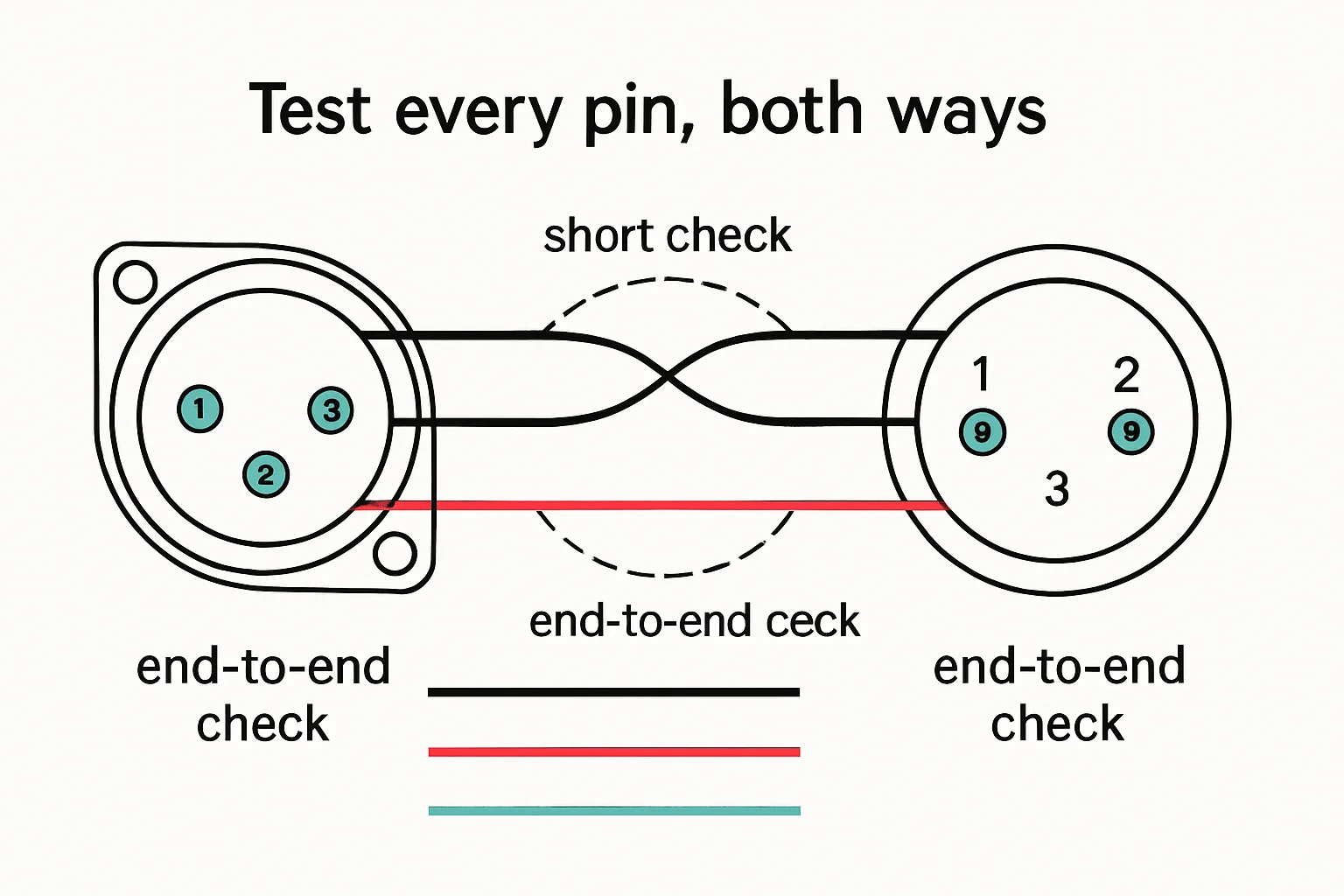
Before you call a cable good, check the shield against each conductor. A short between pin 1 and pin 2 will not fail a continuity beep - every path the beeper wants to see is still there - but it will kill a mic dead the moment phantom power comes up. It is the fault the beep is guaranteed to miss, and it is the one that makes you chase phantom-power problems all over the set when the cable was the culprit from the start. This check costs ten seconds. Build it into the routine.
Bench takeaway: The beep is the start of the test, not the end - follow it with resistance readings and a wiggle, and your cables stop lying to you.
Related
Your Cable Looks Fine. So Why Doesn't It Work? · The Wiggle Test: Catching a Cable That Only Fails Sometimes · Course: Build a basic XLR cable