Bench Notes › Articles › Repair
Article · 2 min readDon't Put a Bad Cable Back in the Good Cable Box.
By Thomas Popp · Oct 7, 2026
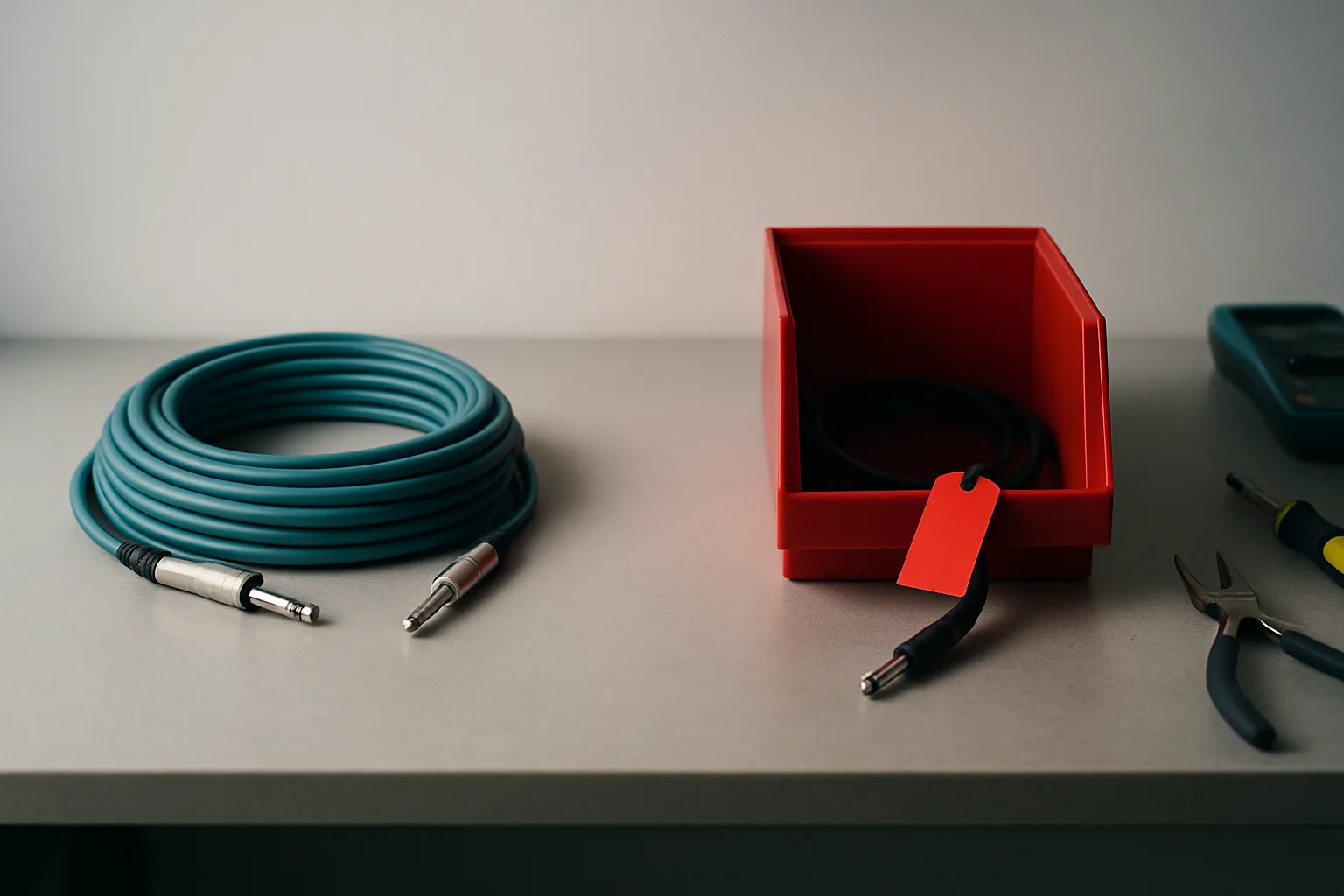
You found the bad cable on set. You worked around it. Then it went back into the same box as the good ones and next week's shoot gets to rediscover it. Every intermittent you have "already dealt with" is a future lost take, and the cruel part is that everyone involved did their job except the last step: making sure the cable could not get back into circulation.
The habit: tag it the moment it misbehaves
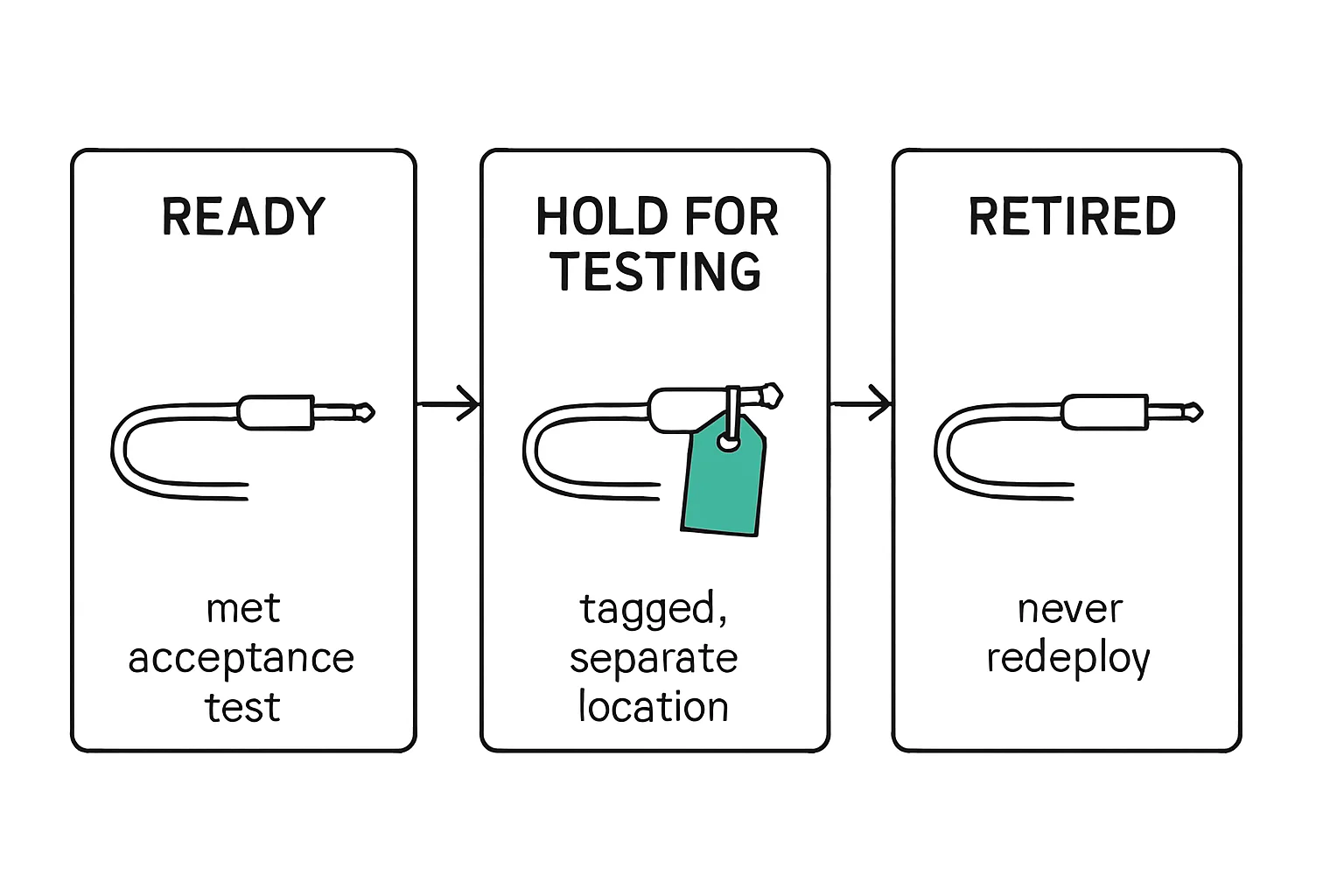
Make quarantine a habit, not a memory. The moment a cable misbehaves - crackles, drops, smells wrong, tests flaky - tag it red and put it somewhere the good cables never go: a separate bin, a hook by the bench, a zip-tied bundle in the corner of the room. The location matters less than the rule: once a cable is tagged, it does not go back in the good box until the bench decides its fate, never on set, never in a hurry.
Suspect counts, too. A cable does not have to fail outright to earn a tag. If something felt wrong and you could not reproduce it, tag it as suspect. An untagged cable is a good cable in everyone's mind - including the person packing the box at 6 AM.
What goes on the tag
The tag carries four things, written plainly enough that a helper can understand them six months from now.
First, the defect description, specific: "crackles when XLR-M body is twisted," not "bad." Second, the date. Third, the test status: failed, intermittent, or just suspect. Fourth, your repair-or-replace recommendation. That plain-language description is doing real work - "Intermittent - beeps clean but fails wiggle test at female end, suspect cold joint" tells you exactly whether the cable is worth re-terminating or worth throwing away, and it makes that decision before the pressure of a shoot day is anywhere near it.
Quarantine first, diagnose later
The whole point is sequencing. Diagnosis takes a quiet bench, a meter, and time - things you never have on set. Quarantine takes a tag and thirty seconds, things you always have. So the rule is simple: tag and isolate now, diagnose when you are back at the bench. A red tag with a date is a work order. An untagged cable in the good box is a problem scheduled for next week.
Bench takeaway: A bad cable in the good box is not a cable problem - it's a process problem, and a red tag is the whole fix.
Pinout reference
| Pin | Carries |
|---|---|
| 1 | Shield / chassis reference |
| 2 | Hot (+), non-inverting |
| 3 | Cold (−), inverting |
Related
The Buzz You Hear Might Not Be Coming From the Microphone · Why Your Connector Keeps Coming Loose · Course: Build a basic XLR cable