Bench Notes › Articles › Test
Article · 1 min readBuild One Known-Good Cable. Protect It Like a Reference Tool.
By Thomas Popp · Oct 7, 2026
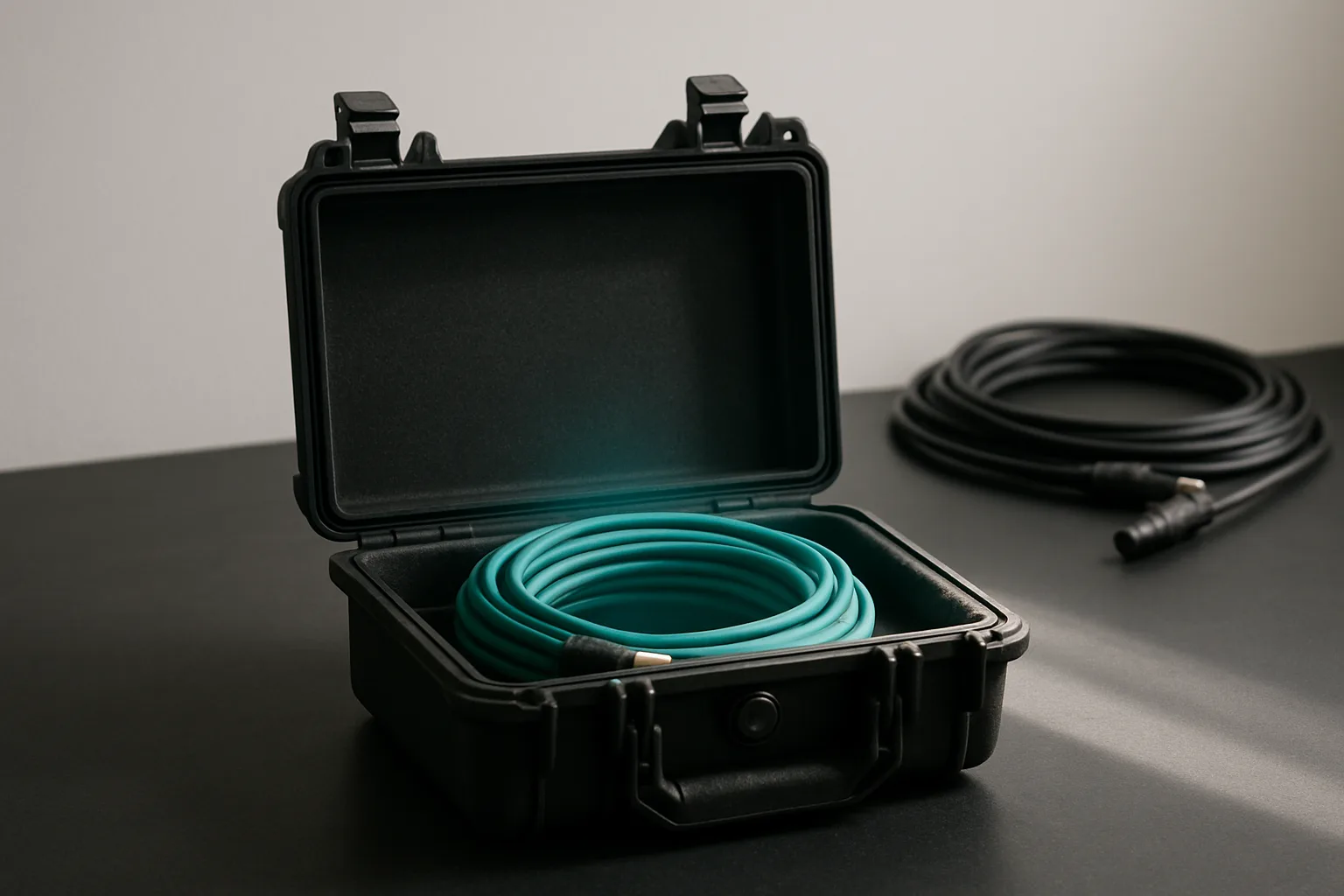
Something on the signal chain goes dead and you need to answer one question: is it the cable or the gear? So you grab another cable from the pile and swap it in. But you never actually tested that cable either. Now you're guessing with more guesses, and every swap costs minutes while people wait.
Why the pile lies to you
A cable that "worked last time" is not a known-good cable. The pile accumulates fault histories nobody remembers: the one that was intermittent in March, the one that took a hard yank off a boom, the one somebody re-terminated in a hurry. Each swap introduces a new unknown, so troubleshooting becomes a process of elimination over components you haven't eliminated. The fix is embarrassingly simple - eliminate the cable variable permanently, with one cable you have personally verified end to end.
Build it and verify it
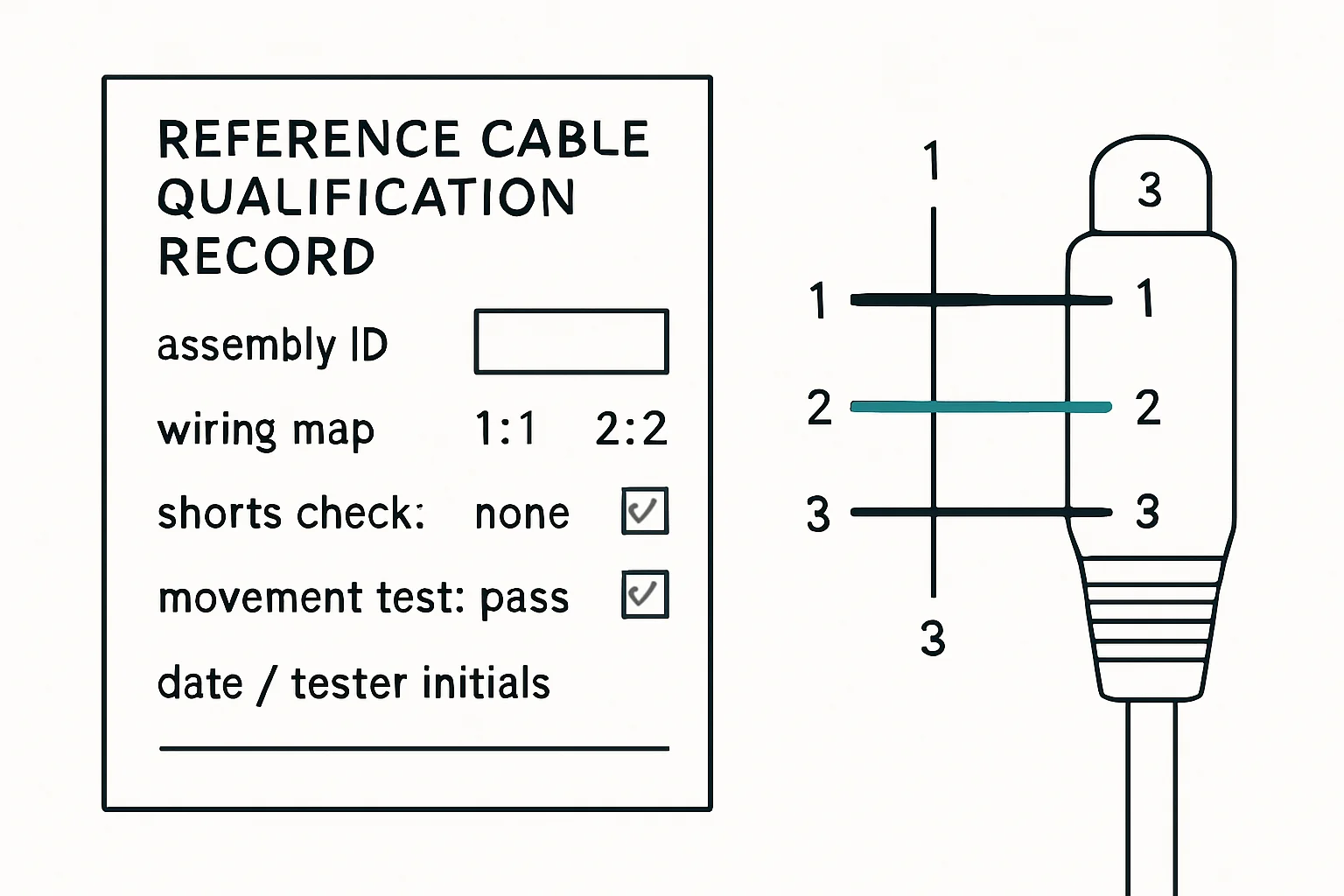
Start with the standard the vault documents: PB-XLRF3-XLRM3, a 25-footer wired pin 1 shield, pin 2 hot, pin 3 cold. Twenty-five feet is long enough to substitute into almost any signal path on set. Then put it through the full bench test, not just a beep: continuity 1-to-1, 2-to-2, 3-to-3 with no shorts between pins, polarity confirmed pin-2-hot at both ends, shield intact to both shells, and a firm tug test at each strain relief. Mark the date and your initials on the label - heat-shrink or a real tag, something that survives coiling. This is the one cable whose entire history you know.
Guard the rule
A reference cable only works if the rule around it is absolute. Store it separately from daily-use stock - its own hook, its own bag, somewhere it can't get grabbed in a pack-out rush. It goes out only to answer "is it the cable or the gear?" and never as a working cable on a shoot, because the moment it does daily duty it starts accumulating the same unknown history as everything else. When you suspect a bad cable, swap in the reference: if the problem vanishes, it's the cable; if it persists, it's the gear. One variable eliminated in seconds, every time.
And re-verify it on the same schedule as your quarterly audits. Even a reference cable takes abuse - the difference is yours gets re-tested on a calendar, while the pile doesn't. Tie the retest date to the audit habit and initial it again.
bench takeaway: One verified cable, stored apart, used only for troubleshooting, re-tested every quarter - and the "is it the cable or the gear?" question dies in seconds.
Related
Your Cable Looks Fine. So Why Doesn't It Work? · The Wiggle Test: Catching a Cable That Only Fails Sometimes · Course: Build a basic XLR cable