Bench Notes › Articles › Reference
Article · 1 min readBuild a Cable Inventory That Makes Sense to Someone Besides You.
By Thomas Popp · Oct 7, 2026

Right now your whole cable stock lives in your head: which lengths you own, what's in which case, which ones are flaky. It works fine - until you're not the one packing the truck. A helper, a second unit, a successor inherits a system they can't read, and the whole thing collapses into a pile of black snakes nobody can identify. The inventory isn't for you. It's for everyone who packs when you can't.
One ID, one row
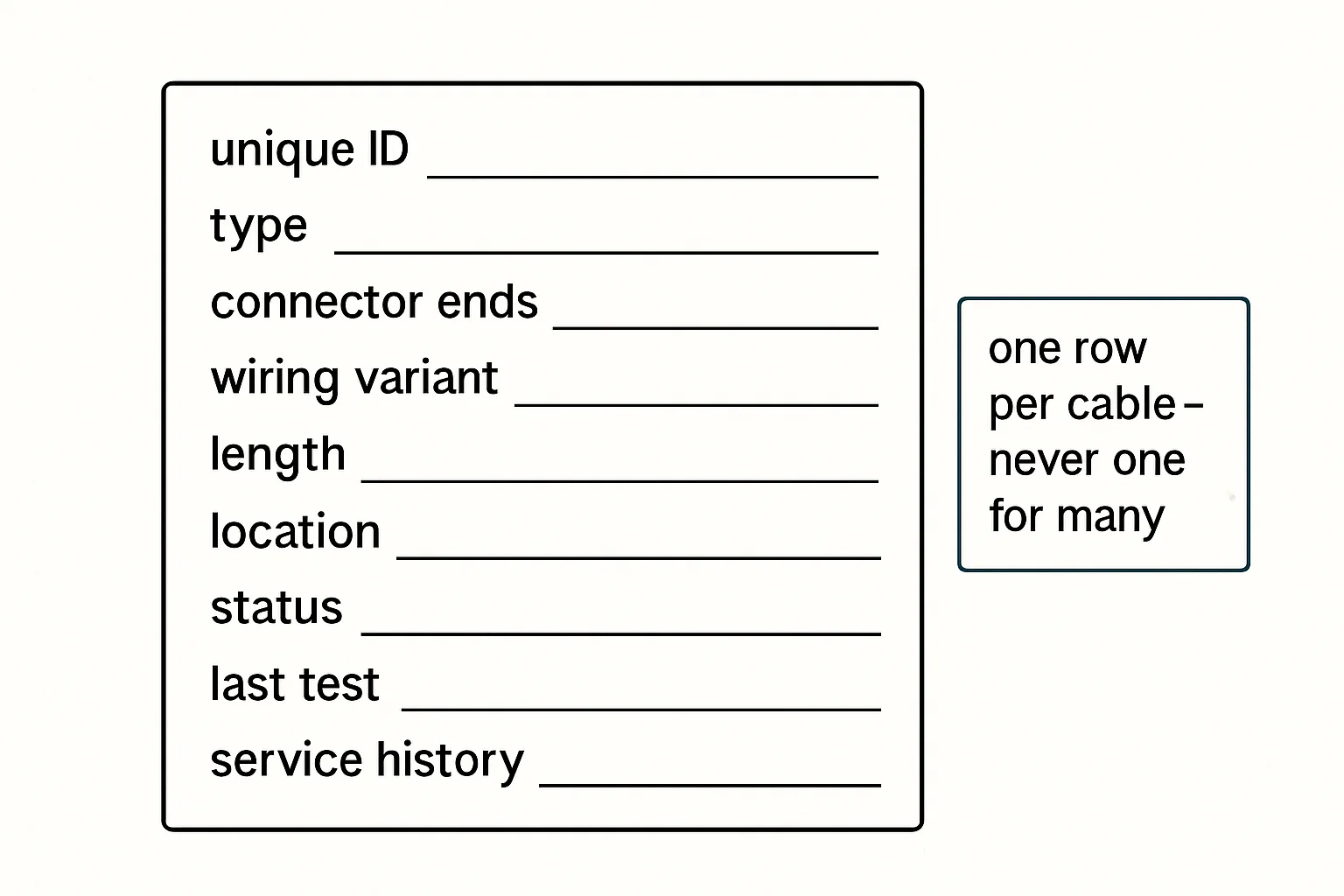
Give every cable a unique ID and log it in one shared sheet. The scheme can be dead simple PB-XLRF3-XLRM3-25-01, -02, -03, straight from the vault's PB numbering - what matters is that it's unique and printed on a label ON the cable, in heat-shrink or a real tag. Not masking tape. Tape falls off, migrates, and leaves you reading someone else's handwriting in six months.
One row per cable with the fields that answer every real question: category (mic cable, turnaround, adapter, snake), length, connector A, connector B, quantity (for adapters), location (which case, which wall position), status (in service, quarantine, reference-only, retired), and date last tested. The date last tested ties the inventory straight to the quarterly audit habit from last issue - the sheet and the audit log reference each other by cable ID, so the two systems reinforce instead of duplicating.
Make it survive you
When the ID is on the cable and the row is in the sheet, anyone can answer "how many 25-foot mic cables do we have and where are they" without finding you. That's the entire point. Retired cables leave the sheet's active view but keep their rows - the history of what failed and when is worth keeping, because it's the same evidence the audit log is building toward your next purchase order.
Two habits keep the inventory honest. Label the cable at both ends: when two cables are tangled together behind a cart, the ID you can read from either side is the one that gets logged correctly. And update the sheet the day something changes - a cable retired, a turnaround added, a case moved. The inventory that gets updated "later" is the one that dies, just like the audit that gets postponed.
bench takeaway: Unique ID on the cable, one row in the sheet, updated the day things change - and anyone can pack the truck without you.
Related
Stop Using Mystery Cables: A Labeling System That Works · Your Cable Isn't a Garden Hose: Learn the Over-Under Coil · Course: Build a basic XLR cable