Bench Notes › Articles › Build
Article · 2 min readBefore the First Solder Joint: Set Up a Safer Bench.
By Thomas Popp · Oct 7, 2026
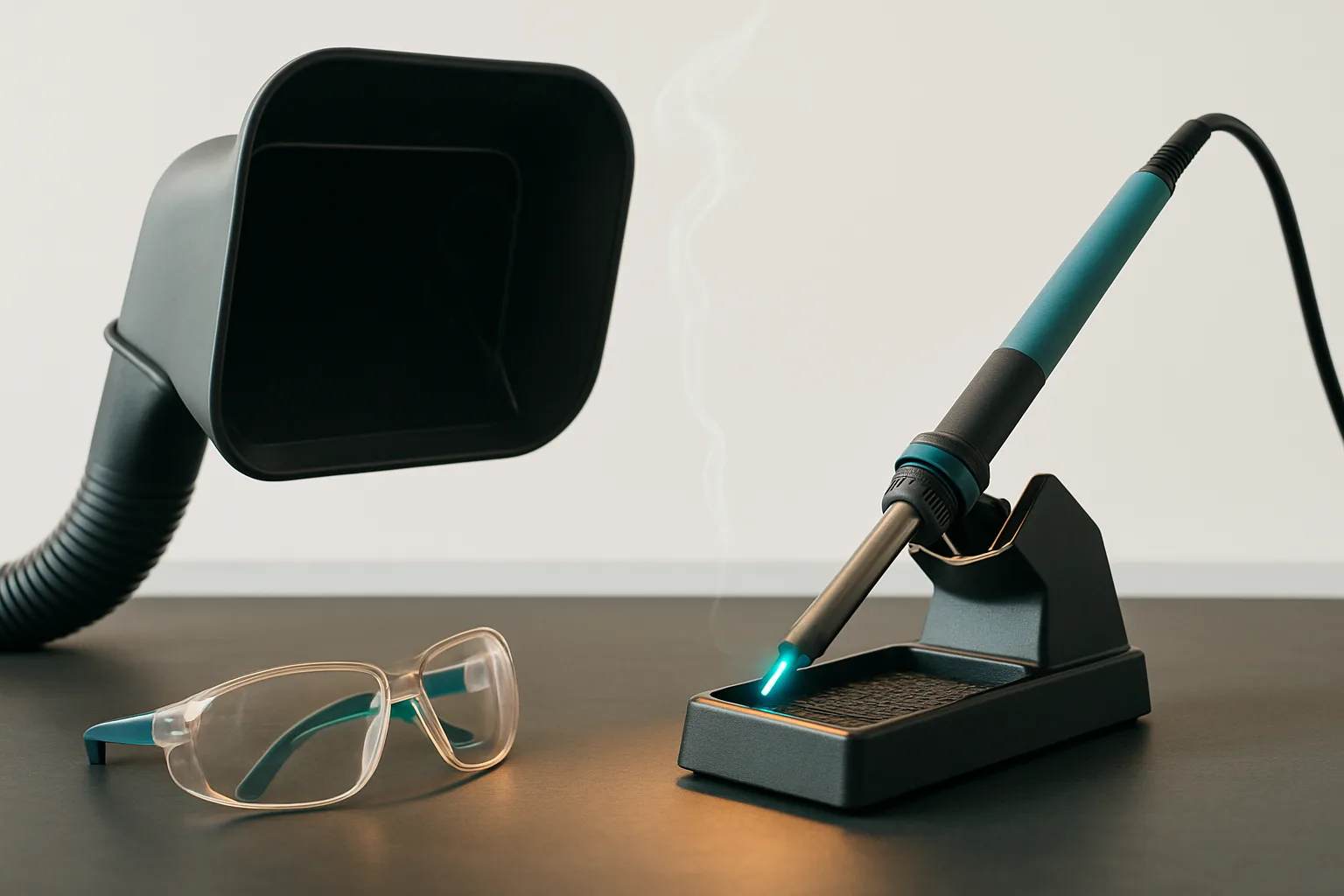
The soldering iron is the easy part - plug it in, wait, make the joint. The part that protects you is everything around it - the part people skip when they're in a hurry. Solder smoke rises straight into your face if the airflow is wrong. A wire snipped without eye protection becomes a projectile. An iron left on a cluttered bench starts things burning. None of this requires expensive gear, just setting up before the first joint instead of improvising after the first accident.
Air and eyes: ventilation and eye protection
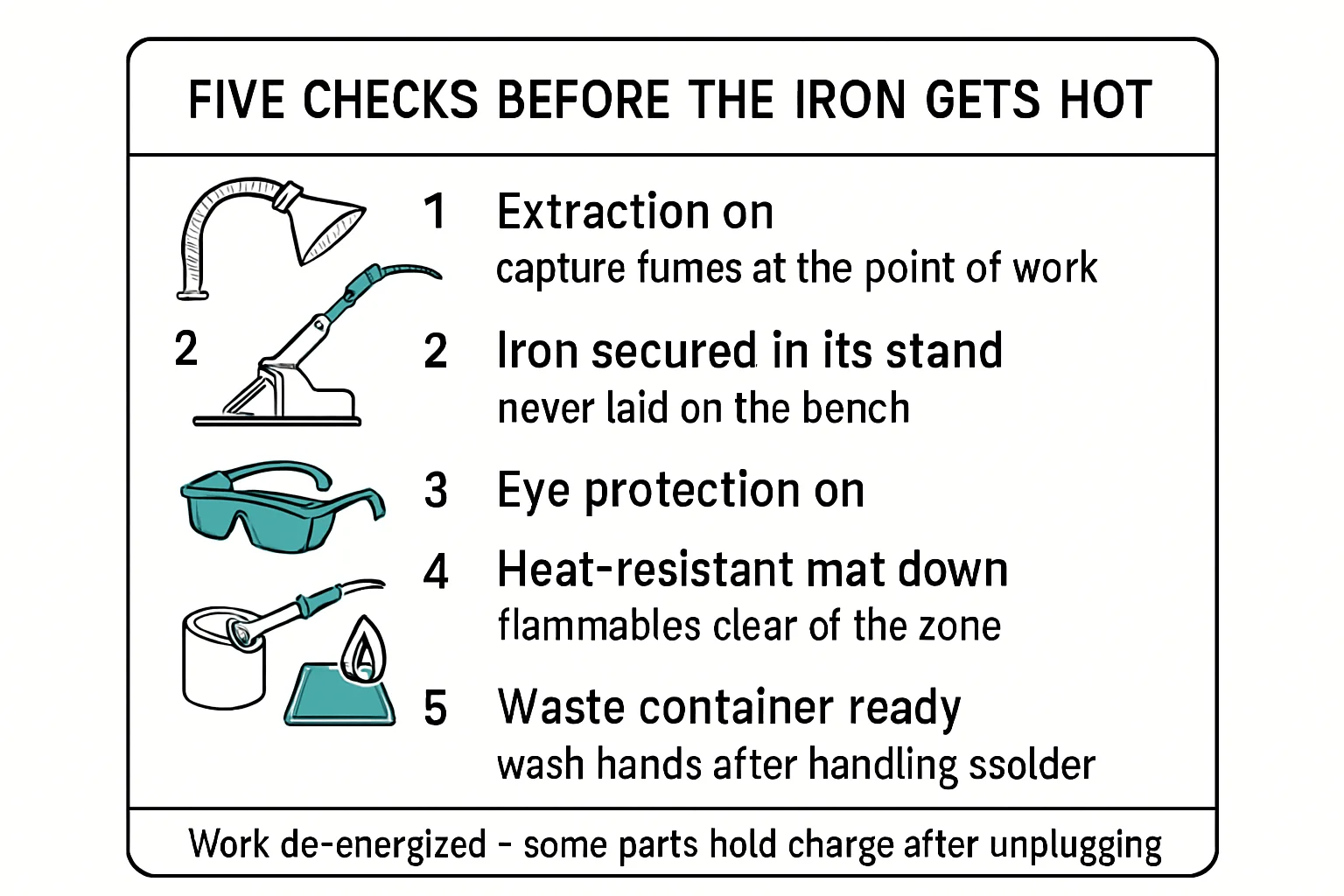
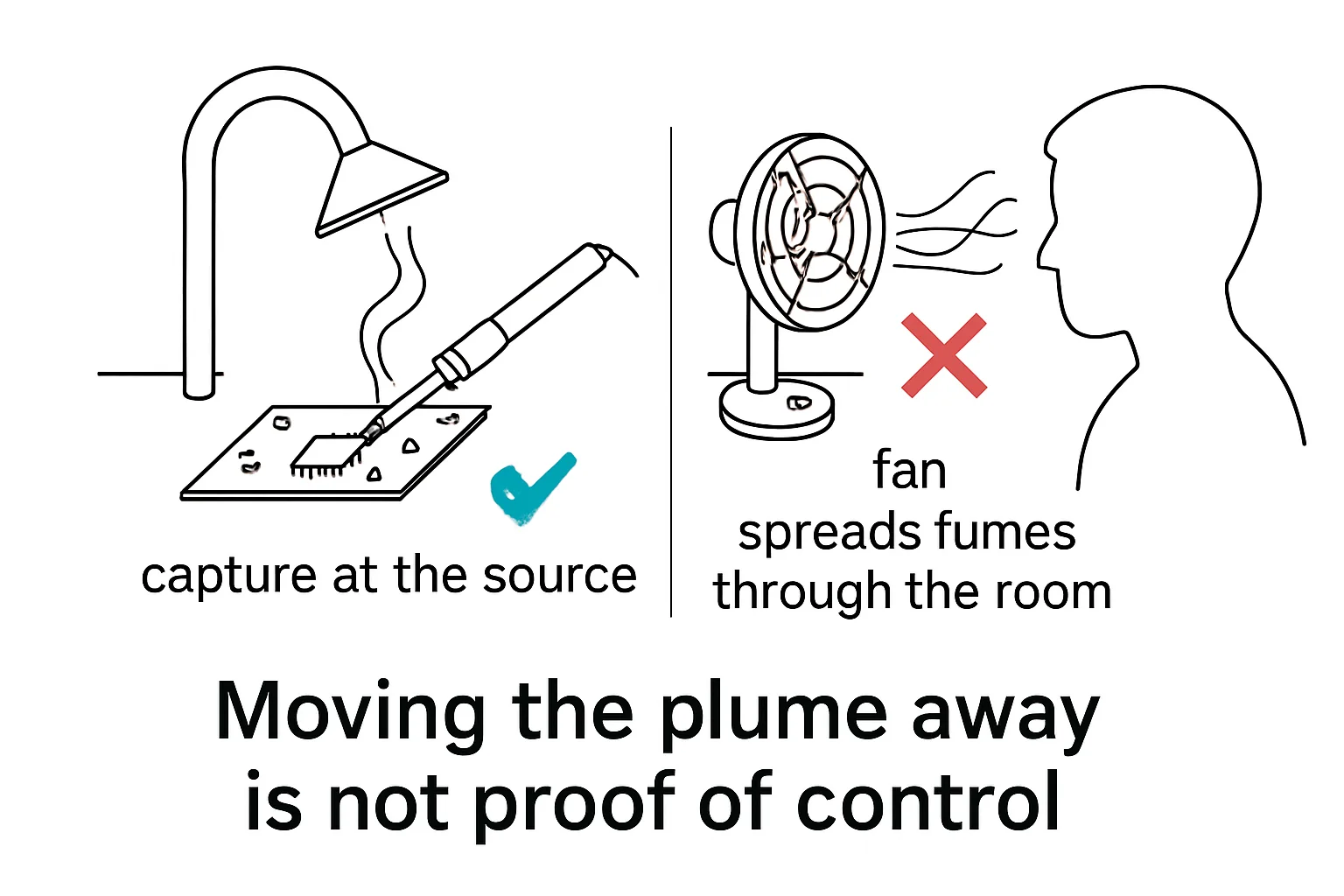
Solder fumes rise from the joint directly into the breathing zone of anyone leaning over the work. Set up airflow so the plume drifts away from you - a small fan pulling the smoke sideways works - and never hover directly over the smoke. It should be a habit, not a decision: position yourself so you're working beside the plume, not inside it. If the air in your space doesn't move, don't solder in that space until it does.
Safety glasses stay on for the entire session - not just the soldering. Solder can splatter when a joint is overheated, and flux pops. Worse, the cutting and stripping steps send clipped wire ends flying at speed; a trimmed component lead off a pair of flush cutters is a genuine projectile. Glasses are cheap; eye injuries aren't. Don't skip them "just for one joint."
The iron lives in its stand
Whenever the iron is not in your hand, it's in its stand. Never lay a hot iron on the bench, even for a second, and never leave a hot iron unattended. A rolling iron finds wire insulation, workbench edges, and power cables with remarkable speed. When the session is over - or when you leave the bench for any reason - the iron gets unplugged, not just switched off. Build this as muscle memory from day one: hand to stand, every time, no exceptions.
Give the stand a proper home: a heat-resistant mat under the work area, and a bench cleared before you start no clutter, no paper, nothing flammable within reach of the iron. A clean surface isn't about tidiness; it's about making sure a slipped iron or a hot component lands on something rated to survive it, not on a coiled cable or a stack of shop rags.
Lead hygiene: boring rules that matter
Wash your hands after handling lead solder, after every session. Keep food and drink off the bench entirely, not "just a coffee, it's over there." Store lead solder labeled, in its container, out of reach of children. Wipe down the work surface when you finish. Dispose of solder dross, trimmed leads, and dead tips per your local hazardous-waste rules, not in the regular trash. Keep a small bin at the bench labeled for solder waste trimmed leads, dross, dead tips. It keeps hazardous bits off the floor and out of the trash, and when it's full it's your reminder to dispose of it properly instead of letting it pile up.
If something goes wrong
If a burn happens, cool it under running water right away and get help - don't guess at treatment. The joint can wait.
Bench takeaway: The bench is the safety equipment - set up ventilation, glasses, stand, mat, and hygiene before the iron ever heats up.
Related
The XLR Wiring Mistake That Keeps Coming Back · Bad Solder Joints: What to Look For Before They Fail · Course: Build a basic XLR cable